Facebook
 X
X
 Pinterest
 Copy Link
Brea Fire Hazard Zones and Home Insurance: The Rules That Go Beyond State Law

Quick Answer
Brea fire hazard zones require 200 feet of defensible space around a structure. That applies in both the High and the Very High tier, double the 100-foot state baseline. The zone also drives sprinkler, roof, and access-road standards, plus seller disclosures. It does not set the price of home insurance, because carriers rate wildfire with their own models.
Brea fire hazard zone and insurance details verified as of July 27, 2026. Sources include the Brea City Code, CAL FIRE, and the California Department of Insurance. Analysis by Michael Mellgren, REALTOR® (DRE #02321556).
What are the Brea fire hazard zones, and where are they?
A fire hazard severity zone rates how readily land could burn. It is not a forecast that it will. CAL FIRE builds each rating from vegetation, terrain, fire weather, and wind. The result sorts land into Moderate, High, and Very High tiers.
That statewide rollout finished on March 24, 2025. Brea then put the maps in front of residents. Its fire department published them and took public input from April 1 to April 30, 2025.
The city has since adopted them. In its 2025 General Plan Annual Report, Brea states that it adopted the updated fire hazard severity zone maps. It also adopted the 2025 California Wildland-Urban Interface Code, with local amendments that tighten brush clearance.
Geography concentrates the hazard at the city’s eastern end. Carbon Canyon carries most of Brea’s wildland-urban interface. The city puts the canyon at roughly 1,758 acres. Carbon Canyon Road bisects it and serves El Rodeo, Olinda Village, Hollydale Park, and La Vita Hot Springs.
Still, the Brea fire hazard zones are not the whole map. Brea City Code section 16.04.040 defines a wildland-urban interface area more broadly. It reaches any area the fire code official flags for nearby combustible vegetation. A parcel can therefore pick up interface duties without a Very High rating.
How do you find out if a Brea home is in a fire hazard zone?
Check the parcel, never the neighborhood. Zone lines follow terrain and fuel rather than tract boundaries. Two homes on one street can therefore carry different ratings. The Office of the State Fire Marshal runs a statewide viewer that takes a street address.
Brea’s fire department also maintains the city’s own maps. During a sale, the answer arrives in writing. Nearly every California resale includes a natural hazard disclosure report, which names the zone for the exact parcel.
That report beats a neighbor’s recollection or an old listing remark. It is drawn for one address, not for a tract. Read it before the contingency period closes.
What do the Brea fire hazard zones require that state law does not?
Brea layers real local amendments on the state code, and several exceed the statewide floor by a wide margin. On September 16, 2025, the City Council adopted Ordinance 1265. That ordinance repealed the old fire chapter.
In its place, the city adopted the 2025 California Fire Code and the 2025 California Wildland-Urban Interface Code. The table below sets the state minimum beside what Brea’s adopted code requires.
| Requirement | California minimum | Brea’s adopted fire code | Source |
|---|---|---|---|
| Defensible space | 100 feet around a structure, and not past the property line | 200 feet from a structure, in both the High and the Very High zone | Public Resources Code §4291; Government Code §51182; Brea City Code §16.04.100 |
| Fire sprinklers | Required in new one- and two-family homes statewide, with no retrofit trigger for an addition | Required in all new structures in the High and Very High zones. For an existing home in a Very High zone, an addition of 33% or more (or over 1,000 square feet within two years) triggers a full system, against 50% elsewhere in the city | Brea City Code §16.04.080 |
| Roof replacement | Class A roof covering on new construction in a wildland-urban interface area | Replacing 33.34% or more of an existing roof within 24 months triggers the new-construction roof standard, and any patch must meet at least Class A | Brea City Code §16.04.100 |
| Fire apparatus access | 20 feet of unobstructed road width | 24 feet inside a fire hazard severity zone, plus two separate public access and exit roads for developments in a zone | Brea City Code §16.04.070 |
| Roadside brush clearance | Left to the local fire code official | 75 feet or more on each side of highways, roads, and private streets, measured from the flow-line or improved edge | Brea City Code §16.04.050 |
| Fuel modification upkeep by an association | No statewide requirement | Recorded conditions, covenants, and restrictions must budget specific funds for upkeep, and the zone gets an annual Brea Fire Department inspection | Brea City Code §16.04.100 |
Brea local fire code requirements against the California minimum, verified July 2026. Sources: Brea City Code Chapter 16.04 (Ord. 1265, 9/16/2025), California Public Resources Code §4291, and California Government Code §51182; summary by Michael Mellgren, REALTOR®.
Defensible space runs 200 feet in Brea
Defensible space is the treated ground around a structure. Dead brush is cleared, limbs are trimmed, and fuels are thinned. State law sets the standard at 100 feet. Brea’s adopted code lists 200 feet, in both the High and the Very High zone.
That local figure is the one an owner is held to. Lot size still caps the obligation in practice. State law does not push clearance past the property line. An owner on a half-acre lot simply treats the whole lot.
On the larger canyon parcels, though, 200 feet is a real annual chore. It is not a paperwork item. Budget the labor before closing rather than after.
Sprinklers, roofs, and access roads
Three other Brea rules can reach a homeowner without warning. First, an existing home in a Very High zone triggers a full sprinkler system at a 33% addition. Elsewhere in the city, the bar sits at 50%.
Second, re-roofing more than a third of the roof within 24 months pulls the job up to the new-construction standard. Third, developments inside a zone need two separate public access and exit roads. That last rule is why canyon subdivisions look the way they do.
Fuel modification zones and homeowner associations
Brea also puts the fuel modification burden in writing before anyone moves in. Where an association maintains a fuel modification zone, the recorded covenants must budget specific funds for the work. Its fire department then inspects the zone once a year.
For a buyer, that changes what matters in the disclosure packet. An association’s reserve study and inspection history are worth reading closely. Skimming them is how a surprise assessment arrives later.
Do the Brea fire hazard zones raise home insurance costs?
Not directly, and the state says so plainly. The California Department of Insurance tells consumers that the CAL FIRE maps do not affect rates or availability. Insurers already price wildfire with their own catastrophe models. Those models weigh slope, fuel, access, and the house itself rather than a zone label.
The Brea fire hazard zones also sit outside the state’s formal trouble list, which cuts both ways. On the Department’s March 6, 2025 designation, Orange County is not a distressed county. No Brea ZIP code appears among the undermarketed ZIP codes either.
So the availability rules below are not aimed at Brea. Carrier appetite in a canyon still varies from one company to the next. Shop the quote rather than assume it.
What changed in California’s insurance market for 2026?
A new trade explains much of what a hillside owner is seeing. Under the Department’s Sustainable Insurance Strategy, an insurer may now use forward-looking catastrophe models in a rate filing. It may also include California net reinsurance costs. In exchange, it must commit to covering at least 85% of properties in the state’s distressed areas.
Fresh numbers show where that stands. California counts 662 ZIP codes in distressed areas. The FAIR Plan held 668,609 homeowner and commercial policies as of December. Six homeowners insurance groups are expanding here under the strategy, against none the prior year.
Those figures come from the Department’s own snapshot, updated in February 2026. Average premiums run $1,571 in California and $1,512 nationally. None of that guarantees a quote at any given address.
Treat the policy as a real line item, not an afterthought. Price it before removing a contingency. For eligibility and coverage at one property, talk with a licensed insurance agent or broker.
Did the Carbon Fire lock in insurance protections for Brea?
No, and the reason is worth understanding. The Carbon Fire started at Carbon Canyon Road and Olinda Road on April 25, 2026. It burned roughly 205 acres and reached full containment on April 30.
Evacuation warnings covered Olinda Village, Hollydale, El Rodeo Stables, and Brea Hills. The Orange County Fire Authority worked the fire in unified command with the Brea Fire Department and CAL FIRE.
Even so, the one-year moratorium is not automatic. Insurance Code section 675.1 blocks cancellation and non-renewal for wildfire risk only after the Governor declares a state of emergency. The Department then publishes a bulletin naming the covered ZIP codes.
No such bulletin followed the Carbon Fire. As of July 2026, the Department’s published list of declarations runs through December 23, 2025. It carries no entry for the Carbon Fire.
Orange County’s last appearance on that list came from the September 11, 2024 Airport Fire declaration. Its one-year window has since closed. A Brea owner near the canyon therefore has no active section 675.1 shield. Check the Department’s live ZIP code lookup rather than assume.
What must a Brea seller disclose in a High or Very High zone?
Two duties attach at the point of sale inside the Brea fire hazard zones. Under Civil Code section 1102.19, a seller in a High or Very High zone must document defensible space compliance. If that paperwork is not ready before closing, the parties may agree in writing that the buyer will comply within one year.
Here Brea’s local standard matters. The statute reaches local vegetation management ordinances, not only the state figure. Compliance for a Brea parcel is measured against the city’s 200-foot requirement. A seller who cleared to 100 feet and stopped may fall short of what a lender or insurer expects.
Second comes the fire hardening disclosure under Civil Code section 1102.6f. It applies to homes built before January 1, 2010. Sellers list features that could admit embers, such as gaps in eaves or a wood shake roof. They also state which hardening improvements exist.
Since July 1, 2025, that notice must carry the State Fire Marshal’s low-cost retrofit list. It must flag which items are done. These are disclosure duties rather than retrofit mandates, so nothing forces a seller to rebuild before listing.
Brea fire hazard zones and insurance: common questions
Is defensible space in Brea 100 feet or 200 feet?
Brea’s adopted code lists 200 feet of defensible space from a structure. That applies in both the High and the Very High zone, and the local requirement governs inside the city. The 100-foot figure is the statewide baseline under Public Resources Code section 4291 and Government Code section 51182. State law lets a local agency require more, and Brea has.
How much notice must an insurer give before non-renewing a Brea policy?
California Insurance Code section 678 requires at least 75 days of notice. A residential property insurer must deliver either a renewal offer or a notice of non-renewal in that window. Use the time the day the notice arrives, not the week before expiration. For alternatives at a specific address, consult a licensed insurance agent or broker.
Are fireworks allowed in Brea?
No. The Brea Fire Code bars the sale, use, and display of 1.4G fireworks, commonly sold as Safe and Sane. It also bars the storage, sale, possession, and handling of 1.3G fireworks. One exception applies citywide: a permitted public display fired electrically by a licensed pyrotechnic operator.
Which agency responds to a wildfire in Brea?
Brea Fire Department serves the city as its own municipal department. It runs roughly 54 personnel across four stations, covering about 12.43 square miles. Mutual aid fills the gaps on a larger incident. The Carbon Fire began on unincorporated land, so the Orange County Fire Authority held jurisdiction there.
Carrying cost drives most of these decisions. Read these Brea details beside the parallel rules for Anaheim Hills fire hazard zones and for wildfire hazard zones and home insurance in Yorba Linda. The separate question of the best time to sell a Brea home sits alongside them.
Weighing a Brea hillside home?
Zone, clearance record, disclosure packet, and insurance quote together decide what a canyon home costs to own. Michael Mellgren, REALTOR®, follows how Brea’s local fire code and California’s insurance rules land on North Orange County property. He can confirm which zone a Brea address falls in, and lay out what the sale paperwork will ask for.
Email Michael Mellgren about a Brea fire hazard zone, or call or text (714) 420-6629. For premiums, coverage, and eligibility, consult a licensed insurance agent. For parcel-specific clearance and permit requirements, contact the Brea Fire Department.
This post is general information about fire hazard severity zones and property insurance in Brea and California, current as of the date shown. It is not legal, tax, financial, or insurance advice, and it creates no attorney-client or agent-client relationship. Rules change, and they apply differently to each lot. Confirm the details for an address with the City of Brea and a qualified professional.
1031 Exchange in California: Rules, Deadlines, and What the State Requires
Quick Answer
A 1031 exchange in California lets an investment property owner defer tax by reinvesting the sale proceeds in another investment property. Two federal clocks control it. The first gives 45 days to identify the replacement property in writing, and the second gives 180 days to close. Missing either clock makes the whole gain taxable, and California adds its own reporting.
Section 1031 rules verified as of July 27, 2026 against the Internal Revenue Code, the Treasury regulations, and Franchise Tax Board guidance. Analysis by Michael Mellgren, REALTOR® (DRE #02321556).
What is a 1031 exchange, and how does it work?
A 1031 exchange trades one investment property for another. It is not a sale followed by a purchase. Section 1031 of the tax code lets the owner postpone tax on the gain. Money that would go to the IRS stays invested instead.
Still, the gain is deferred rather than erased. It comes due when the replacement property finally sells in a taxable sale.
Both properties must serve a business or investment purpose. Since 2018 the rule has covered real property only. The Tax Cuts and Jobs Act dropped personal property such as cars and equipment.
Most U.S. real estate counts as like-kind to most other U.S. real estate. A rental condo can therefore trade for raw land, a fourplex, or a warehouse. That test is broader than most owners expect. Even so, three limits bite:
- Property held mainly for resale does not qualify, which rules out a flip.
- Real property outside the United States is never like-kind to real property inside it.
- A primary residence does not qualify, because it is personal use rather than investment.
Meanwhile, the sale itself still runs like any other listing. Owners weighing that half can read the step-by-step guide to how to sell a home in Orange County.
What are the deadlines for a 1031 exchange in California?
Two clocks start the day the property being sold closes. Both are federal. The first allows 45 days to identify replacement property in writing. The second allows 180 days to receive it, or until that year’s tax return is due, whichever comes first.
Neither clock stretches for hardship. The only exception is a presidentially declared disaster.
| Deadline | What must happen | Where the rule comes from |
|---|---|---|
| Day 0, the closing of the property being sold | The relinquished property transfers and both clocks start | Treasury Regulation section 1.1031(k)-1(b)(2) |
| Day 45 | Replacement property is identified in a signed written document delivered to the intermediary or the transferring party | Treasury Regulation section 1.1031(k)-1(b)(2)(i) and (c)(2) |
| Day 180, or the tax return due date, whichever is earlier | The replacement property is received | Treasury Regulation section 1.1031(k)-1(b)(2)(ii) |
| The tax return for the year of the exchange | Federal Form 8824 is filed with the return | IRS Instructions for Form 8824 |
| Every year the California gain stays deferred | Form FTB 3840 is filed, when the replacement property sits outside California | Revenue and Taxation Code section 18032 |
Deadlines in a deferred 1031 exchange of California real property. Sources: Treasury Regulation section 1.1031(k)-1, the IRS Instructions for Form 8824, and the California Franchise Tax Board.
How replacement property gets identified
It takes a signed written document. A phone call or a handshake will not do. The document must reach the right party before midnight on day 45. That means the person obligated to transfer the property, or another party to the exchange such as the qualified intermediary.
Notice to your own attorney, accountant, or real estate agent does not count. Each property also needs a clear description: a legal description, a street address, or a known name.
Rules also cap how much an owner can identify. Pick one of three tests:
- The three-property rule. Identify up to three properties, at any value.
- The 200 percent rule. Identify any number, as long as their combined value stays at or under 200 percent of what was sold.
- The 95 percent rule. Identify any number at any value, then close on at least 95 percent of the total value identified.
Blow past all three and the law treats it as identifying nothing, which kills the exchange. Pulling one back is just as formal. It must be in writing, and it must land before day 45. An oral revocation is void, and the dropped property still counts against the caps.
The year-end trap most owners miss
A late-year closing can quietly shorten the 180 days. The exchange period ends on the 180th day or on the tax return due date, whichever comes first. So a fall closing can run out of road.
Take an individual who closes on November 1. Day 180 lands near the end of April, yet the return is due April 15. The clock stops two weeks early.
Filing an extension restores the full 180 days. That single step is the fix, and it has to happen before the return goes in.
Why the seller cannot touch the money
Receiving the sale proceeds, even briefly, disqualifies the exchange. The regulations treat actual or constructive receipt of the cash as a sale. A qualified intermediary therefore holds the funds between the two closings.
That intermediary’s written agreement must expressly bar the taxpayer from drawing on the money. The bar runs until the exchange period ends.
Who cannot serve as the qualified intermediary
Federal rules disqualify anyone who has acted as the taxpayer’s agent within the prior two years. The regulation names the employee, attorney, accountant, investment banker or broker, and real estate agent or broker. Put plainly, the agent who listed the property cannot also hold the money.
Two carve-outs are worth knowing. Prior work on other 1031 exchanges does not count against a person. Neither do routine escrow, title, or trust services from a financial institution, title company, or escrow company.
What California requires of an exchange facilitator
California regulates exchange facilitators, and most states do not. Division 20.5 of the Financial Code sets the rules. It covers anyone who facilitates an exchange for a fee, keeps an office here, or advertises the service. The requirements are specific:
- A fidelity bond of at least $1,000,000, an equivalent deposit, or all funds in a qualified escrow (section 51003).
- Errors and omissions coverage of at least $250,000, or an equivalent deposit (section 51007).
- Custody of exchange funds under a prudent investor standard, with commingling expressly a violation (section 51009).
- Written notice to clients within 10 business days of any change in control (section 51001).
- A right to sue for a violation, and to claim against the bond (sections 51005 and 51013).
These rules exist because failed intermediaries have cost taxpayers their deferral. Anyone running a 1031 exchange in California can ask a facilitator to document its bond and coverage. That takes one email, and it is worth the minute.
What California requires that federal law does not
Form FTB 3840 and the California clawback
California tracks gain that leaves the state. Say a California property trades for one outside the state. Part of the California-source gain then goes unrecognized. That triggers Form FTB 3840 for the year of the exchange.
The owner refiles it every year until the deferred gain finally lands on a California return. Franchise Tax Board guidance on reporting like-kind exchanges sets out the mechanics.
This obligation follows the gain rather than the person. It continues for an owner who has moved away and no longer files a California return. It also survives later exchanges of that out-of-state property.
Skipping it invites a Notice of Proposed Assessment. That notice adds back the deferred gain, plus penalties and interest.
Reporting ends in three narrow cases:
- Recognition of the gain on a California return.
- Transfer of the property by inheritance.
- Donation of the property to a nonprofit.
A replacement property inside California triggers no Form 3840 at all. That gain never leaves the state’s reach.
Withholding at the closing table
California withholds on real estate sales, and an exchange escapes that only up to a point. A deferred exchange is exempt at the initial transfer once the seller certifies it on Form 593. Cash or other non-like-kind property above $1,500 changes the answer. The intermediary must then withhold 3 1/3 percent of that amount.
A failed exchange is worse. If the exchange never happens, or does not qualify, the intermediary withholds 3 1/3 percent of the full sales price. On a $1,200,000 property that is roughly $40,000, recoverable only as a credit on that year’s return.
What is boot, and when is tax owed anyway?
Boot is anything received in the exchange that is not like-kind property. Usually that means cash or debt relief. Taking boot does not break the exchange, but it makes gain taxable up to the amount of the boot.
Trading down in value produces boot. So does cutting the mortgage without adding cash, even when no check changes hands.
Worked example
An owner sells a North Orange County rental for $1,200,000, free of any mortgage. The adjusted basis is $400,000, so the realized gain is $800,000. A replacement property costs $1,050,000, and the owner keeps the remaining $150,000 in cash.
That $150,000 is boot and is taxable now, while $650,000 of gain stays deferred. Because the boot tops $1,500, the intermediary also withholds about $5,000 for California. Basis in the new property carries over at $400,000. That is exactly why the deferred gain resurfaces later.
Did the 2025 tax law change the 1031 exchange?
No. The federal tax package signed on July 4, 2025 made no change to Section 1031. Real property exchanges continue under the same rules, and proposals to cap the deferral never became law.
One earlier change still governs, however. The Tax Cuts and Jobs Act limited Section 1031 to real property beginning in 2018. California conformed for tax years starting on or after January 1, 2025. So personal property qualifies under neither system.
Frequently asked questions about a 1031 exchange in California
Can a primary residence go into a 1031 exchange?
No. Section 1031 covers property held for business use or investment, and a primary residence is personal use. A home sale falls under a separate rule with its own limits. See this guide to capital gains tax when selling a California home.
How much does a 1031 exchange cost?
Intermediary fees vary by company, and the state does not set them. That number comes from the facilitator’s own quote. Ordinary transaction costs still apply on both sides. This guide to closing costs in Orange County covers who pays each one.
Can a 1031 exchange be done with a family member?
It is possible but restricted. Under section 1031(f), a trade with a related party has a catch. Both sides must hold what they received for two years.
An early sale inside that window can undo the deferral for both parties. Run this structure past a tax professional first.
What happens if no replacement property is identified within 45 days?
The exchange fails, and the gain is taxable in the year of the sale. An intermediary releases the funds once the identification period ends. California withholding then applies to those proceeds at 3 1/3 percent of the sales price.
Weighing an exchange on an Orange County investment property?
Whether an exchange pencils out depends on the gain, the debt, the target, and the time left. Michael Mellgren, REALTOR®, follows the North Orange County investment market closely. He can help map a sale timeline against the 45-day identification window and the 180-day closing deadline.
Email Michael Mellgren about a 1031 exchange, or call or text (714) 420-6629. For the tax treatment of a specific property, consult a qualified tax professional. Engage a qualified intermediary before the sale closes rather than after.
What is a Mills Act Contract, and Which Orange County Homes Qualify?
Quick Answer
A Mills Act contract is a voluntary 10-year deal between a California city or county and the owner of a historic home. The owner promises to preserve the property. In return, the property-tax bill drops. In Orange County, eleven jurisdictions offer it, and a home must be a designated historic property to qualify.
Mills Act details verified as of July 20, 2026, from the California Office of Historic Preservation and the state statute; analysis by Michael Mellgren, REALTOR® (DRE #02321556).
What is a Mills Act contract?
A Mills Act contract is California’s main property-tax break for historic buildings. State lawmakers created it in 1972, under Government Code sections 50280 to 50290. A participating city or county cuts an owner’s property taxes. In return, the owner keeps a designated historic property in good repair.
The state does not run the program or sign the contracts. Each local government does, so the terms differ from city to city. You can read the framework on the California Office of Historic Preservation’s Mills Act program page.
The deal runs for at least ten years, and it renews on its own. Each year on the anniversary, one more year is added automatically. So the term stays at a rolling ten years unless someone files notice to stop it.
The agreement stays with the property when the home sells. Its new owner then takes on the same benefits and the same duties.
How does the Mills Act lower your property taxes?
The Mills Act lowers property taxes by changing how the county values the home. Most California homes are taxed under Proposition 13. That value usually tracks the purchase price, plus small yearly increases. A home under contract is valued a different way, using the income approach.
The income approach estimates what the home could earn as a rental. It then divides that figure by a state-set capitalization rate. The result is often a much lower assessed value, and a lower tax bill. Savings vary widely, because the math depends on local rents and the yearly rate.
Reductions are commonly cited in the 40% to 60% range. Some Orange County programs report more. Anaheim and the County of Orange both cite savings of up to 70% for certain homes.
One catch is worth knowing up front. The county reassesses each enrolled home every year. So the tax bill can rise or fall from year to year rather than stay flat. The assessor compares three figures and applies the lowest: the Mills Act value, the Proposition 13 value, and current market value.
Which Orange County homes qualify for the Mills Act?
An Orange County home qualifies when two things are true. First, it sits in a city or county that runs the program. Second, it is a designated historic property. Both conditions must be met, because the break only exists where a local government has adopted it.
Eleven Orange County jurisdictions currently offer these contracts, as listed by Preserve Orange County. Participation can change over time, so it is worth confirming a city’s current program with its preservation office. The list stands as follows:
- Anaheim, which includes Anaheim Hills
- Brea
- Dana Point
- Fullerton
- Laguna Beach
- Orange
- San Clemente
- San Juan Capistrano
- Santa Ana
- Tustin
- The County of Orange, for unincorporated areas
Two nearby cities this site covers are missing from that list: Yorba Linda and Placentia. A historic home in either one cannot enroll today. Owners there can still ask their city to adopt the program. Placentia does levy other special taxes, but its Placentia Mello-Roos districts are unrelated to the Mills Act.
Availability can also change within a participating city. Orange, for one, is not currently accepting new Mills Act applications while it reviews the program, so a historic home there cannot newly enroll right now. Existing Orange contracts still stand, and they transfer with the property. Anyone counting on a new contract should confirm a city’s current status before relying on the savings.
The second requirement is historic designation. A qualifying home must be privately owned, and it must pay property tax. It also has to carry an official historic listing. State law recognizes several paths to that listing, shown below.
| Designation path | What it covers | Listing authority |
|---|---|---|
| Local landmark | A home individually designated historic by its city or county | City or county historic register |
| Local historic district | A home that contributes to a locally designated historic district | City or county historic register |
| California Register | A home listed on the California Register of Historical Resources | California Office of Historic Preservation |
| National Register | A home listed on the National Register of Historic Places, or a contributor to a National Register historic district | National Park Service |
How an Orange County home qualifies as a historic property for the Mills Act. Sources: California Government Code §50280.1; California Office of Historic Preservation.
Local rules vary. Still, many California cities look for a home at least several decades old, and a clear example of a style or era, before they will designate it. If a home is not designated yet, an owner can often apply for landmark status and a contract at once. Any later work then follows local preservation rules, like the historic-district conditions built into Orange’s ADU rules.
What does a Mills Act contract require from the owner?
The contract requires the owner to preserve and maintain the home. That duty runs for the life of the agreement, to recognized historic standards. Most cities apply the Secretary of the Interior’s Standards. Those standards favor repairing original features over replacing them.
The contract also lets the local government inspect the property. A city usually reviews the home before signing. After that, it inspects on a set schedule, often every five years. Some cities also charge fees; Fullerton, for one, lists a $1,520 application fee and an $85 yearly fee.
The agreement runs with the land. So these duties pass to each new owner automatically. A buyer inherits both the lower tax basis and the preservation commitments. That is why reviewing the recorded contract, alongside the usual Orange County closing costs, during escrow matters.
What happens if you cancel or don’t renew a Mills Act contract?
Ending the agreement works one of two ways, and the difference is expensive. An owner who simply wants out files a notice of non-renewal. That notice stops the automatic yearly extension. The contract then winds down over its remaining term, usually about ten years, with no penalty.
The owner must serve that notice at least 90 days before the anniversary date. During the wind-down, the home keeps its reduced assessment. That value then steps back toward a standard one as the term runs out. The city can also decline to renew, with 60 days’ notice to the owner.
Cancellation is the costly path. It happens when the government cancels because the owner broke the terms. State law then charges a fee of 12.5% of the home’s current fair market value, under Government Code section 50286. The county assessor sets that value as if no contract existed, so on a $1,200,000 home the fee comes to $150,000.
Frequently asked questions about the Mills Act in Orange County
Does the contract transfer when the home is sold?
Yes. A Mills Act agreement runs with the property, not the owner. So it stays in place when a historic home changes hands in Orange County. The buyer takes on the reduced assessment and the preservation duties, and the ten-year clock simply continues.
How much can the Mills Act save on Orange County property taxes?
Savings depend on the home and change every year, so no single number applies. The reduction is commonly put in the 40% to 60% range. Anaheim and the County of Orange report up to 70% for some homes. The county reassesses yearly, so the figure moves with local rents and the state rate.
Do Yorba Linda and Placentia offer the Mills Act?
No. Neither city appears among the eleven Orange County jurisdictions that run the program. So a historic home in Yorba Linda or Placentia cannot enroll today. Nearby Brea, Fullerton, and Anaheim, including Anaheim Hills, do participate.
Can any older Orange County home get a Mills Act contract?
No. A home must first carry an official historic designation. That can be local landmark status, a spot in a historic district, or a California or National Register listing. Age alone does not qualify a property.
Weighing a historic home in Orange County?
Whether a Mills Act contract pencils out depends on the home, the city that governs it, and the designation on record. Michael Mellgren, REALTOR®, follows Orange County’s historic-property landscape closely. He can help weigh how a preservation contract might affect the carrying cost of any address you are considering, from Old Towne Orange to the historic streets of Fullerton and Anaheim.
Email Michael Mellgren about an Orange County Mills Act question, or call or text (714) 420-6629. For the assessment on a specific parcel, contact the Orange County Assessor’s Special Properties division. For eligibility and application steps, contact the historic preservation office in the city that governs the home.
Best Time to Sell a Brea Home: Now or Wait Until Fall?

Quick Answer
The best time to sell a Brea home in 2026 is now, not fall, at least on the closed record. Brea sellers averaged 101.6% of original list price in about 23 days across 145 closings year to date. The live market held an Expected Market Time of 45 days on July 16, 2026.
Market data as of July 16, 2026, based on CRMLS data via Pacific West Association of Realtors; analysis by Michael Mellgren, REALTOR® (DRE #02321556).
Is now the best time to sell a Brea home, or is fall better?
Listing now is the better-supported call. Brea sellers averaged 101.6% of original list price across 145 closings year to date through mid-July 2026. The typical home found a buyer in about 23 days. Sale-to-list compares the final price to the first asking price, so 101.6% means the average Brea sale finished just above where it started.
Waiting until fall is not a neutral choice, although it often gets treated as one. A Brea home listed in October sells into a different market. Supply, buyer urgency, and pricing posture all shift with the calendar. Brea’s completed 2025 record is the only local evidence of what that shift looked like.
What happened to Brea sellers last fall?
Brea sellers gave ground steadily after spring last year. In 2025, Brea’s second quarter averaged 104.4% of original list in about 17 days across 80 sales. The third quarter slipped to 102.1% in about 26 days on 77 sales. By the fourth quarter, the average reached 99.3% in about 39 days on 59 sales.
In plain terms, the average Brea seller cleared 4.4% above the first asking price in spring. By the close of the year, that same average landed 0.7% below it, and the wait more than doubled. Still, one year is one reading, not a seasonal law. Weather does not price homes; supply, rates, and buyer urgency do.
So far, 2026 has traced a similar shape. Brea closed 51 sales at 102.1% of original list in about 29 days in the first quarter. The second quarter brought 79 sales at 101.7% in about 19 days, as covered in the Brea housing market Q2 2026 results. The third quarter holds only 15 closings, at 99.1% in about 22 days, a partial count rather than a trend.
Which Brea price range is selling fastest in 2026?
Brea’s $1M–$1.5M band carries the market and clears the highest above asking. Those 87 sales made up 60% of all Brea closings year to date through mid-July 2026. They averaged 103.3% of original list in about 22 days.
The $2M+ tier posted the shortest average at about 12 days, but on only 7 sales. That reads as a small-sample figure rather than a market signal. At the other end, homes under $750K averaged about 34 days at 98.2% of original list. Homes from $1.5M to $2M lagged as well, at about 31 days and 97.8%.
| Price band | Sales | Volume | Avg. price | Avg. days on market | Avg. sale-to-list |
|---|---|---|---|---|---|
| Under $750K | 14 | $9,376,222 | $669,730 | 34 days | 98.2% |
| $750K–$1M | 25 | $21,828,893 | $873,156 | 18 days | 100.1% |
| $1M–$1.5M | 87 | $106,836,512 | $1,228,006 | 22 days | 103.3% |
| $1.5M–$2M | 12 | $19,722,030 | $1,643,503 | 31 days | 97.8% |
| $2M+ | 7 | $19,005,000 | $2,715,000 | 12 days | 98.6% |
| All Brea sales | 145 | $176,768,657 | $1,219,094 | 23 days | 101.6% |
Brea home sales by price band, year to date through mid-July 2026. Source: CRMLS via Pacific West Association of Realtors; analysis by Michael Mellgren, REALTOR®.
Read the band averages as what Brea sellers actually collected, not what they hoped for. Each figure measures the final sale against the original asking price. Any band below 100% is one where the average home closed under its first list price. A shorter cohort tells a narrower story, and the Brea housing market June 2026 results covers June’s 31 closings on their own.
What does the Brea market look like right now?
Brea held a Deep Seller’s Market on July 16, 2026, with 48 active listings. Expected Market Time sat at 45 days. That figure measures how long today’s supply would take to clear at the recent pace of new escrows. At 45 days, the shelf is thin next to demand.
Meanwhile, 38.5% of the Brea market sat under contract. Thirty homes carried $33,586,686 in escrow, and those escrows expose the gap between asking and reality. Within matched segments, Brea homes cleared at $1,120,725 against $1,174,685 in asking, a difference of $53,960, or 4.6%.
That gap matters when weighing the best time to sell a Brea home. It prices the homes a new listing would compete with today.
Seller pricing posture is holding, with one small group worth watching. Of the 48 active Brea listings, 33 have held firm within 1% of original list. Nine have made market-fit trims of 1% to under 5%, averaging 2.5%. Six have cut 5% or more, averaging 6.3%.
That last group is the early tell if buyers begin gaining ground. The number to track is whether its share grows through the fall.
Brea seller timing: common questions
Is fall a bad time to sell a home in Brea?
Not bad, but weaker on the only completed Brea record available. Brea’s 2025 fourth quarter produced the year’s lowest average sale-to-list, 99.3%, and its longest average days on market, 39 days. The second quarter, by contrast, ran 104.4% in about 17 days. Still, one year is one reading, so fall carried less seller leverage in Brea last year without being a rule.
How long does it take to sell a home in Brea in 2026?
About 23 days on average. Average days on market ran 22.7 across 145 Brea closings year to date through mid-July 2026. Speed varied by price band. Homes from $750K to $1M averaged about 18 days, the $1M–$1.5M band about 22 days, and homes under $750K about 34 days.
Do Brea homes sell above the asking price?
On average yes, though not in every price range. Brea’s 145 year-to-date closings through mid-July 2026 averaged 101.6% of original list price. The $1M–$1.5M band averaged 103.3%. Homes from $1.5M to $2M averaged 97.8%.
What does Expected Market Time tell a Brea seller?
It weighs supply against live demand. Brea’s Expected Market Time was 45 days on July 16, 2026. At the recent pace of new escrows, the 48 active listings would take about 45 days to clear. It runs longer than average days on market, about 23 days, because it counts every listing on the shelf rather than only the homes that sold.
Weighing a Brea listing this year
Deciding the best time to sell a Brea home comes down to one address and one price band. Michael Mellgren, REALTOR®, tracks every closed Brea sale as it records, and the step-by-step guide to selling a home in Orange County lays out the process end to end. He can map a specific property against the 2026 closings and the live 45-day picture. Email Michael Mellgren about Brea seller timing, or call or text (714) 420-6629.
Capital Gains Tax When Selling Your California Home: The $250K/$500K Exclusion Explained

Quick Answer
Capital gains tax when selling your California home applies only to the gain above the exclusion. A single filer excludes $250,000. A married couple filing jointly excludes $500,000. To qualify, you must have owned the home and lived in it as your main home for two of the last five years.
Tax rules verified as of July 17, 2026. Analysis by Michael Mellgren, REALTOR® (DRE #02321556). General information only, not tax advice.
How much is capital gains tax when selling your California home?
Most sellers owe nothing at all. The exclusion usually erases the whole gain. Section 121 of the Internal Revenue Code sets the limits. They run $250,000 for a single filer and $500,000 for a married couple filing jointly.
The exclusion covers gain, never the sale price. That single distinction trips up more sellers than anything else. Gain is what you cleared over your basis, not what the buyer paid.
Above the exclusion, the gain turns taxable. At North Orange County prices, that happens more often than sellers expect. Federal long-term rates run 0%, 15%, or 20%, depending on taxable income.
California then taxes the same excess on its own terms. The 3.8% net investment income tax can reach part of it as well.
Can you avoid capital gains by buying another house?
No, and this is the most common misconception about selling a home. The rule people remember was real, but Congress repealed it in 1997. Buying a more expensive home does nothing for your tax bill today.
The old rule was Section 1034 of the Internal Revenue Code. It let you defer gain by buying a replacement home, generally within two years either side of the sale. The Taxpayer Relief Act of 1997 repealed it for sales after May 6, 1997.
Section 121 is what replaced it. The same act scrapped a separate one-time $125,000 exclusion for sellers aged 55 and over. Congress traded both away for the exclusion this post describes.
Most sellers came out ahead on that trade. The old rollover only postponed the tax, pushing the gain into the basis of the next home. The exclusion erases the gain outright, it comes back every two years, and buying a replacement home is not required at all.
So the proceeds are now yours to do anything with. Spend them, invest them, buy a smaller home, or buy nothing. The tax outcome does not move either way.
Isn’t that what a 1031 exchange is for?
Not for your own home. A 1031 exchange defers gain only on property held for investment or business use. Publication 523 is blunt about it: a main home is not available for an exchange.
The two rules can also collide. Acquire a property through a 1031 exchange, convert it to your main home, then sell within five years of that exchange, and Section 121 drops away entirely. Anyone weighing that conversion should map the timing with a qualified tax professional first.
Does an old rollover from before 1997 still matter?
Yes, and long-time owners should check. Gain deferred under the old Section 1034 rules reduced the basis of whatever home came next. That lower basis carries forward to this day.
The effect compounds quietly. A seller who rolled gain through three or four homes before 1997 can be sitting on a far larger gain today than the purchase price suggests. Old settlement statements are worth digging out before assuming the exclusion covers everything.
Who qualifies for the $250,000/$500,000 home sale exclusion?
Three requirements control eligibility. The IRS calls them the ownership, residence, and look-back requirements. All three sit inside the five-year period ending on the date of sale.
Married couples face a split test. Both spouses must meet the residence requirement individually to reach $500,000. Only one spouse needs to meet the ownership requirement.
| Filing status | Maximum exclusion | Ownership requirement | Residence requirement | Look-back requirement |
|---|---|---|---|---|
| Single, or married filing separately | $250,000 | Owned the home at least 24 of the last 60 months | Lived in it at least 24 of the last 60 months | No exclusion taken on another home in the prior 2 years |
| Married filing jointly | $500,000 | One spouse meets it | Both spouses meet it individually | Neither spouse took one in the prior 2 years |
| Surviving spouse, selling within 2 years of the death and not remarried | $500,000 | The late spouse’s ownership time counts | The late spouse’s residence time counts | Neither took one in the prior 2 years |
Section 121 home sale exclusion limits and requirements, verified July 2026. Source: IRS Publication 523 (2025), Selling Your Home; analysis by Michael Mellgren, REALTOR®.
The 24 months need not run consecutively. Publication 523 asks only for 730 days of residence somewhere inside the five-year window. Vacations and other short absences still count as time at home.
Two automatic disqualifications override all of it, though. The first catches anyone who acquired the property through a 1031 like-kind exchange in the past five years. The second catches anyone subject to expatriate tax.
How do you calculate the gain on your home sale?
Capital gains tax when selling your California home rests on gain, and gain has two moving parts. Amount realized is your selling price minus selling expenses, such as the commission. Adjusted basis is what you paid, plus improvements, plus certain costs from the original purchase.
Improvements are the lever most sellers underuse. Every documented dollar of basis is a dollar of gain that never exists. The IRS counts work that adds value, extends the home’s life, or adapts it to new uses:
- Additions such as a bedroom, bathroom, deck, patio, porch, or garage
- A new roof, new siding, storm windows and doors, and insulation
- Kitchen modernization, flooring, built-in appliances, and a fireplace
- Heating systems, central air conditioning, ductwork, wiring, and security systems
- Landscaping, driveways, walkways, fences, retaining walls, and swimming pools
- Septic systems, water heaters, and water filtration systems
Routine upkeep earns nothing. Painting, fixing leaks, filling cracks, and swapping broken hardware simply hold a home steady. They add no value, so they stay out of basis. One exception matters, though: repair work folded into an extensive remodel counts as part of the improvement.
A worked example, on a $1,350,000 sale
Selling price: $1,350,000
Less selling expenses (commission, escrow, title): $81,000
Amount realized: $1,269,000
Original purchase price, 2012: $525,000
Plus documented improvements (kitchen remodel, roof): $75,000
Adjusted basis: $600,000
Gain: $669,000
Less exclusion, married filing jointly: $500,000
Taxable gain: $169,000
Only that $169,000 draws tax. The $1,269,000 on the closing statement does not. Sellers who kept receipts across a long ownership routinely shrink that number, while the rest end up proving basis from memory. For the full sequence around this step, see the step-by-step guide to selling your home in Orange County.
Does California tax capital gains on a home sale?
California conforms to the federal exclusion. Revenue and Taxation Code section 17152 adopts Section 121 directly. So the same limits govern the state return, on the same two-out-of-five-year terms. The Franchise Tax Board’s guidance on income from the sale of your home confirms it.
What California withholds is a break on rate. The FTB states plainly that no special rate exists for long-term capital gain. Anything above the exclusion therefore meets ordinary California income tax rates instead. That reverses the federal treatment, where those same dollars earn a preferential rate.
What is Form 593, and why would 3⅓% come out of your sale?
California takes 3⅓% of the gross sales price at closing. The only way out is an exemption certified on FTB Form 593. On a $1,350,000 sale, that runs $44,955 out of proceeds, and the actual gain makes no difference. Sales of $100,000 or less escape withholding entirely.
The principal residence exemption clears it. Owned the home and lived in it for two of the last five years? Certify on Part III, line 1, and no withholding follows.
Notably, the exemption turns on the property, not on the size of the gain. Certify the home under Section 121 and the withholding goes away. That holds even when part of the gain tops the exclusion and genuinely owes tax.
Yet the FTB is explicit on the flip side. An exemption never relieves a seller of the duty to file a California return and pay what is owed.
Timing is where sellers lose money. Form 593 must reach the escrow officer before the transaction closes. Afterward, only a credit on that year’s tax return recovers the cash. For how this fits the rest of the closing math, see escrow, title, and closing costs in Orange County.
Do you have to report the sale if the gain is fully excluded?
In Orange County, usually yes. National guides mislead local sellers on exactly this point. Form 1099-S, Proceeds From Real Estate Transactions, changes that. It means you must report the sale even when the exclusion covers every dollar.
Price decides whether that form ever appears. The instructions for Form 1099-S let a closing agent skip it only below $250,000. That rises to $500,000 where the seller certifies as married. The seller must also certify the home as a principal residence with the full gain excludable.
Orange County medians sit well above both thresholds. So most local sellers get one.
Sources genuinely conflict here, so it is worth naming rather than smoothing over. The FTB’s own page tells sellers they need not report a sale when the gain came in under the limit. The IRS instead ties the reporting duty to the 1099-S. Follow the federal rule on the federal return: if the form issued, report the sale on Form 8949 and Schedule D.
What if you don’t meet the two-year test?
A partial exclusion may still apply, at a reduced limit rather than none. Three categories qualify, so long as one of them drove the sale:
- Work-related move: a new or transferred job at least 50 miles farther from the home than the old work location
- Health-related move: a move to obtain or provide diagnosis, treatment, or care for yourself or a family member, or a move a doctor recommended
- Unforeseeable events: a death, a divorce or legal separation, eligibility for unemployment compensation, two or more children from one pregnancy, a home destroyed or condemned, or an inability to pay basic living expenses after an employment change
The math is a simple proration. Take the shortest of three periods. Those are your months of residence, your months of ownership, and the months since your last excluded sale. Divide by 24, then multiply by $250,000.
An example makes it concrete. A single filer with 12 months in the home before a qualifying job transfer lands at a $125,000 limit.
Service members get a separate rule. It covers qualified official extended duty in the Uniformed Services, the Foreign Service, or the intelligence community. Those members may suspend the five-year test period for up to 10 years.
Frequently asked questions about capital gains on a California home sale
Does the 3.8% net investment income tax apply to a home sale?
Excluded gain never touches it. The IRS treats gain excluded under Section 121 as something other than net investment income. So it stays out of the math. Only gain above the exclusion can be caught, and only when modified adjusted gross income tops $200,000 single or $250,000 filing jointly.
Can you use the home sale exclusion more than once?
Yes, but only once in any two-year period. The look-back requirement blocks it if you already excluded gain from another home sale. The window runs two years back from the date of this sale.
What happens to the exclusion if the home was rented out?
Two separate rules bite. Depreciation you claimed, or simply could have claimed, after May 6, 1997 falls outside the exclusion. It returns as unrecaptured Section 1250 gain. Also, any stretch after 2008 when the home served some other use generally counts as nonqualified use, and gain from that stretch stays outside the exclusion too.
Do you pay capital gains tax on an inherited home?
Usually very little, because the basis resets. An heir’s basis is generally the fair market value on the date of death, so only later appreciation produces gain. The guide to selling an inherited home in California covers the mechanics.
Does a loss on a home sale help at tax time?
No. The IRS treats a loss on the sale of a main home as nondeductible, so it yields no write-off.
Getting the number right before the home hits the market
Whether capital gains tax when selling your California home costs anything comes down to three inputs. Those are documented basis, years of ownership and residence, and a Form 593 certification that lands before escrow closes. Michael Mellgren, REALTOR®, walks sellers through all three early rather than at the signing table. He can help assemble the ownership record, the improvement history, and a net-proceeds picture for any address under consideration.
Email Michael Mellgren about California home sale capital gains, or call or text (714) 420-6629. For your actual exclusion limit, your tax rate, and your Form 593 certification, consult a qualified tax professional or CPA.
Orange ADU Rules: Size Limits, Setbacks, and Permits (2026)
Quick Answer
Orange ADU rules size a unit by its bedroom count, not by one flat cap. On a lot with a single-family home, the City of Orange allows one accessory dwelling unit (ADU). It can reach 850 square feet with one bedroom or none, or 1,000 square feet with two or more. One junior ADU (JADU) of up to 500 square feet may join it. There is no minimum lot size, and the city has 60 days to act on a complete application.
Orange ADU details verified as of July 16, 2026, against Orange Municipal Code Chapter 17.29 and California ADU law. Analysis by Michael Mellgren, REALTOR® (DRE #02321556).
How big can an ADU be in Orange?
An ADU in Orange tops out at 850 square feet with one bedroom or none. Add a second bedroom and the cap rises to 1,000. That bedroom-count structure catches most homeowners off guard, because many nearby cities publish one flat ceiling instead. Orange Municipal Code section 17.29.050 sets the sizes. Section 17.29.190 lists anything larger as a prohibited unit.
A second limit runs alongside the first. Under section 17.29.060, an ADU cannot exceed 50% of the floor area of the existing main home. Even so, the city must always allow at least 800 square feet, whatever that ratio says. So a modest 1,400 square foot house will not push your ADU below 800 square feet. It will, however, keep you from reaching 1,000.
Conversions escape both caps. Build inside the living area of an existing home, or inside the existing floor area of a detached garage, and the 850 and 1,000 figures drop away. The unit simply matches the square footage already there. You may add up to 150 square feet more, but only for an entrance.
| Unit type | Maximum size | Maximum height | Minimum setback (side and rear) |
|---|---|---|---|
| Detached ADU | 850 square feet with one or fewer bedrooms; 1,000 square feet with two or more | 16 feet, or 18 feet within a half mile of a major transit stop or corridor | 4 feet up to 800 square feet; zoning district setbacks above 800 square feet |
| Attached ADU | 850 square feet with one or fewer bedrooms; 1,000 square feet with two or more | 25 feet or the zone limit, whichever is lower, and no more than two stories | 4 feet up to 800 square feet; zoning district setbacks above 800 square feet |
| Junior ADU (JADU) | 500 square feet of interior livable space, inside the home or its attached garage | Within the existing walls | Not applicable |
| Conversion ADU | Existing square footage, plus up to 150 square feet for an entrance | The existing structure | None required |
Orange ADU and JADU standards on a single-family lot, verified July 2026. Source: Orange Municipal Code sections 17.29.050, 17.29.080, and 17.29.095, and California ADU law; summary by Michael Mellgren, REALTOR®.
Where can you put an ADU on an Orange lot?
Setbacks in Orange hinge on one number: 800 square feet. Stay at or below it and the side and rear setback falls to four feet, under section 17.29.080. Go above it and the full setback for the zoning district returns. On a typical Orange lot, that means well more than four feet. A setback is just the required gap between a structure and the property line.
That threshold quietly shapes most projects. A 1,000 square foot two-bedroom unit is legal on paper. Yet it must respect standard zone setbacks, so a narrow lot may not fit one at all. An 800 square foot unit tucked four feet off the line often does fit. Front setbacks follow the zoning district either way. Even then, the city cannot use a front setback to block an 800 square foot ADU when no other spot works.
Lot size itself is no barrier. Section 17.29.100 says plainly that no minimum lot size applies to an ADU or JADU in Orange. Conversions of existing space carry no setback at all, since the walls already stand where they stand. Every setback must still satisfy the fire department. Distances between buildings follow Table 17.14.120.
What design standards apply to an Orange ADU?
Orange applies a detailed list of objective design standards to new ADUs. Here the city parts ways most sharply with its neighbors. Section 17.29.090 asks that design elements continue completely around the structure, so a plain firewall facing a neighbor will not pass. These standards are objective on purpose. That means staff apply them at the counter instead of putting the project to a vote.
The specifics get unusually concrete for a residential code. Any building frontage needs at least two building materials, and each one must cover at least 20% of it. Two exterior colors are the minimum, and primary colors work only as accents. Window and door openings need trim surrounds at least two inches deep. Windows must follow classical proportions such as 2:1, 3:2, or 4:3.
Massing rules round out the list. No facade may run more than 20 feet in a continuous plane without a window, door, plane change, or vertical element. New construction must also match the roof form and pitch of the main house. Failing that, it should track the home’s architectural style. Trash receptacle locations belong on the plans, screened from public view.
What if your Orange home sits in a historic district?
An ADU in one of Orange’s four historic districts carries submittal duties that no other North Orange County city imposes. According to the City of Orange, a project on a historic property, or on any property inside a historic district, needs an evaluation of existing conditions and project compliance. A historic preservation professional must prepare it, one who meets the Secretary of the Interior’s Professional Qualifications Standards. That report rides with the application. It is not an afterthought.
Garage conversions draw an extra step. Propose converting an existing accessory structure and you must also file a condition assessment. It covers siding, framing, windows, doors, and roofing. It must also show the structure can feasibly be rehabilitated for the new use. If it cannot, city staff steer the applicant toward an approach that leaves the historic structure alone. Demolition comes last.
The code adds one more historic-district rule worth knowing early. Under section 17.29.055, garage doors on contributing structures stay in place, finished so they no longer operate. Owners may replace a non-contributing garage door with a compatible style, or infill the opening. First, though, a historical assessment must confirm the structure does not qualify as a contributing resource. Budget for the consultant before you budget for the build.
Does an Orange ADU require parking?
Orange does require parking for an ADU, unlike many California cities that waived it outright. Section 17.29.130 calls for one space per ADU or one per bedroom, whichever is less. Each space needs clear interior dimensions of 20 feet deep by 10 feet wide. Tandem parking on a driveway counts, so long as the space sits outside the zoning district setback.
The exemptions run broad enough that many projects never provide a space. Orange waives parking when the ADU sits within a half mile walking distance of public transit. It also waives parking when the unit is part of the existing home or an accessory structure, and when the property falls inside an architecturally and historically significant district. Two narrower cases apply as well. One covers a lot where on-street permits exist but the ADU occupant cannot get one. The other covers a reserved car-share space within one block.
A JADU never triggers added parking. That said, any main-house parking a JADU displaces must return somewhere on site. If a required ADU space cannot fit through the normal options, the Community Development Director picks an alternate location.
What does an ADU cost to permit in Orange?
Permit costs in Orange start with the ADU application fee. Section 17.29.030 sets it at the Administrative Design Review rate on the city’s master fee schedule. Building plan-check fees follow once the city approves the application. The city updates that fee schedule periodically, so confirm current figures directly with the City of Orange Planning Division rather than trusting a published estimate.
Two exemptions cut real money off the total. Section 17.29.180 bars impact fees on any ADU under 750 square feet, and charges them proportionally at 750 square feet or more. A 2026 state law, Senate Bill 543, also exempts ADUs and JADUs under 500 square feet from school district developer fees. Fire sprinklers are another common worry that often proves unfounded. Section 17.29.170 skips them in an ADU unless the main home needs them too.
Construction cost is the larger and less predictable half. It turns on size, finishes, site conditions, and the builder. A garage conversion generally runs cheapest, because the shell already exists. A historic-district project adds the consultant report described above. For a firm number, collect bids from a licensed contractor. An ADU also raises property taxes, though generally only on the value of the new unit. Ask a qualified tax professional what that means for a specific parcel.
How do you get an ADU permit in Orange?
An Orange ADU permit runs through a ministerial process. The city approves a compliant application with no hearing and no discretionary vote. Start with the Community Development Department’s ADU application, filed through the city’s online portal. Once the city deems it complete, section 17.29.030 gives staff 60 days to act. A building permit application with full plans follows the approved ADU application.
State law now guards the front end of that clock. Senate Bill 543, effective January 1, 2026, gives a permitting agency 15 business days to decide whether an ADU or JADU application is complete, and to say so in writing. Miss the deadline and the application counts as complete anyway. If the city calls it incomplete, it must list exactly what is missing.
Plan for real time regardless. These clocks cap each stage, yet they skip the design work, the corrections, and the construction around them. Confirm the zoning first. Next, design to the objective standards. Then submit. Owners in a historic district should add the consultant assessment to the front of that sequence.
Orange ADU rules: common questions
Do you have to live on the property to rent out an ADU in Orange?
No. Section 17.29.120 of the Orange Municipal Code still carries conditional language tying owner-occupancy to a state provision that expired after January 1, 2025. Assembly Bill 976 made that provision permanent, effective January 1, 2024. State law controls, so no owner-occupancy requirement reaches a standard ADU. A JADU differs. Under Assembly Bill 1154, effective January 1, 2026, owner-occupancy applies only where the JADU shares a bathroom with the main home.
Can an Orange ADU be a short-term rental?
No. Orange ADU rules require any ADU or JADU rental to run longer than 30 days, under section 17.29.120. The code states directly that neither one qualifies as a short-term rental. Nightly platform bookings are therefore off the table for the unit.
How many ADUs can one Orange lot have?
A single-family lot in Orange allows one ADU plus one JADU. The ADU may be attached or detached, but not both. Multifamily properties follow separate rules. There, owners may convert up to 25% of the existing unit count from non-livable space, and add up to two detached ADUs.
Can an ADU be sold separately from the main house in Orange?
No. Section 17.29.120 lets an owner rent an ADU separately from the main residence, but bars selling or conveying it separately. A JADU carries a recorded deed restriction to the same effect. A standard ADU needs no deed restriction.
Because an ADU decision usually rides on a larger move, these Orange ADU rules read well beside the current Orange housing market results for Q2 2026 and the data on the best time to sell a home in Orange. Owners comparing cities can also review the Fullerton ADU rules, which set noticeably different size limits.
Weighing an ADU on an Orange property?
Whether an ADU pencils out in Orange depends on the lot, the zoning, and whether the address falls inside a historic district. Michael Mellgren, REALTOR®, follows the local land-use landscape closely. He can help weigh how an accessory dwelling unit might fit a property already owned or under consideration, for any Orange address on the list. Email Michael Mellgren about an Orange ADU, or call or text (714) 420-6629. For project costs, fees, and approvals, consult a licensed contractor and the City of Orange Planning Division. For the assessment impact, speak with a qualified tax professional.
This post is general information about ADU rules in Orange and California, current as of the date shown. It is not legal, tax, or financial advice, and it creates no attorney-client or agent-client relationship. Rules change and apply differently to each property. Confirm the details for a specific situation with the City of Orange and a qualified professional before acting.
Anaheim Hills Fire Hazard Zones: What They Mean for Your Home Insurance
Quick Answer
Anaheim Hills fire hazard zones set building, defensible space, and disclosure rules, not insurance prices. Anaheim adopted CAL FIRE’s Moderate, High, and Very High zone map by Ordinance No. 6612 on June 17, 2025. The California Department of Insurance says plainly that insurers do not use those maps to set rates or decide coverage.
Fire hazard zone, building code, and insurance details verified as of July 15, 2026. Sources: the City of Anaheim, CAL FIRE’s Office of the State Fire Marshal, and the California Department of Insurance. Analysis by Michael Mellgren, REALTOR® (DRE #02321556).
Is Anaheim Hills in a fire hazard severity zone?
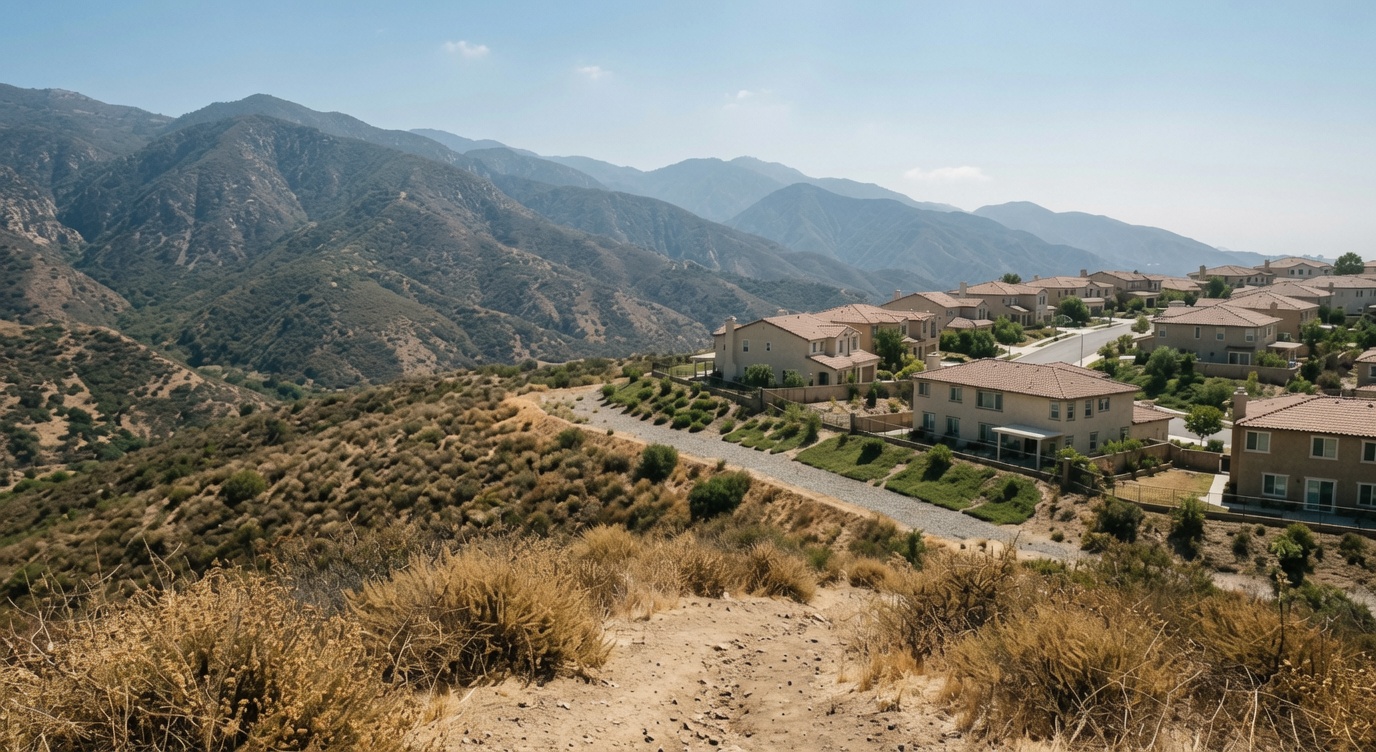
Much of Anaheim Hills sits inside a mapped fire hazard severity zone. CAL FIRE’s Office of the State Fire Marshal issued the new local maps in four phases during spring 2025. The last phase landed on March 24, 2025.
The City of Anaheim wrote the new fire hazard zones into its municipal code on June 17, 2025. Anaheim Municipal Code section 16.40.020 adopts that map outright, under Government Code section 51179(a). The city’s own hazard page puts the wildfire threat mainly in east Anaheim.
Zones come in three grades: Moderate, High, and Very High. However, CAL FIRE draws the grade parcel by parcel, not neighborhood by neighborhood. Two homes on one Anaheim Hills street can land in different zones. One can also fall outside a zone entirely.
So a neighbor’s answer is not your answer. For a given Anaheim Hills address, only the map settles it. Anyone weighing an address can look it up on the City of Anaheim’s fire hazard severity zone map. The city also shows the adopted maps in person at Anaheim West Tower.
Hazard is not the same thing as risk, and the gap matters in Anaheim Hills. The Office of the State Fire Marshal compares the maps to flood maps. They score physical conditions: fuel, slope, terrain, and typical fire weather. The window runs 30 to 50 years.
Crucially, the maps ignore what an owner has already done. Defensible space, a Class A roof, and ember-resistant vents will not move a parcel down a grade. Yet all three change how a house behaves in a fire.
One Anaheim rule reaches past the zone map. Chapter 16.08 of the municipal code labels a large slice of the city a Wildland-Urban Interface Fire Area. That is the belt where houses meet open wildland fuel.
The line runs east of the Costa Mesa Freeway (SR-55) and south of the Riverside Freeway (SR-91). So every Anaheim Hills address sits inside that interface area, whatever grade a single parcel draws.
Do Anaheim Hills fire hazard zones raise your home insurance?
Anaheim Hills fire hazard zones do not set insurance rates. The California Department of Insurance says so directly. A 2025 consumer alert from the Department is blunt about it. Insurers do not use CAL FIRE’s hazard maps to price policies or to decide who gets one.
Instead, the maps guide local planning. Insurance Commissioner Ricardo Lara has made the same point. Carriers have priced wildfire with their own models for years. Those models weigh far more than a zone grade.
The hazard itself is still real. So a carrier can still raise a premium or walk away at renewal. What it cannot do is blame the state map.
Because each insurer runs its own model, two companies can reach different answers on one Anaheim Hills house. Shopping the policy through a licensed broker is the practical move. A broker can also confirm what a given carrier credits.
California does require wildfire safety discounts. The Safer from Wildfires rule took effect in October 2022. It was the first program of its kind in the nation.
Credits track home hardening and community-level work. Rather than assume, owners should ask their own carrier what it recognizes. Check any figure with a licensed insurance professional first.
A separate shield kicks in after a declared wildfire disaster. California Insurance Code section 675.1 came from Senate Bill 824 in 2018. It bars an insurer from canceling or non-renewing a home policy over wildfire risk for one year.
The clock starts when the Governor declares a state of emergency. Coverage extends to any ZIP code inside or next to the fire perimeter. Notably, the shield protects owners who lost nothing at all. The Department of Insurance names the covered ZIP codes in a bulletin for each fire.
What do Anaheim Hills fire hazard zones actually require?
An Anaheim Hills fire hazard zone grade triggers three concrete duties. Owners keep defensible space. Builders meet interface standards. Sellers disclose the zone.
Each duty traces to a different statute, and none traces to an insurance company. The table below splits what the grade controls from what it does not.
| Requirement or effect | Who sets it | What applies in Anaheim Hills | Source |
|---|---|---|---|
| Zone grade (Moderate, High, Very High) | CAL FIRE, Office of the State Fire Marshal | Local Responsibility Area maps issued March 24, 2025; Anaheim adopted them by Ordinance No. 6612 on June 17, 2025 | Anaheim Municipal Code 16.40.020 |
| Defensible space of 100 feet | State law | Required for an occupied dwelling in a locally designated Very High zone, or out to the property line | Government Code 51182; Public Resources Code 4291 |
| Wildland-urban interface building standards | California Building Code | Applies to new buildings in a fire hazard severity zone or interface fire area | California Building Code Chapter 7A; California Fire Code Chapter 49 |
| Wildland-Urban Interface Fire Area | City of Anaheim | All of Anaheim east of SR-55 and south of SR-91, which covers Anaheim Hills | Anaheim Municipal Code Chapter 16.08 |
| Seller duties at sale | State law | Proof of defensible space compliance in a High or Very High zone, plus a fire hardening disclosure for homes built before 2020 | Civil Code 1102.19; Civil Code 1102.6f |
| Insurance rate and eligibility | The insurer’s own catastrophe model | Not set by the zone map; the Department of Insurance says insurers do not use the maps for rates or coverage decisions | California Department of Insurance |
What an Anaheim Hills fire hazard zone grade does and does not control, verified July 2026. Sources as listed; analysis by Michael Mellgren, REALTOR®.
Defensible space: 100 feet around the structure
Defensible space is the first duty. Government Code section 51182 covers an occupied dwelling in a locally designated Very High zone. The owner keeps 100 feet of defensible space around the structure. On a smaller lot, the duty stops at the property line.
Public Resources Code section 4291 sets the parallel rule on state land. In plain English, defensible space means managing fuel near the house. A fire burning under average weather should then struggle to ignite it.
Construction standards: Chapter 7A and Chapter 49
Construction standards are the second duty. Chapter 7A of the California Building Code governs new buildings in a fire hazard severity zone or interface area. It reaches roofing, attic vents, exterior walls, windows, doors, decking, and underfloor areas.
Chapter 49 of the California Fire Code carries the matching fuel rules. Anaheim adopts the Fire Code through Chapter 16.08, with local amendments.
Selling a home in an Anaheim Hills fire hazard zone
Disclosure is the third duty. Since July 1, 2021, Civil Code section 1102.19 has applied in a High or Very High zone. The seller hands the buyer proof that the property meets defensible space rules.
If that proof is not ready, both sides can agree in writing instead. The buyer then has a year to get it.
Civil Code section 1102.6f adds a fire hardening disclosure for homes built before 2020. Since July 1, 2025, that notice also carries the State Fire Marshal’s low-cost retrofit list. Sellers should confirm the current forms with their agent. Take any legal question to a qualified attorney.
What happens if no insurer will cover an Anaheim Hills home?
An Anaheim Hills owner turned down by the standard market can apply to the California FAIR Plan. The FAIR Plan is the state’s insurer of last resort. It is not a government agency.
Instead, it is an association of the insurers licensed to write basic property insurance here. It exists so owners shut out through no fault of their own still hold a fire policy. A licensed broker must search the standard market first.
Coverage is narrow by design. The FAIR Plan dwelling policy is a named peril policy. It pays only for the causes of loss it lists. Those are chiefly fire, lightning, internal explosion, and smoke.
It leaves out liability, theft, and water damage. So most policyholders add a Difference in Conditions policy from another carrier. Together the pair comes close to a standard homeowners policy.
Local articles often get the limits wrong, so here are the clean numbers. The Department of Insurance puts the FAIR Plan’s residential limit at $3 million per location. Commissioner Lara ordered that figure in November 2019, after two decades without a bump.
Meanwhile, the $20 million limit some articles cite is the commercial limit, not the residential one. Separately, hardening a property can earn up to 20 percent off the wildfire portion of a FAIR Plan premium.
What did the Canyon 2 Fire show about home hardening in Anaheim Hills?
The Canyon 2 Fire is the clearest local record of how Anaheim Hills homes behave in a wind-driven wildfire. It started in the City of Anaheim on the morning of October 9, 2017. Santa Ana winds drove it west through the Santa Ana Canyon.
Crews called it fully contained on October 17, 2017. The Orange County Fire Authority’s after-action report puts the burn at 9,217 acres. That made it the largest Orange County wildland fire in nearly a decade at the time.
Retellings garble the structure count, so here is the official version. Fire Authority damage inspection teams logged 80 structures damaged or destroyed. The fire destroyed 25 of them outright. Of those 25, only 14 were homes.
It damaged another 44 homes, one commercial building, and 21 outbuildings. Structure loss totaled $39,256,673. The report recorded no lives lost and no major injuries.
Yet the report’s own conclusion is the part worth carrying forward. The Fire Authority credits the prevention measures already in place. It names defensible space, non-combustible roofs, fuel modification zones, and ignition-resistant construction.
Those measures, it concludes, were the major factors in saving hundreds of homes that day. A zone map cannot capture any of that. After all, the map scores the landscape, not the house standing on it.
Zone rules sit alongside the ordinary market questions an Anaheim Hills buyer or seller weighs. For the closed-sales picture, see the Anaheim Hills housing market results for Q2 2026. The Anaheim Hills housing market results for June 2026 cover the shorter window. For the same hazard and insurance breakdown one city over, see wildfire hazard zones and home insurance in Yorba Linda.
Anaheim Hills fire hazard zones: frequently asked questions
How do you check whether an Anaheim Hills address is in a fire hazard severity zone?
Look the address up on the fire hazard severity zone map the City of Anaheim posts online. You can also view the adopted maps in person at Anaheim West Tower, 201 S. Anaheim Blvd. CAL FIRE draws the zones parcel by parcel, so a neighbor’s answer is not necessarily yours. Anaheim also staffs a Wildfire Mitigation Specialist who takes questions about a specific property.
Does a Very High fire hazard zone make an Anaheim Hills home uninsurable?
No, a Very High grade does not make an Anaheim Hills home uninsurable. The California Department of Insurance says insurers do not use the zone maps to decide coverage. Carriers apply their own wildfire models, so answers differ from company to company. Where the standard market declines, the California FAIR Plan plus a Difference in Conditions policy is the fallback.
What extra paperwork does a seller in an Anaheim Hills fire hazard zone owe a buyer?
In a High or Very High fire hazard severity zone, the seller owes the buyer proof of defensible space compliance. Civil Code section 1102.19 sets that duty. For a home built before 2020, Civil Code section 1102.6f adds a fire hardening disclosure. That notice lists features making a house vulnerable to embers, and it carries the State Fire Marshal’s low-cost retrofit list.
Which fire department serves Anaheim Hills?
Anaheim Fire & Rescue serves Anaheim Hills. Anaheim runs its own municipal fire department rather than contracting with the Orange County Fire Authority. During the Canyon 2 Fire in 2017, Anaheim Fire & Rescue shared incident command. Its partners were the Orange County Fire Authority, the Orange Fire Department, and CAL FIRE’s Riverside Unit.
Check an Anaheim Hills address before you commit to it
A fire hazard zone grade changes what an Anaheim Hills owner must maintain. It changes what a builder must use, and what a seller must disclose. So it belongs in the decision early, not during escrow.
Michael Mellgren, REALTOR®, works these North Orange County cities daily. He can pull a specific address’s zone grade and walk the duties that follow from it. He can also flag what an insurance broker will want to see.
Email Michael Mellgren about an Anaheim Hills fire hazard zone, or call or text (714) 420-6629. Consult a licensed insurance professional on coverage, and a qualified attorney on any legal question.
Escrow, Title, and Closing Costs in Orange County: What Buyers and Sellers Pay
Quick Answer
Closing costs in Orange County fall into three groups: charges the county fixes, charges the companies you hire quote you, and prorated items you owe for the days you held the property. Orange County’s transfer tax runs $0.55 per $500 of price. Escrow and title fees vary by company, so compare them.
Escrow, title, and closing-cost details verified as of July 15, 2026, against the Orange County Clerk-Recorder, the Orange County Treasurer-Tax Collector, the California Department of Insurance, the California Department of Real Estate, and the California codes cited below. Analysis by Michael Mellgren, REALTOR® (DRE #02321556).
What is escrow, and who holds the money?
Escrow is a neutral third party. It holds the money and the paperwork until both sides do what they promised. The California Department of Insurance calls it a closing service that lets a buyer and seller transact through a neutral party instead of directly with each other. In practice, the escrow holder takes in the buyer’s funds, prepares the deed, prorates taxes and interest, and confirms that contingencies clear. It then records the deed, orders the title policy, prepares the final accounting, and disburses the money.
Escrow is not a place you visit. Rather, it is an arrangement. The company running it is the escrow holder. In Orange County that role usually goes to an independent escrow company, a title company’s escrow division, or an escrow run by a real estate broker.
Who regulates your escrow holder?
The answer depends on which kind of escrow holder you hired, and it catches most people off guard. Independent escrow companies hold a license from the California Department of Financial Protection and Innovation. Their rules sit in the Escrow Law, which begins at Section 17000 of the Financial Code. However, Section 17006 exempts four groups from that licensing scheme. Those groups are banks and insurance companies, attorneys with a bona fide client relationship, title companies, and real estate brokers acting as an agent or a party in the deal. The industry calls the exempt ones controlled escrows.
That difference matters. According to the Department of Real Estate’s consumer escrow pamphlet, independent escrow agents face far stricter rules. Those rules include background checks, surety bonding, a five-year experience minimum at the main office, an annual audit by a licensed accountant, and membership in the Escrow Agents’ Fidelity Corporation. Controlled escrows instead answer to whichever agency licenses their parent. You do not have to guess which one you hired. Section 17403.4 of the Financial Code makes the escrow instructions name the license and the supervising agency, so the answer sits on your own paperwork.
What does title insurance actually cover?
Title insurance covers ownership problems that already existed before you bought. It does not cover damage that happens afterward. The California Department of Insurance guide to title insurance lists the classic defects it addresses: errors in public records, unknown liens, missing heirs, forgeries, undiscovered easements, and undiscovered wills. Homeowners insurance looks forward at fire and theft. By contrast, title insurance looks backward at the paper trail. You pay the premium once, at the close of escrow, and it never renews.
Owner’s policy versus lender’s policy
Two different policies protect two different people, and buyers mix them up constantly. The lender’s policy covers the loan amount and protects the lender’s security interest. It does not protect you, and the Department of Insurance says so flatly. Meanwhile, the owner’s policy covers the purchase price and protects the buyer. That protection lasts as long as the buyer or the buyer’s heirs hold an interest in the property. The previous owner’s policy does not carry over.
There are also two coverage levels. A standard policy covers defects that a search of the public record would turn up. An extended policy adds off-record risks such as boundary conflicts and encroachments. Because it reaches further, the insurer will usually want a survey first.
Rates differ by company, which is the part worth acting on. California law makes every title insurer, underwritten title company, and controlled escrow company file its rate schedule with the Insurance Commissioner. Loss experience differs by company, so the filed rates differ too. Whoever pays for the policy picks the company. Discounts also go unclaimed: a first-time buyer rate, a short-term rate when the property resold within the last five years, and a concurrent rate when one insurer writes both policies.
Who pays closing costs in Orange County?
Local custom splits the bill, and custom is not law. The Department of Insurance is explicit here. Local practice decides who pays the title premium, not statute. Southern California custom puts the owner’s title policy and the county transfer tax on the seller, and it splits the escrow fee between buyer and seller. The Department of Real Estate describes that same split in its escrow pamphlet. Still, every line is negotiable in the purchase agreement. Treat the table below as a starting point rather than a rule. Sellers weighing the whole picture can see where these costs land in the step-by-step guide to how to sell your home in Orange County.
| Cost item | Customarily paid by | How the amount is set | Source |
|---|---|---|---|
| Documentary transfer tax | Seller | Fixed by county ordinance at $0.55 per $500 of consideration, or fraction thereof | Orange County Clerk-Recorder |
| Owner’s title insurance policy | Seller | Filed rate, based on purchase price; varies by company | California Department of Insurance |
| Lender’s title insurance policy | Buyer | Filed rate, based on loan amount; concurrent-issue discount may apply | California Department of Insurance |
| Escrow fee | Split between buyer and seller | Not fixed by law and not regulated by the state; quoted by the escrow holder | California Department of Real Estate |
| Recording fees | Each party, for its own documents | Fixed by county fee schedule at $12.00 for the first page per title and $3.00 for each additional standard page | Orange County Clerk-Recorder |
| SB 2 Building Homes and Jobs Act fee | Usually neither, on a standard resale | $75 per title, capped at $225, but exempt where the transfer pays documentary transfer tax | Government Code Section 27388.1 |
| Property tax proration | Shared by day | Calculated from the current tax bill and the closing date, per the escrow instructions | Orange County Treasurer-Tax Collector |
| Loan payoff and reconveyance | Seller | Set by the existing lender’s written payoff demand | Existing lender |
| Supplemental property tax | Buyer, billed after closing | Billed separately on the difference between the prior assessed value and the purchase price | Orange County Treasurer-Tax Collector |
Who customarily pays which closing costs on an Orange County home sale, July 2026. Custom is negotiable and is not set by law. Sources: Orange County Clerk-Recorder, Orange County Treasurer-Tax Collector, California Department of Insurance, California Department of Real Estate; analysis by Michael Mellgren, REALTOR®.
How much are closing costs in Orange County on a $1.2 million home?
You can calculate some of these figures to the dollar today. The rest you have to ask for. Consider a hypothetical Orange County sale at $1,200,000 with a $960,000 loan.
The documentary transfer tax is fixed. Orange County charges $0.55 for each $500 of consideration, or fraction of $500, under County Ordinance No. 2183.
Transfer tax math on a $1,200,000 Orange County sale
$1,200,000 ÷ $500 = 2,400 units
2,400 × $0.55 = $1,320
The count rounds up on any fraction. At $1,200,300 it becomes 2,401 units, so the tax is $1,320.55.
No Orange County city adds a city transfer tax of its own. That is why an Orange County closing statement looks lighter here than one in parts of Los Angeles County.
Recording fees are fixed too. Effective January 1, 2026, the Orange County Clerk-Recorder charges $12.00 for the standard first page per title and $3.00 for each additional standard page. A $20.00 Survey Monument Preservation Fund fee applies to a grant deed whose legal description is something other than a complete lot and tract. Separately, a $20.00 fee applies when a change of ownership records without a Preliminary Change of Ownership Report.
The $75 SB 2 fee usually does not apply, and many published guides miss this. Government Code Section 27388.1 adds $75 per title, capped at $225 per transaction per parcel. However, subdivision (a)(2) carves out two big exemptions. The fee skips anything recorded in connection with a transfer that pays documentary transfer tax. It also skips anything recorded in connection with the transfer of a residential dwelling to an owner-occupier. A standard resale clears that first exemption, as long as the documents carry the exemption language on their face.
Escrow fees and title premiums are a different story. You have to get a quote. The Department of Real Estate says plainly that escrow fees are not fixed by law and not regulated by the state. They track the size and complexity of the file. Title premiums sit on file with the Insurance Commissioner and vary by company as well. Any figure published as the typical cost for either one is a guess. Ask two or three companies for a written schedule before you open escrow. Budgeting for these charges belongs earlier than most buyers think, and the guide to how to get ready to buy a home in Orange County covers where they fit.
When do the closing numbers become final?
Closing costs in Orange County are not final until the Closing Disclosure lands, and federal law hands you a three-day head start to read it. The Consumer Financial Protection Bureau makes the lender deliver a Loan Estimate within three business days of your application. The lender must also deliver the Closing Disclosure so that you receive it at least three business days before closing. That window exists for a reason. Compare the two documents line by line, then ask why anything moved.
Escrow prepares its own estimated closing statement as well. Ask for that estimate at the start of the transaction rather than closing week. The Department of Real Estate recommends exactly that.
What gets prorated at closing, and what does not?
Prorated items split by day, based on the tax bill that exists today. They do not use the bill you will get later. Orange County runs a July 1 to June 30 fiscal year. The first installment falls due November 1 and goes delinquent after December 10. The second falls due February 1 and goes delinquent after April 10.
Work a hypothetical. Escrow closes October 15. The current annual bill on the seller’s existing assessed value is $6,400, and the $3,200 first installment covers July 1 through December 31.
That installment spans 184 days, or about $17.39 per day. The seller owned the home for 107 of those days. So the seller credits the buyer roughly $1,861, and the buyer pays the full installment in November. The exact day-count convention sits in the escrow instructions, so confirm it there.
The supplemental tax bill nobody prorates
The supplemental bill is the real surprise, and escrow does not touch it. Orange County reassesses the home when ownership changes. It then bills separately for the gap between the prior owner’s assessed value and your purchase price, prorated from your closing date to the end of the fiscal year.
Do not count on it arriving quickly. The county’s own pages give different windows. One says the supplemental bill usually arrives three to six months after purchase. Another puts the Assessor’s reappraisal at roughly six to eight months. A third says the supplemental notice can take up to a year from the purchase date. Budget for the long end, because the bill is the same size whenever it lands.
Two more details catch people out. A purchase between January 1 and May 31 triggers two supplemental bills rather than one. Also, supplemental bills generally sit outside your impound account, and your lender does not get a copy.
Stay with the same hypothetical. Say the prior assessed value was $400,000 and you bought at $1,200,000. The reassessment captures $800,000 of new value. At the 1% base rate under Proposition 13, that runs about $8,000 a year, so the share from October 15 to June 30 comes to roughly $5,650. Expect the real figure to land higher. Orange County bills also carry direct levies and voter-approved debt on top of the 1% base. Special taxes such as Mello-Roos special taxes are parcel-specific and ride on the annual bill.
Why does closing happen the day after you sign?
Closing happens the day after signing because the money has to actually be there. California’s good funds rule, Section 12413.1 of the Insurance Code, blocks a title insurance company, controlled escrow company, or underwritten title company from paying out escrow funds before those funds are available. Cash and electronic payments, meaning wires, can go out the same business day they land. Deposits with next-day availability under federal Regulation CC have to wait until the business day after deposit. Personal checks wait longer still.
Signing and closing are therefore two different events. Signing happens in front of a notary. Closing happens when the loan funds, the deed records, and the money moves. The Department of Real Estate notes that recording typically falls on the business day after funding. Subdivision (j) of the same statute allows recording before funds arrive, but only when the parties consent in writing beforehand.
Wire instructions deserve a phone call
Never accept wiring instructions that arrive by email, and never trust a last-minute change to them. Criminals watch real estate email threads and send revised instructions that look authentic. Call the escrow officer at a phone number you found independently, not the number in the email. Read the account details back before you send anything. The Department of Real Estate makes a broader version of the same point. Question any unexpected or last-minute change to documents or to previously held agreements.
Frequently asked questions about closing costs in Orange County
Is owner’s title insurance required in California?
No law requires an owner’s title insurance policy in California. A lender will require its own policy as a condition of the loan. The California Department of Insurance is direct about the gap. The lender’s policy protects the lender, not the buyer, and the prior owner’s policy does not protect the buyer either. Only an owner’s policy protects the buyer’s ownership interest, and it lasts as long as the buyer or the buyer’s heirs hold an interest in the property.
Can a seller make me use a particular title company?
No. The California Department of Insurance points to the federal Real Estate Settlement Procedures Act of 1974, which bars a seller from making a buyer purchase title insurance from any particular company. Whoever pays for the policy chooses the company. Filed rates vary between companies, so comparing two or three quotes in Orange County is worth the phone calls.
How much is the transfer tax on an Orange County home?
Orange County charges a documentary transfer tax of $0.55 for each $500 of consideration, or fraction of $500, under County Ordinance No. 2183. That works out to about 0.11% of the price. On a $1,000,000 sale the tax is $1,100. No Orange County city imposes a city transfer tax on top of the county rate. By Southern California custom the seller pays it, although the purchase agreement controls.
Why did I get a property tax bill in the seller’s name after closing?
Orange County issues the annual tax bill to whoever owned the property on the January 1 lien date. A purchase after that date will show the prior owner’s name and assessed value until the following year. That bill is still valid and still your responsibility. Once the Assessor processes the supplemental roll, a supplemental bill or a refund follows. Meanwhile, the Treasurer-Tax Collector warns that failing to receive a bill does not waive penalties.
Working the numbers on your own Orange County closing
Escrow, title, and closing costs in Orange County decide how much cash you actually bring to the table or walk away with. Most of the surprises are avoidable if you ask earlier. Michael Mellgren, REALTOR®, works with buyers and sellers across North Orange County. He can walk through the estimated closing statement, the transfer tax math, and the supplemental tax exposure for any address you are weighing. Email Michael Mellgren about Orange County closing costs, or call or text (714) 420-6629. For advice on a personal tax and title situation, consult a qualified tax professional or attorney.
Inheriting a Home With a Reverse Mortgage: Options and Deadlines for Heirs

Quick Answer
Inheriting a home with a reverse mortgage starts a federal clock, not a probate one. The loan becomes due and payable when the last borrower dies. Once the servicer mails the due and payable notice, the estate gets 30 days. Pay, sell, or hand back the home. Nobody owes more than the house is worth.
Reverse mortgage rules verified as of July 15, 2026 against 24 CFR 206.125 (eCFR, current through July 9, 2026), HUD Mortgagee Letter 2017-11, further U.S. Department of Housing and Urban Development guidance, and the Consumer Financial Protection Bureau. Analysis by Michael Mellgren, REALTOR® (DRE #02321556). General information only, not legal, tax, or lending advice.
What happens to a reverse mortgage when the borrower dies?
The loan comes due. A reverse mortgage is not assumable, and no heir inherits the right to keep making no payments.
HUD states the trigger plainly. The balance comes due when the borrower sells the home, stops occupying it as a primary residence, or when the last surviving borrower dies. From then on, the loan disburses no further funds.
Two servicer deadlines run before the heirs’ clock even starts. Under 24 CFR 206.125, the servicer must notify HUD within 60 days that the loan is due and payable. The servicer then has 30 days to notify the estate and the heirs. That window runs from the HUD notice, or from HUD’s approval where approval is needed.
Only after that letter arrives do the heirs’ 30 days begin. The distinction matters, because months can pass between a death and a notice. The clock runs from the notice, not from the date of death.
Title is a separate track. The loan question and the ownership question move on different calendars. The guide to selling an inherited home in California covers the probate and trust side.
How long do heirs have to act?
Thirty days from the notice, with room to extend. The regulation gives the estate 30 days from the date of the due and payable notice. Three moves qualify: pay the balance in full, sell the property, or deliver a deed in lieu of foreclosure.
That number frightens people more than it should. The servicer’s own foreclosure deadline is the practical outer boundary. Under 24 CFR 206.125(d), the servicer must commence foreclosure within six months of the due date, unless HUD approves additional time.
HUD’s published guidance for heirs fills in the rest. The lender may approve 90-day extensions. What it wants is satisfactory documentation that the estate is actively trying to sell the property or repay the loan. Documentation is the price of time. A signed listing agreement, a probate filing, or a loan application is what buys it.
| Step | Who acts | Deadline | Authority |
|---|---|---|---|
| Servicer tells HUD the loan is due and payable | Servicer | Within 60 days of the loan becoming due and payable | 24 CFR 206.125(a)(1) |
| Servicer notifies the estate and the heirs | Servicer | Within 30 days of notifying HUD, or of HUD’s approval where needed | 24 CFR 206.125(a)(2) |
| Estate pays, sells, or delivers a deed in lieu | Estate or heirs | 30 days from the date of that notice | 24 CFR 206.125(a)(2) |
| Servicer orders an appraisal after a request | Servicer | Within 30 days of receiving the request | 24 CFR 206.125(b) |
| Deed in lieu recorded to be accepted | Estate or heirs | Within 9 months of the due date | 24 CFR 206.125(f)(1)(i) |
| Cash for Keys incentive available | Estate or heirs | Deed delivered within 6 months of the due date | 24 CFR 206.125(f)(1)(ii) |
| Servicer must commence foreclosure | Servicer | Within 6 months of the due date, unless HUD approves more time | 24 CFR 206.125(d)(1) |
Federal deadlines after an FHA-insured reverse mortgage becomes due and payable. Source: 24 CFR 206.125, current through July 9, 2026; summary by Michael Mellgren, REALTOR®.
One line in that table does the most damage when ignored. Property taxes and insurance stay the responsibility of the borrower’s estate until title transfers, according to HUD. A lapsed policy or an unpaid tax bill during a slow probate stacks a second problem on the first. Any special assessment rides along too, so a parcel-level check matters early. The Yorba Linda Mello-Roos explainer shows how specific those charges get.
What are the options when inheriting a home with a reverse mortgage?
Four, and they are not equally good.
Sell the home
Most estates sell. The regulation lets the party with legal right to dispose of the property sell it. Net proceeds go against the loan balance. Equity above the payoff belongs to the estate, exactly as with an ordinary mortgage.
A detail here catches even experienced agents. Closing costs on that sale carry a ceiling. They cannot exceed the greater of 11 percent of the sales price, or a fixed dollar amount HUD sets by notice. Price the deal against it.
The servicer also has to clear the lien. Where the loan is due and payable, the servicer must satisfy the mortgage of record to facilitate the sale. Two conditions attach: no junior liens, and all net proceeds go to the servicer. That is why a second lien can wreck an otherwise clean payoff. Once the loan question settles, the sale runs the ordinary sequence. The step-by-step guide to selling a home in Orange County walks that path.
Keep the home
Keeping it means paying the loan off, though not always at full price. Heirs pay the lesser of the full loan balance or 95 percent of the appraised value.
HUD Mortgagee Letter 2017-11 says so directly. It puts the estate and the heirs in the same sentence as the borrower, and it calls 95 percent of appraised value the amount the Commissioner will accept when any of them satisfies a due and payable HECM for less than the total balance. The Consumer Financial Protection Bureau states the rule the same way for heirs who want to keep the home.
Read HUD’s consumer factsheet on its own and this gets lost. That page says the balance must be paid in full to keep the home, without addressing an underwater loan. The same page also notes that any post-death transfer counts as a sale, which is what pulls an heir purchase back under the 95 percent floor. Where the two read differently, the Mortgagee Letter is the better guide.
Financing usually means a conventional refinance or cash. The next section works the number.
Hand the home back
A deed in lieu of foreclosure ends the matter. The servicer must accept one from the party with legal right to dispose of the property. Two conditions apply. It has to be filed for recording within nine months of the due date, and the servicer has to be able to obtain good and marketable title.
HUD may also pay a cash incentive where the deed lands within six months of the due date. The regulation calls it Cash for Keys. It is the one option that pays an estate something for moving quickly.
Let it go to foreclosure
Doing nothing works, in a narrow sense. The estate carries no liability beyond the property, so a foreclosure closes the file without personal exposure. What it costs is any equity, any incentive payment, and all control of the timeline.
Can heirs owe more than the home is worth?
No. That is the single most important fact here, and it is federal regulation rather than a servicer’s courtesy.
Where the loan is due and payable, the property may be sold at a floor price HUD sets by notice. That floor cannot exceed 95 percent of the appraised value. Net proceeds go against the balance, and FHA insurance absorbs the shortfall.
Work an example. A home appraises at $900,000 against a $1,050,000 balance. A sale at $855,000, which is 95 percent of appraised value, satisfies the loan. The $150,000 gap never becomes the family’s debt.
An heir can be that buyer. Nothing in the rule requires an outside purchaser. A daughter who wants the family home can take it at $855,000 on those same facts, finance it conventionally, and FHA insurance still absorbs the $150,000. Families rarely hear this option exists, and it is the difference between keeping a house and losing one.
The appraisal is not on the estate either. Where the loan is due and payable, the servicer pays for it, subject to reimbursement out of sale proceeds. Heirs can request one. The servicer must then order it within 30 days.
That protection is the reason inheriting a home with a reverse mortgage so rarely means inheriting a debt.
What if a surviving spouse still lives in the home?
A different rule may apply, and it turns on paperwork signed years earlier.
HUD created a deferral for an Eligible Non-Borrowing Spouse. Per the Consumer Financial Protection Bureau, that spouse has to clear four bars:
- Married to the borrower when the loan documents were signed, and still married at the death.
- Named as a non-borrowing spouse in those documents.
- Living in the home at closing, and living there still as a principal residence.
- Current on everything else the loan requires.
The deadline here is short and unforgiving. HUD’s guidance sets a hard one. The non-borrowing spouse must give the lender a Non-Borrowing Spouse Certification within 30 days of the last surviving borrower’s death, among other requirements.
If the spouse does not qualify, the ordinary timeline returns. Per the CFPB, a lender that decides to foreclose must begin within six months of the death. A non-borrowing spouse actively trying to sell may request a delay of up to 180 days.
Is it a HECM, or a proprietary reverse mortgage?
Check first, because everything above describes one specific product. All of it applies to a Home Equity Conversion Mortgage, the FHA-insured reverse mortgage that HUD administers.
A single number draws the line. For FHA case numbers assigned on or after January 1, 2026, HUD set the HECM maximum claim amount at $1,249,125, up from $1,209,750 in 2025.
That figure sits below much of North Orange County. An owner of a $2,000,000 property who wanted meaningful proceeds had reason to look at a proprietary reverse mortgage instead. Those loans are private and carry no FHA insurance. The 95 percent rule, the federal deadlines, and the protections described here all come from HUD’s program. A private loan follows whatever its own contract says.
Read the note before assuming any of it applies.
Frequently asked questions
How long do heirs have to sell a house with a reverse mortgage?
Thirty days from the date of the servicer’s due and payable notice, under 24 CFR 206.125. The lender may approve 90-day extensions when the estate documents an active effort to sell or repay. The practical outer limit is the servicer’s own duty to start foreclosure within six months of the due date, unless HUD approves more time.
Do heirs have to pay back a reverse mortgage?
Not personally. A HECM is non-recourse, so no heir owes the balance out of their own funds. The property secures the debt. Where the balance exceeds the home’s value and the loan is due and payable, a sale at 95 percent of the appraised value satisfies it. FHA insurance covers the difference.
Can you inherit a house with a reverse mortgage and keep it?
Yes, by paying off the lesser of the full loan balance or 95 percent of the appraised value. Per HUD Mortgagee Letter 2017-11 and the Consumer Financial Protection Bureau, that 95 percent figure reaches an heir keeping the home, not just a sale to an outside buyer. Financing usually means a conventional refinance or cash. Heirs who want the property should start that conversation the week the notice arrives, not the month before the deadline.
What happens if heirs do nothing after a reverse mortgage becomes due?
The servicer forecloses. Under 24 CFR 206.125(d), it must commence foreclosure within six months of the due date unless HUD grants more time. The estate faces no personal liability, but it forfeits any equity in the home, any Cash for Keys incentive, and any say in the timing.
Does probate pause the reverse mortgage clock?
No. Federal servicing deadlines run on their own schedule regardless of where a probate case sits. That mismatch is the trap. An estate can sit four months from a hearing date while the servicer sits two weeks from a foreclosure referral. Manage both calendars together from day one.
Talk through a specific property
Inheriting a home with a reverse mortgage puts a family on a federal timeline nobody chose. The first 30 days decide most of what follows. Michael Mellgren, REALTOR®, works with executors, successor trustees, and heirs across North Orange County. He can read the servicer’s notice against the calendar, pull a realistic value for the property, and show whether a sale clears the balance or lands on the 95 percent rule. Email Michael Mellgren about an inherited home with a reverse mortgage, or call or text (714) 420-6629. For the loan itself, contact the servicer directly, and consult a qualified attorney and a HUD-approved housing counselor on the deadlines that apply.
Selling an Inherited Home in California: What Heirs Need to Know
Quick Answer
Selling an inherited home in California starts with one question: how the title transfers. A successor trustee can list a home held in a living trust within weeks. A home held in the owner’s own name is a probate asset. Someone needs court authority to sign the deed. That single distinction drives the timeline, the cost, and the paperwork.
Probate, tax, court, and disclosure details verified as of July 14, 2026 against the California Probate Code, the California Civil Code, Judicial Council of California form DE-300, the Internal Revenue Service, the California State Board of Equalization, the Consumer Financial Protection Bureau, and the Superior Court of California, County of Orange. Analysis by Michael Mellgren, REALTOR® (DRE #02321556). General information only, not legal or tax advice.
Do you have to go through probate to sell an inherited home in California?
Not always. What matters is how the deceased owner held title, and not what the home is worth.
A home held in a properly funded living trust avoids probate entirely. The successor trustee draws authority from the trust document itself. Once a death certificate and a certification of trust are in hand, that trustee can sign a listing agreement.
By contrast, a home held in the owner’s own name is a probate asset. Before anyone can sell it, the court has to appoint a personal representative and issue Letters. Escrow and title will ask for that document, and there is no substitute for it.
Homes held in joint tenancy, or as community property with right of survivorship, pass to the surviving co-owner outside probate. That owner needs no court appointment to sell.
The transfer paths, side by side
Selling an inherited home in California does not always require a full probate. Several shorter routes exist, and each carries its own value limit. Those limits key off the date of death rather than today’s date. For deaths on or after April 1, 2025, the Judicial Council of California publishes those limits on form DE-300, the official maximum values for small estate procedures. The next scheduled adjustment is April 1, 2028.
| Transfer path | What it moves | Maximum value (death on or after April 1, 2025) | Court filing required |
|---|---|---|---|
| Successor trustee of a living trust | Any real property titled in the trust | No limit | No |
| Affidavit for collection of personal property (Probate Code sections 13100 to 13101) | Personal property only, never a house | $208,850 | No |
| Petition to determine succession to primary residence (Probate Code sections 13151 to 13154) | The decedent’s primary residence | $750,000 | Yes |
| Affidavit for succession to real property of small value (Probate Code section 13200) | All California real property in the estate | $69,625 | Yes |
| Full probate administration | Anything the shorter routes cannot reach | No limit | Yes |
California transfer paths for a deceased owner’s home, for deaths on or after April 1, 2025. Source: Judicial Council of California form DE-300 and the California Probate Code; summary by Michael Mellgren, REALTOR®.
Two details cause most of the confusion. First, the $208,850 affidavit reaches personal property only, so it cannot transfer a house. Real estate has its own separate procedures, and the $750,000 primary-residence route is a petition rather than an affidavit. It takes a court filing and a judge’s order. What it avoids is a full administration, which is the entire point of it. Second, the law counts gross value, before the mortgage. A $900,000 home carrying a $600,000 loan still counts as $900,000.
Can an executor sell an inherited home without a court hearing?
Often, yes. The answer turns on one line in the Letters. It tells you whether the personal representative holds full or limited authority under the Independent Administration of Estates Act.
That authority is granted, never assumed. Under Probate Code section 10450, the representative has to ask for it, either in the petition for appointment or in a separate petition. Section 10452 then directs the court to grant what was requested, unless an interested person objects and shows good cause. Show good cause for limited authority alone, and limited authority is what the court grants.
With full authority, the representative sets the price and terms. Next comes a Notice of Proposed Action, served on everyone with an interest. Those parties have 15 days to object. If nobody objects, the sale closes without a confirmation hearing, and the price floor described below never applies.
Limited authority works differently. The sale has to go back to the court for confirmation, and two statutory rules take over.
The first is a price floor. Probate Code section 10309 bars the court from confirming a private sale below 90 percent of the appraised value. That appraisal must be under a year old on the hearing date.
The second is the overbid. Under Probate Code section 10311, anyone can appear at the confirmation hearing and bid. The first overbid must beat the accepted offer by 10 percent of the first $10,000 plus 5 percent of the rest. On a $1,200,000 accepted offer, that puts the opening overbid at $1,260,500.
That rule cuts both ways. A buyer in a court-confirmed sale can pay for inspections, wait weeks, and still lose the house in the courtroom. Sellers should set that expectation in writing early.
After the authority question settles, pricing and timing follow ordinary market logic. The same analysis drives the read on the best time to sell a Yorba Linda home.
Where Orange County probate cases are heard
Orange County probate cases are heard at the Costa Mesa Justice Complex, 3390 Harbor Boulevard, Costa Mesa. The Superior Court of California, County of Orange runs decedent’s estates, wills, and trusts through its Probate and Mental Health unit there. Several published guides still send heirs to the Lamoreaux Justice Center in the city of Orange. The court’s own website, occourts.org, is the authority here, and its probate division page lists Costa Mesa.
What taxes do heirs pay when selling an inherited home in California?
Two taxes matter, and they pull in opposite directions.
Capital gains and the stepped-up basis
Heirs get a fresh cost basis. Under IRS rules, the basis of inherited property is generally the fair market value on the date of death. Decades of appreciation simply drop out for tax purposes.
An example makes it concrete. Suppose parents bought a home in 1985 for $150,000, and it was worth $1,300,000 the day the last of them died. The heir’s basis is $1,300,000, not $150,000. Sell a few months later at $1,320,000, and the taxable gain is about $20,000 before selling costs, rather than $1,170,000.
California adds a wrinkle for married couples. Because California is a community property state, the whole property generally takes a new basis when the first spouse dies. Not just that spouse’s half. Still, confirm the numbers with a CPA. Basis turns on titling, improvements, and prior use.
Property tax and Proposition 19
Proposition 19 rarely helps someone who is selling. That exclusion carries three conditions. First, the home must have been the parent’s primary residence. Second, the child must move in as their own primary residence within one year. Third, the child must file for the homeowners’ exemption within that same year. An heir who lists the home meets none of it.
So the practical effect is simple. A county reassessment to market value follows the transfer, and the estate then carries the higher bill for as long as the sale takes. The California State Board of Equalization sets the cap. For transfers between February 16, 2025 and February 15, 2027, it equals the parent’s factored base year value plus $1,044,586. Anything above that cap joins the new taxable value.
Local special taxes ride along too. A parcel inside a Mello-Roos district carries that charge until the sale closes. The Yorba Linda Mello-Roos special tax shows just how parcel-specific the charge can be.
Probate fees are charged on the gross value
The statutory fees are not a percentage of equity. Probate Code section 10800 sets the personal representative’s compensation on a graduated schedule. It runs 4 percent of the first $100,000, then 3 percent of the next $100,000, then 2 percent of the next $800,000, and 1 percent of the next $9 million. The attorney earns that same schedule under section 10810.
Run a $1,200,000 home through that math, and each side earns $25,000, or $50,000 combined. Section 10800 measures the estate without reference to encumbrances. So a $600,000 mortgage does not shrink the fee at all. That figure surprises heirs more than any other.
What does an heir have to disclose when selling?
Less than an ordinary seller, but never nothing. Civil Code section 1102.2 exempts two situations that come up here. The first is a sale ordered by a probate court in the administration of an estate. The second is a sale by a fiduciary in the course of administering a trust or a decedent’s estate. Those sellers skip the Transfer Disclosure Statement.
However, the exemption has a catch. It drops away when the trustee is a natural person, trustee of a revocable trust, who once owned the property or lived there within the past year. Picture an adult child who moved into the family home last year and now sells it as successor trustee. That seller is not exempt.
Meanwhile, an exempt seller still cannot conceal a known defect. The exemption removes a form, not the duty to be honest. The listing agent’s own inspection and disclosure duties also stay in place. A standard sale runs a fuller package, and the step-by-step guide to selling a home in Orange County walks through that version.
What if the inherited home has a reverse mortgage?
The clock is different, and it is short. According to the Consumer Financial Protection Bureau, a reverse mortgage becomes due and payable after the borrower’s death. The same holds after the death of any co-borrower or eligible non-borrowing spouse. Once the servicer sends a due and payable notice, heirs have 30 days to buy, sell, or turn the home over. That window can sometimes stretch to six months.
That schedule runs on its own track, independent of the probate calendar. Heirs in this position should call the loan servicer right away. A HUD-approved housing counselor is worth a call too. Servicer deadlines will not wait for the court. The full breakdown of those deadlines and the four options an estate actually has sits in the guide to inheriting a home with a reverse mortgage.
Frequently asked questions
Can you sell an inherited house in California before probate is finished?
Yes, in most cases. Most estates sell the home during administration rather than after it. A personal representative with full authority under the Independent Administration of Estates Act can list and close it. Two things must happen first: the court issues Letters, and a Notice of Proposed Action clears its 15-day window. A representative with limited authority can also sell, but the court must confirm that sale.
Do all heirs have to agree to sell an inherited home in California?
Not while the estate is in probate. The personal representative, and not the beneficiaries, holds the authority to sell, subject to a fiduciary duty to the estate. Any interested party can object to a Notice of Proposed Action within 15 days. That objection pushes the sale into a court-confirmed process. When heirs already hold title as co-owners, the analysis is different, so consult a qualified attorney.
How much is capital gains tax on an inherited home in California?
Usually far less than heirs expect. The basis resets to fair market value as of the date of death. Only appreciation after that date counts as gain. A home sold within months of death often shows a small gain, or even a loss after selling costs. Confirm the calculation with a CPA.
Does an inherited home in California get reassessed for property tax?
Generally yes, if the heir sells rather than occupies. The Proposition 19 parent-child exclusion requires the child to move in within one year. It also requires a homeowners’ exemption claim within one year. An heir who lists the home qualifies for neither.
Is a probate sale in Orange County always subject to overbidding?
No. Overbidding under Probate Code section 10311 happens at a court confirmation hearing. A sale under full authority with a cleared Notice of Proposed Action never reaches that hearing, so no overbid occurs.
Talk through a specific property
Selling an inherited home in California is a title question before it is a pricing question. The answer reshapes the whole calendar. Michael Mellgren, REALTOR®, works with executors, successor trustees, and heirs across North Orange County. He can read the Letters, identify the authority level, and lay out a realistic listing timeline for any address. Email Michael Mellgren about selling an inherited home, or call or text (714) 420-6629. For the probate, tax, and title specifics, consult a qualified attorney and a qualified tax professional.