Facebook
 X
X
 Pinterest
 Copy Link
Placentia Mello-Roos: The Three Special-Tax Districts and How to Check Your Address
Quick Answer
Placentia Mello-Roos comes from just three city-run special-tax districts. Because of that, most homes in Placentia pay no Mello-Roos at all. One district funds public-safety services. The other two maintain public streets, one in the transit-oriented downtown and one in Old Town. All three attach to specific newer parcels, not the whole city, and any address can be checked in minutes.
Placentia Mello-Roos details verified as of July 14, 2026, from the City of Placentia and the Orange County Treasurer-Tax Collector. Analysis by Michael Mellgren, REALTOR® (DRE #02321556).
What is Mello-Roos, and why do so few Placentia homes pay it?
A Mello-Roos tax is an extra annual charge on top of the regular 1% property tax. It pays for public services or improvements inside a defined district. California created these districts through the Mello-Roos Community Facilities Act of 1982, after Proposition 13 capped ordinary property taxes and left cities short of money for new development. The charge follows a fixed formula, not a home’s market value. So two similar houses can owe very different amounts, or nothing at all.
Placentia keeps this footprint small. The city administers only three community facilities districts, and all three are recent and tied to new development. As a result, most Placentia homes sit outside any Mello-Roos district and pay no special tax. That is especially true of homes built before the mid-2010s. In short, the special tax reaches a small, specific set of parcels rather than the whole city.
Which Placentia homes pay the Mello-Roos special tax?
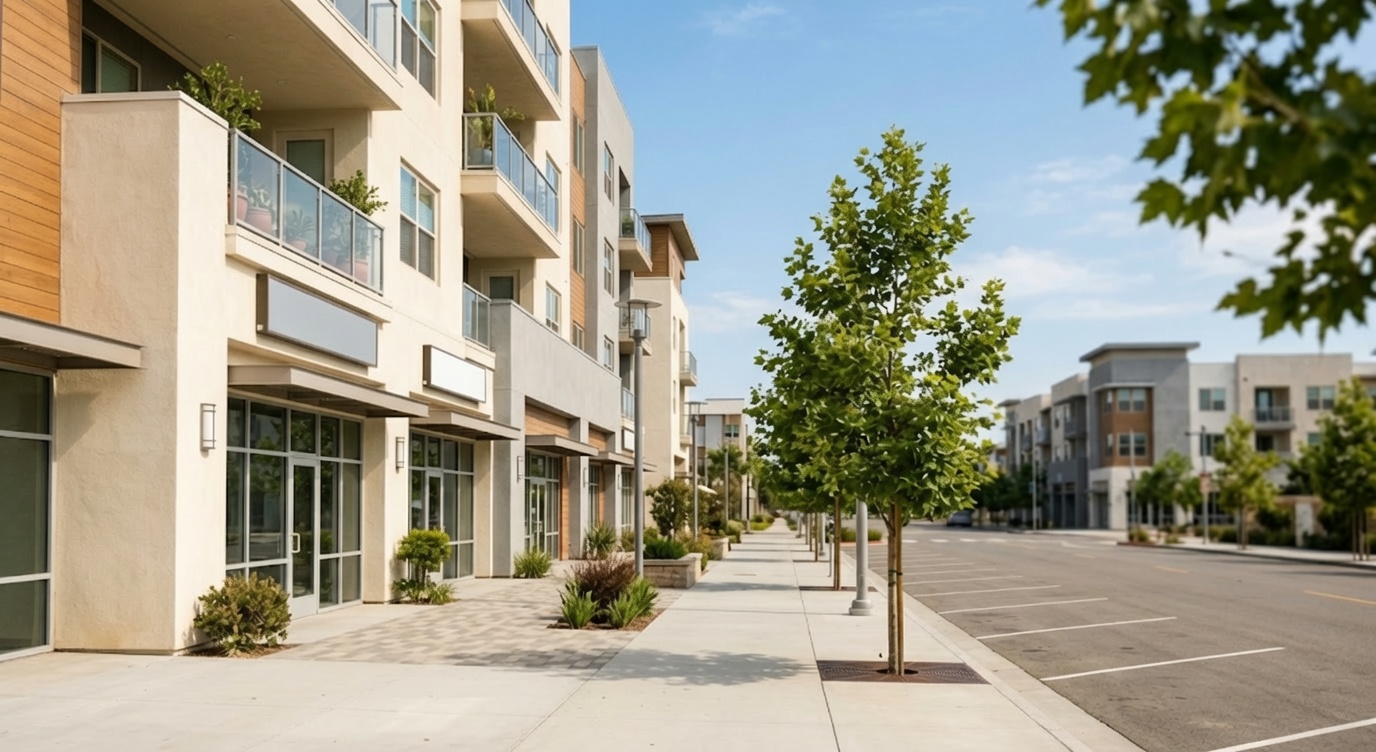
Only homes inside one of the city’s three community facilities districts pay the Placentia Mello-Roos special tax. The first, CFD 2014-01, funds public-safety services. Next, CFD 2018-01 maintains the public streetscape in the downtown transit district. A third district, CFD 2024-01, does the same for Old Town. Each district makes new development pay for its own added services, so they cover specific annexed parcels, not established neighborhoods.
| District | Year formed | What it funds | Who it applies to |
|---|---|---|---|
| CFD 2014-01 (Public Safety Services) | 2014 | Police, fire, ambulance, and paramedic services | Newer development parcels annexed into the district |
| CFD 2018-01 (Transit-Oriented Maintenance) | 2018 | Upkeep and repair of public streetscape in the downtown transit district | New projects that annex into the transit district |
| CFD 2024-01 (Old Town Maintenance) | 2024 | Upkeep and repair of the public streetscape in Old Town | New Old Town projects that annex into the district |
Placentia’s three Mello-Roos community facilities districts, verified July 2026. Source: City of Placentia; analysis by Michael Mellgren, REALTOR®.
The City of Placentia formed CFD 2014-01 in February 2014 by a vote of the affected landowners. It began collecting its special tax in the 2014 to 2015 fiscal year, and it pays for police, fire, and paramedic services tied to new growth. CFD 2018-01 followed in 2018, inside the city’s Transit-Oriented District, to fund ongoing upkeep of the streets and public spaces built there. CFD 2024-01 came next in 2024 and does the same job for Old Town Placentia. New projects in the transit district and in Old Town must join their district as a condition of approval. So these districts keep adding parcels, and the safest move is to check a home’s current tax bill rather than assume.
What about landscape and streetlight assessments?
Placentia also bills two assessments that people often mistake for Mello-Roos. They are not. LMD 1992-1 is a landscape maintenance district, and SLD 81-1 is a streetlight maintenance district. Both come from a separate 1972 state law. They pay for local landscaping, sidewalks, street lights, and traffic signals, and they show up as their own line items on the county tax bill. When you check a Placentia property, read each line on its own, because a landscape or lighting assessment is not a Mello-Roos special tax.
How to check whether a Placentia address pays Mello-Roos
Any Placentia address can be checked against county records in a few minutes. The County of Orange bills special taxes and prints them as separate line items on the annual property tax bill. So the bill itself is the clearest record. The steps below confirm what a specific parcel owes.
- Pull the property tax bill or parcel record at the Orange County Treasurer-Tax Collector’s site (taxbill.octreasurer.gov), using the address or the assessor’s parcel number.
- Open the parcel on the county tax map (taxmap.octreasurer.gov). It flags any Mello-Roos or PACE assessment tied to that parcel.
- Read the special-assessment section line by line. Separate a Mello-Roos community facilities district from a landscape or streetlight assessment.
- For a purchase, ask for the seller’s Notice of Special Tax. California requires that disclosure when a home sits inside a Mello-Roos district.
A tax bill shows the amount charged in a given year, which can sit below the district’s maximum rate. Treat it as a starting point, and confirm the current figure with the county or the city before you rely on it. Because the city keeps adding parcels, the live county tax bill is a safer guide than any older summary. For background on these districts, see the City of Placentia’s special assessment districts page.
Frequently asked questions about Placentia Mello-Roos
Do most homes in Placentia have Mello-Roos?
No. Most homes in Placentia carry no Mello-Roos special tax. The city runs only three community facilities districts, and all three are tied to newer development. Homes outside those districts pay only the regular property tax, plus any landscape or streetlight assessment that applies.
How long does a Placentia Mello-Roos tax last?
Placentia’s three districts fund ongoing services: public safety in one, and streetscape upkeep in the transit district and Old Town. Their special taxes can continue for as long as the city provides those services. That differs from a district set up only to repay a construction bond, which ends once the bond is paid off. For a specific parcel, confirm the terms with the City of Placentia or the county.
Is Mello-Roos the same as an HOA fee or a landscape assessment?
No. A Mello-Roos special tax appears on the county property tax bill and funds public services or infrastructure. An HOA fee is a private charge from a homeowners association. A landscape or streetlight assessment comes from a separate 1972 state law. A Placentia home can carry one, none, or a mix of these, so check each on its own.
Can I find out about Mello-Roos before making an offer?
Yes. Before you make an offer on a Placentia home, review the property tax bill’s line items, check the parcel on the county tax map, and request the seller’s special-tax disclosure. Together these confirm whether the home sits in one of the city’s Mello-Roos districts and what it currently pays.
Weigh the special tax before you make an offer
A home’s Mello-Roos status changes its true monthly cost. So it belongs in the math before any offer in Placentia. Michael Mellgren, REALTOR®, reads the special-assessment line items on a property’s tax bill. He can walk the full carrying cost for any Placentia address under consideration. Email Michael Mellgren about Placentia Mello-Roos, or call or text (714) 420-6629. For advice on a personal tax situation, consult a qualified tax professional.
Related reading: the Placentia housing market for June 2026, Placentia’s second-quarter 2026 results, and how Mello-Roos works in Yorba Linda.
Best Time to Sell a Home in Orange: Now or Wait Until Fall?
Quick Answer
The best time to sell a home in Orange is now, not fall, based on 2026 closings through early July. Across 436 sales, Orange sellers averaged 99.3% of their original list price in about 31 days. The market stayed firmly seller-leaning through the first half of the year. Waiting for fall bets on an improvement the current data does not show.
Closed-sales figures cover January through early July 2026; live market conditions are current as of July 13, 2026. Based on CRMLS data via Pacific West Association of Realtors; analysis by Michael Mellgren, REALTOR® (DRE #02321556).
Is now the best time to sell a home in Orange?
Yes, mid-2026 is a strong window to sell a home in Orange. Across 436 closed sales from January through early July 2026, sellers averaged 99.3% of their original list price. That figure, the sale-to-list ratio, compares the final sale to the very first asking price, cuts included. Homes took about 31 days to sell.
Today the market holds an Expected Market Time of 77 days, a Moderate Seller’s Market. Expected Market Time estimates how long every current listing would take to sell at the present pace. In short, sellers who price accurately still find buyers within roughly a month.
What have homes in Orange sold for in 2026?
Orange homes sold for a median of $1,220,000 across the first half of 2026. That is up 8.7% from the same period a year earlier. The figure covers 436 closed sales through early July 2026, worth $542.5 million in total volume. It compares this year to date against the same 2025 window, so it reflects a real same-period move. Even so, one comparison is a single reading, not a lasting trend.
The table below breaks Orange sales into price bands for 2026 year to date. The $1M to $1.5M band led with 206 sales, and it moved fastest at about 28 days. A fuller quarter breakdown appears in the Orange housing market results for the second quarter of 2026.
| Price band | Sales | Volume | Avg. price | Avg. days on market | Avg. sale-to-list |
|---|---|---|---|---|---|
| Under $750K | 71 | $42,573,210 | $599,623 | 36 | 99.1% |
| $750K–$1M | 63 | $55,629,900 | $883,014 | 31 | 99.8% |
| $1M–$1.5M | 206 | $256,931,457 | $1,247,240 | 28 | 99.8% |
| $1.5M–$2M | 70 | $118,145,312 | $1,687,790 | 32 | 98.5% |
| $2M+ | 26 | $69,261,005 | $2,663,885 | 37 | 97.4% |
Orange home sales by price band, 2026 year-to-date through early July. Source: CRMLS via Pacific West Association of Realtors; analysis by Michael Mellgren, REALTOR®.
How long does it take to sell a home in Orange?
Homes in Orange took about 31 days to sell on average in 2026 year to date. Speed varied by price band. The $1M to $1.5M band moved quickest at roughly 28 days. The $2M-plus tier took longest, near 37 days, on just 26 sales.
Live demand points the same way. Expected Market Time sits at 77 days, and 29.1% of listings are already in escrow. That share under contract signals steady buyer demand. Month-by-month detail appears in the Orange June 2026 market results.
Should you sell now or wait until fall in Orange?
The 2026 data cannot pit fall against summer in Orange, because fall has not happened yet. Only 33 sales have closed so far in the third quarter, and the fourth quarter sits at zero. So there is no autumn cohort to compare.
What the record does show is momentum within the year. First-quarter sellers averaged 99.0% of original list, and that firmed to 100.0% in the second quarter. Early third-quarter numbers look softer at 97.3%, but that thin sample of 33 sales is a partial snapshot, not a trend. Meanwhile, asking and escrow prices are nearly aligned right now, within about 1% across matched price segments. Because a stronger fall is unproven and today’s conditions are solid, listing now rests on confirmed strength.
What today’s Orange market means for sellers and buyers
For sellers in Orange, mid-2026 rewards accurate pricing over ambitious pricing. Asking and escrow prices are aligned, and 101 of 151 active listings hold within 1% of their original price. Homes priced to the market are clearing near ask in about a month. Stretching the price is the main thing that slows a sale.
For buyers, Orange offers room to negotiate at the edges without a frenzy. As of July 13, 2026, 15 of 151 active listings had trimmed their price by 5% or more. With Expected Market Time at 77 days, buyers get more breathing room than in a deep seller’s market. Buyers getting started can review how to get ready to buy a home in Orange County.
Orange home-selling FAQ
Is now the best time to sell a home in Orange?
Now is a favorable time to sell a home in Orange. Across 2026 year to date through early July, sellers averaged 99.3% of original list in about 31 days. The market held an Expected Market Time of 77 days.
Are home prices rising or falling in Orange?
Orange home prices are up year over year in 2026. The median sale price reached $1,220,000 through early July, about 8.7% above the same period in 2025. A single same-period comparison is a reading, not a long-run trend.
How long does it take to sell a home in Orange?
Homes in Orange took about 31 days to sell on average in 2026 year to date through early July. Demand stayed steady in mid-July 2026, with Expected Market Time at 77 days and 29.1% of listings in escrow.
Is now a good time to buy in Orange?
Buyers in Orange have modest negotiating room in mid-2026, without a bidding frenzy. As of July 13, 2026, 15 of 151 active listings had cut their price by 5% or more. Asking and escrow prices sat within about 1% of each other.
Get a specific read on your Orange home
The best time to sell a home in Orange depends on your timeline and your pricing. Michael Mellgren, REALTOR®, tracks every closed sale in Orange from the raw MLS data. He can pull the current pricing, days-on-market, and negotiation picture for any Orange address you are weighing. Email Michael Mellgren about selling an Orange home, or call or text (714) 420-6629. For capital-gains questions tied to a sale, consult a qualified tax professional.
How to Sell Your Home in Orange County: A Step-by-Step Guide
Quick Answer
To sell your home in Orange County, follow eight steps: set your timeline, choose a listing agent, price from recent comparable sales, prepare the home, understand your selling costs, market it widely, review and negotiate offers, then close. Pricing to recent closings is the lever that moves a home fastest.
Home-selling steps reviewed and current as of July 2026. Guide by Michael Mellgren, REALTOR® (DRE #02321556).
How to sell your home in Orange County: the 8 steps
Selling a home in Orange County follows the same path whether the property sits in Yorba Linda, Fullerton, Orange, or a neighboring city. These eight steps run in order, and each one sets up the next. The table gives the short version, and the sections that follow explain every step in plain English.
| Step | What to do | Why it matters |
|---|---|---|
| 1. Set your timeline | Decide when and why you are selling | A clear goal shapes pricing and every step after |
| 2. Choose an agent | Pick one who works your area and prices from recent sales | The right agent guides pricing, marketing, negotiation |
| 3. Price from comps | Set the price against homes that recently closed nearby | An accurate price draws offers; a high one stalls |
| 4. Prepare the home | Declutter, clean, handle repairs, lift curb appeal | Presentation shapes interest and offer strength |
| 5. Know your costs | Add up commission, closing costs, possible taxes | Knowing your net proceeds prevents surprises |
| 6. Market and show | List on the MLS with strong photos, hold showings | Wide exposure brings more qualified buyers |
| 7. Review offers | Weigh price, terms, and contingencies together | The strongest offer balances price with certainty |
| 8. Close the sale | Complete disclosures, inspection, appraisal, escrow | Clean paperwork and deadlines keep the deal on track |
The home-selling steps at a glance, Orange County and surrounding areas. Guide by Michael Mellgren, REALTOR®.
When is the right time to sell your home?
The right time to sell is when your asking price matches what comparable homes are actually closing for. Season matters less than pricing. Orange County sees steady buyer demand across the year, so a well-priced home can draw strong offers in almost any month. For a data-backed example, this read on the best time to sell a Yorba Linda home makes the case. Current, measurable conditions beat a guess about a future season. Start by deciding your own timeline, because a firm move-out date shapes every decision that follows.
Should you sell before you buy your next home?
Selling first gives you a firm budget and a stronger position on your next purchase. You know exactly what your home netted. Buying first lets you move once, though it can mean carrying two mortgages for a stretch. Neither path is right for everyone. A local agent and a lender can map the trade-offs against your finances and timeline.
How do you choose an agent to sell your home?
Choose a listing agent who works your target area every week and prices from recent closings, not from hopeful asking prices. A strong agent runs a comparative market analysis, recommends which repairs pay off, markets the home widely, and negotiates on your behalf. Ask any agent to walk through recent comparable sales and explain how they would price your specific home. The clearest signal is how well an agent reads today’s market. Weigh the substance of those answers over the size of a promise.
How do you price your home to sell?
Price your home against the homes that recently sold near it, because buyers and appraisers both judge value from those closings. An accurate list price draws early attention and competing offers, while an inflated one leaves a home sitting. In fact, a Yorba Linda look at days on market and pricing strategy settled this. Overpricing, not holding firm, is what stalls a listing. Set the number where recent comparable sales landed, and the market tends to respond. Reach well past them, and the home lingers while newer listings pass it by.
What happens if you overprice your home?
An overpriced home usually sits, then sells for less than a well-priced one would have. Early days on the market draw the most buyer interest, so a listing that opens too high wastes that window. Later price cuts can also signal trouble to buyers, who then negotiate harder. Pricing close to recent closings from the start protects both the timeline and the final number.
How do you prepare your home for sale?
Preparing a home for sale means cleaning, decluttering, handling obvious repairs, and lifting curb appeal before the first showing. Buyers form an impression within seconds, so a tidy, well-kept home tends to draw stronger offers. Focus on the fixes that photograph well and the ones an inspector will flag anyway. A fresh, neutral, clutter-free space lets buyers picture themselves in the home. That is often what turns a showing into an offer.
What does it cost to sell a home in Orange County?
Selling costs in Orange County usually run several percent of the sale price, before any mortgage payoff. The largest pieces are the real estate commission and closing costs such as escrow and title fees, transfer taxes, and prorated property taxes. Some sellers also credit the buyer for repairs after inspection. Subtracting these costs, and then the remaining loan balance, gives the net proceeds, which is the number that actually matters. Because these figures vary by property and contract, a specific estimate for one address is worth requesting early.
Do you pay taxes when you sell your home?
Many home sellers owe no federal tax on the sale of a primary residence, thanks to a capital-gains exclusion. Under the IRS rules on selling your home, a qualifying single filer can exclude up to $250,000 of gain. A married couple filing jointly can exclude up to $500,000. Eligibility depends on ownership and use tests, so the exclusion does not fit every situation. A tax professional can confirm whether it applies and what any sale would owe.
How do you market and show your home?
Marketing a home starts with professional photos and a listing on the MLS, which feeds the major search portals buyers use. From there, showings, open houses, and online exposure put the home in front of as many qualified buyers as possible. Wider exposure tends to bring more offers, and more offers give a seller room to negotiate. Keep the home showing-ready during this stretch, since the strongest interest usually lands in the first week or two.
How do you review and compare offers?
Review offers on more than price, because the terms often decide which one actually closes. A clean offer from a fully pre-approved buyer, with a solid deposit and reasonable contingencies, can beat a higher bid that carries more risk. Buyers who have taken the steps to get ready to buy a home tend to write those stronger offers. Weigh the price against the financing, the contingencies, the deposit, and the proposed timeline, then counter where it helps. A knowledgeable agent can compare offers side by side and flag the risks in each.
What happens during escrow and closing?
Once an offer is accepted, the sale moves into escrow, where a neutral third party holds funds and documents until every condition is met. During this stretch the buyer typically completes inspections and an appraisal. California also requires the seller to provide written disclosures about the property’s known condition. The escrow company coordinates the loan, title, and signing, and the sale records once funds are in place. Staying responsive on paperwork and deadlines keeps the closing on track. For the legal and tax details of a specific sale, a real estate attorney or tax professional is the right resource.
Frequently asked questions about selling your home
How long does it take to sell a home in Orange County?
It depends on price and condition. A well-priced, move-in-ready home in a steady market can go under contract within a few weeks. An overpriced or dated one can sit much longer. Local market conditions and the home’s price band both shape the timeline.
Do you need to make repairs before selling?
Not always, though targeted repairs often pay off. Fixing obvious issues and the items an inspector will flag can protect the price and prevent renegotiation later. Major renovations rarely return their full cost, so focus on clean, safe, and well-presented over extensive remodeling.
Should you sell your home before buying another?
It depends on your finances and risk tolerance. Selling first locks in your proceeds and strengthens your next offer. Buying first spares a second move, though it may mean carrying two payments. A lender and an agent can map which order fits your situation.
What is the first step to selling your home?
Setting your timeline and pricing goal is the first step, because both shape every decision that follows. From there, choosing a listing agent and pricing the home against recent closings come next.
Sell your home in Orange County with local guidance
Getting each step right, from the list price to the closing table, is what makes a home sale go smoothly. Michael Mellgren, REALTOR®, works across Orange County and the surrounding areas. He can price a specific address against comparable sales, recommend the prep that pays off, and guide a sale through offers and escrow. Email Michael Mellgren about selling a home in Orange County, or call or text (714) 420-6629. For the tax and legal specifics of a sale, consult a licensed tax professional or real estate attorney.
How to Get Ready to Buy a Home: A Step-by-Step Guide for Orange County Buyers
Quick Answer
Learning how to get ready to buy a home comes down to eight steps: check your credit, set a realistic budget, save for the down payment and closing costs, get pre-approved for a mortgage, gather your paperwork, understand the full cost of ownership, choose an agent, and start your search. Preparation turns a stressful purchase into a smooth one.
Home-buying steps reviewed and current as of July 2026. Guide by Michael Mellgren, REALTOR® (DRE #02321556).
How to get ready to buy a home in Orange County: the 8 steps
Getting ready to buy a home in Orange County follows the same path whether the search runs through Fullerton, Yorba Linda, Anaheim Hills, or a neighboring city. The eight steps below move in order, and each one builds on the last. The table gives the quick version, and the sections that follow explain every step in plain English.
| Step | What to do | Why it matters |
|---|---|---|
| 1. Check your credit | Pull all three reports, fix errors, pay on time | A higher score can lower your mortgage rate and payment |
| 2. Set your budget | Work out an affordable monthly payment first | Knowing your ceiling keeps the search focused |
| 3. Save the cash | Build both the down payment and closing costs | Both come due at purchase, not just the down payment |
| 4. Get pre-approved | Ask a lender for a full pre-approval letter | It shows sellers the offer is backed by financing |
| 5. Gather documents | Collect pay stubs, tax returns, and statements | Ready paperwork speeds up loan approval |
| 6. Know the full cost | Add taxes, insurance, HOA dues, special taxes | The real monthly cost runs beyond the mortgage |
| 7. Choose an agent | Pick one who works your target area weekly | Local guidance shapes pricing, offers, negotiation |
| 8. Start the search | Tour homes and write offers | With prep done, shopping and offers move quickly |
The home-buying readiness steps at a glance, Orange County and surrounding areas. Guide by Michael Mellgren, REALTOR®.
How do you check your credit before buying a home?
Checking your credit is the first move, because your score shapes the mortgage rate a lender offers. Pull your reports from all three bureaus, review them for errors, and dispute anything wrong. Paying down balances and making every payment on time can lift a score over a few months. Since even a small rate difference adds up across a 30-year loan, this early step often saves the most money.
What credit score do you need to buy a home?
Requirements vary by loan type, so no single cutoff applies. Conventional loans generally reward higher scores with better rates, while some government-backed programs accept lower ones. A licensed lender can tell you where you stand and what each program requires.
How much money do you need to buy a home?
Start with what you can afford each month, then work backward to a price range. Many lenders suggest keeping your total monthly home payment at or below about 28% of your gross monthly income. The Consumer Financial Protection Bureau’s home-buying guide reflects that same rule of thumb. That payment covers principal, interest, taxes, and insurance, not just the loan itself. Running the numbers early prevents falling for a home that stretches the budget too thin.
How much should you save for a down payment and closing costs?
Plan for two separate piles of cash: the down payment and the closing costs. Down payments range widely, from as little as 3% to 5% on some loan programs up to 20% or more. Putting down 20% typically removes the added cost of mortgage insurance. Closing costs usually add another few percent of the purchase price on top. Because both come due at once, saving for them together avoids a last-minute scramble.
What is mortgage pre-approval, and why does it matter?
Pre-approval is a lender’s written estimate of how much it will lend you, based on a real review of your income, debts, and credit. It matters for two reasons. First, it sets a firm price ceiling before you shop. Second, it tells sellers the offer is backed by financing, which carries real weight in a competitive market. A pre-approval is stronger than a quick pre-qualification, so ask the lender for the full version.
What documents do you need to buy a home?
Gathering paperwork ahead of time keeps the loan moving after an offer is accepted. Most lenders ask for recent pay stubs, two years of tax returns and W-2s, recent bank and investment statements, and a photo ID. Self-employed buyers usually need profit-and-loss records as well. Having these ready in one folder can shave days off the approval timeline.
What is the full cost of owning a home?
The monthly cost of ownership runs well beyond the mortgage payment. Property taxes, homeowners insurance, and any homeowners association dues all add to the total. Some Orange County neighborhoods also carry a Mello-Roos special tax that funds local infrastructure. Utilities, maintenance, and repairs round out the real budget. Because these costs vary by property, checking them for a specific address before making an offer avoids surprises after closing. For property-tax specifics, a tax professional or the county tax collector can confirm the exact figures.
How do you choose a real estate agent?
Pick an agent who knows the local market and works your target area every week. A strong agent prices offers against recent closings, spots red flags in a listing, and negotiates on your behalf. In tight markets, that guidance is how buyers can compete without overpaying. Ask an agent to walk you through recent comparable sales, to explain how they would price an offer on a specific home, and to describe the support and resources behind them. The clearest signal is how well an agent reads today’s market, so weigh the substance of those answers.
When are you ready to start your home search?
You are ready to shop once your credit is in order, your budget is set, your cash is saved, and your pre-approval is in hand. Checking current conditions in the target city, such as recent Fullerton housing market results, also sharpens an offer. At that point, touring homes and writing offers moves quickly, because the groundwork is already done. Buyers who skip the prep often lose time, or lose out to better-prepared competition. Knowing how to get ready to buy a home puts a serious offer on the table the moment the right listing appears.
Frequently asked questions about getting ready to buy a home
How long does it take to get ready to buy a home?
It depends on your starting point. A buyer with strong credit and savings can be ready within a few weeks, while someone repairing credit or building a down payment may need several months. Starting early gives the most flexibility.
Do you need 20% down to buy a home?
No. Some loan programs allow down payments as low as 3% to 5%. Putting down 20% avoids mortgage insurance and lowers the monthly payment, but no rule requires it. A lender can lay out the trade-offs for each option.
Should you get pre-approved before or after finding a home?
Before. Pre-approval sets your budget and strengthens your offer, so it belongs at the start of the process, not after you have found a home you love.
What is the first step to buying a home?
Checking your credit is the first step, because your score drives the mortgage rate you qualify for. From there, setting a budget and saving for cash up front come next.
Get ready to buy with local guidance
Getting the preparation right makes an Orange County home purchase go smoothly, from the first credit check to the closing table. Michael Mellgren, REALTOR®, works across Orange County and the surrounding areas and can guide buyers through every step, from setting a realistic budget to weighing offers on a specific address. Email Michael Mellgren about getting ready to buy a home, or call or text (714) 420-6629. For mortgage specifics, consult a licensed lender, and for property-tax questions, a qualified tax professional.
Where Is Yorba Linda Placing the State-Required High-Density Rezoning Units?
Quick Answer
Yorba Linda’s high-density rezoning puts the tallest, densest housing in the Savi Ranch area, in the city’s southeast corner. There, zoning now allows up to 60 units per acre and five stories. The plan spreads the rest across 18 named sites citywide. Together they cover less than 2% of the city’s land. The city rezones for capacity, but it does not build the homes.
Rezoning and Housing Element details verified as of July 10, 2026. Sources include the City of Yorba Linda, the Orange County Registrar of Voters, and the California Department of Housing and Community Development. Analysis by Michael Mellgren, REALTOR® (DRE #02321556).
Why does Yorba Linda have to rezone for high-density housing?
The rezoning exists because state law requires it. Under California’s Regional Housing Needs Assessment, or RHNA, the state assigns each city a housing target. Yorba Linda’s target is 2,415 new homes for the 2021 to 2029 cycle. The Southern California Association of Governments passed that number down to the city.
The city does not build any of these homes. Its only duty is to zone for that capacity. Whether owners and developers pursue it is up to them. So the market, not the city, decides what actually gets built.
A city that fails to adopt a compliant plan faces real risks. Those include the loss of local land-use control and state fines. A non-compliant city can also face the Builder’s Remedy. That state rule lets certain high-density projects skip local zoning. To keep control, Yorba Linda adopted a Housing Element and the rezoning that carries it out.
Where is Yorba Linda placing the high-density rezoning units?
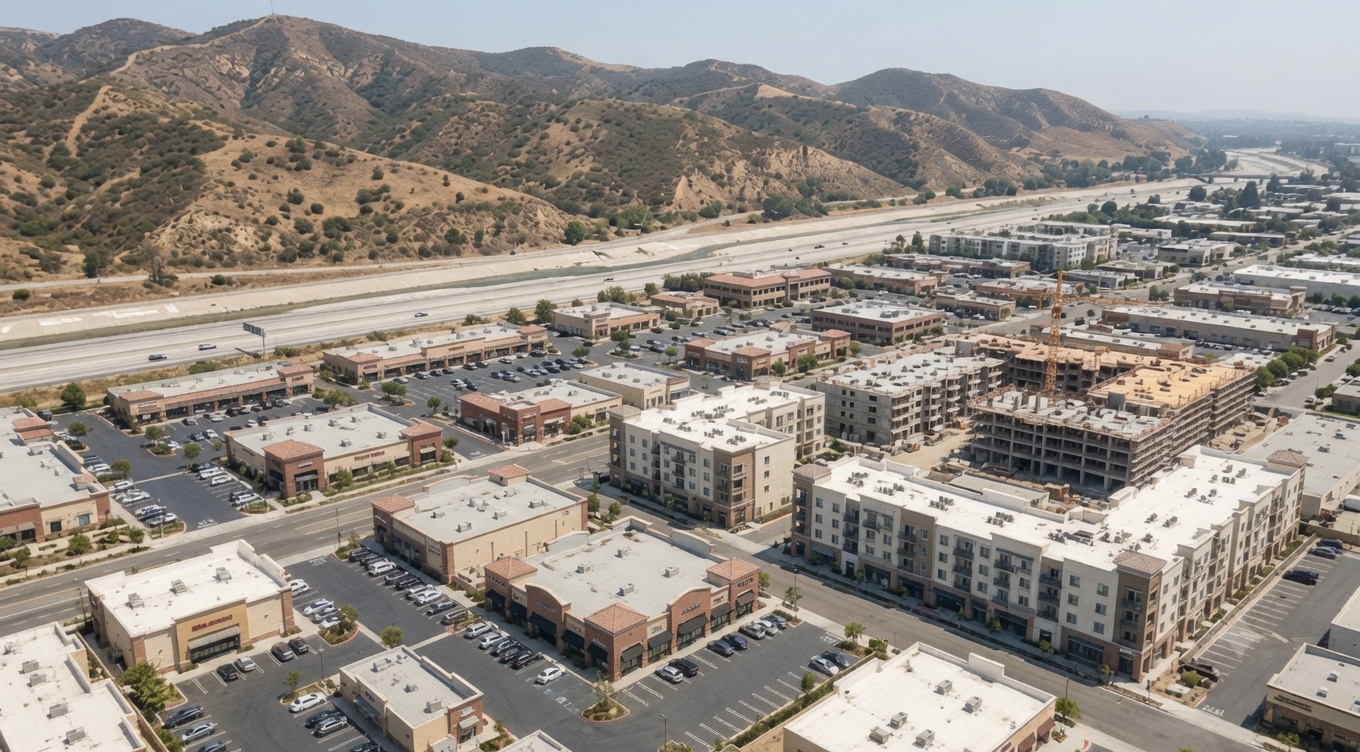
The densest housing is planned for the Savi Ranch area, in the southeast corner of Yorba Linda. The area sits between the 91 Freeway and the Santa Ana River. Three sites there may reach 60 units per acre and five stories. They run along Old Canal Road, Oak Crest Circle, and near Eastpark Drive and Savi Ranch Parkway. That is the tallest, densest zoning in the plan.
Savi Ranch is an existing retail, office, and commercial district rather than a residential neighborhood. The city’s stated goal is a mixed-use, downtown-style area that pairs housing with shops and restaurants. The area already holds the Oakcrest Terrace and Oakcrest Heights apartments, built between 2016 and 2017.
Beyond Savi Ranch, the plan spreads capacity across smaller sites citywide. These sit along corridors such as Imperial Highway, Bastanchury Road, Richfield Road, and Yorba Linda Boulevard. A few are individual parcels near Rose Drive, Eureka Avenue, and Plumosa Drive. Several carry overlay zones, such as an Affordable Housing Overlay or a Mixed-Use Overlay. Where those apply, density can reach 35 units per acre.
| Area or corridor (site references) | Maximum density | Maximum building height |
|---|---|---|
| Savi Ranch: Old Canal Road, Oak Crest Circle, Eastpark Drive and Savi Ranch Parkway (S6-015, S6-020, S6-025) | 60 units per acre | 85 feet (up to 100 feet by permit), or 5 stories |
| Vacant parcel west of 16951 Imperial Highway (S1-021) | 35 units per acre | 50 feet, or 4 stories |
| Overlay sites near Rose Drive, Eureka Avenue, Plumosa Drive, Bastanchury Road, Richfield Road, Liverpool Street, and Mountain View Avenue (S1-200, S3-082, S4-075, S2-008, S3-012, S2-013, S3-024, S3-210) | 35 units per acre | 40 feet, or 3 stories |
| Altrudy Lane and Yorba Linda Boulevard (S4-200, S4-204B) | 20 units per acre | 40 feet, or 3 stories |
| Imperial Highway and Richfield Road (S3-211, S3-207) | 10 units per acre | 35 feet, or 2 stories |
| Bastanchury Road and vacant land near Fairmont Boulevard and Quarter Horse Drive (S3-203, S5-008) | 3 to 5 units per acre | 35 feet, or 2 stories |
Approved maximum residential density by location under Yorba Linda’s Measure JJ high-density rezoning, verified July 2026. Sources: City of Yorba Linda Ordinances 2024-1109 and 2024-1111 and the Orange County Registrar of Voters Measure JJ impartial analysis; summary by Michael Mellgren, REALTOR®.
Density here means the maximum number of homes allowed on each acre of land. In several areas, Measure JJ actually lowered the planned density rather than raising it. Those areas include the Richfield and Christmas Tree Farm area, Buena Vista, and vacant land near Fairmont Boulevard and Quarter Horse Drive. Each is now held to between 3 and 10 units per acre and two stories.
What did Yorba Linda voters approve with Measure JJ?
Yorba Linda residents approved the rezoning directly through Measure JJ. It passed with more than 90% support in November 2024. The Orange County Registrar of Voters certified the result on December 3, 2024. The measure carried the formal title of the Local Control, Residential Neighborhood, Open Space Protection Measure.
That vote was required by Yorba Linda’s own Right-to-Vote Amendment, known as Measure B and passed in 2006. It forces a citywide election before the city can make major changes to its land-use plans. Rezoning for the Housing Element counts as a major change. So residents had to approve it directly. The full program is documented on the City of Yorba Linda’s Housing Element program.
This was actually the city’s second attempt. A first version, Measure Z, failed in November 2022. The city then rebuilt the plan with a resident working group and seven public workshops. Measure JJ followed. Two ordinances, numbers 2024-1109 and 2024-1111, put the approved changes into effect.
Does rezoning mean high-density homes will actually be built in Yorba Linda?
No. Rezoning changes what a property owner is allowed to build, not what must be built. The measure’s own impartial analysis is clear on this. It does not require housing on any site. Whether a property is developed stays up to the owner.
This distinction matters for anyone reading the map. A site on the rezone list does not mean a five-story building is coming next year, or ever. Instead, it means the option now exists. Financing, market conditions, and each owner’s plans will decide the rest, across the 2021 to 2029 period and beyond.
How can a Yorba Linda homeowner check whether a parcel is a rezone site?
Check the parcel against the city’s published site list. Measure JJ names each rezone site by street address and assessor parcel number. So a specific property either appears on that list or it does not. Because the sites cover less than 2% of the city, most parcels are not affected at all.
For a visual view, the city keeps an online Housing Element Implementation Map that shows every rezone site. For a single address, the City of Yorba Linda Community Development Department can give a definitive answer. It can confirm a parcel’s current zoning and whether any overlay applies.
These land-use questions sit alongside the other costs and rules of owning here. They include the Yorba Linda Mello-Roos special tax and the Yorba Linda wildfire hazard zones on many hillside parcels. They also connect to the wider Yorba Linda housing market.
Is the Bryant Ranch (Yorba Canyon) site part of the city’s rezoning plan?
No. The Bryant Ranch Shopping Center site is not part of the city’s Housing Element. It is also known as the Yorba Canyon proposal. The City Council removed it from the plan in January 2024.
It reached the ballot on a separate track. The property owner gathered signatures for a private initiative to rezone that site. So it appeared as its own November 2024 measure, apart from Measure JJ. The two are often confused, yet only Measure JJ carries the city’s official rezoning.
Yorba Linda high-density rezoning: common questions
How many housing units must Yorba Linda plan for?
Yorba Linda must plan zoning for 2,415 new housing units for the 2021 to 2029 cycle. That is its state-assigned RHNA figure. It is a planning obligation, not a construction quota. The city creates the capacity, and the market decides what gets built.
What is the highest density allowed under the rezoning?
The highest density allowed under the Yorba Linda rezoning is 60 units per acre, with buildings up to five stories. That tier applies only to the Savi Ranch sites in the southeast corner. Every other rezone site is held to 35 units per acre or less.
Did Yorba Linda residents vote on the rezoning?
Yes. Residents approved the rezoning directly through Measure JJ. It passed with more than 90% support in November 2024 and was certified on December 3, 2024. The vote was required by the city’s 2006 Right-to-Vote Amendment, Measure B.
What is the Builder’s Remedy?
The Builder’s Remedy is a state rule that applies when a city lacks a compliant Housing Element. In that situation, certain affordable and high-density projects can move forward while bypassing local zoning. Yorba Linda’s certified plan and approved rezoning keep that rule from applying here.
Weighing a Yorba Linda home near a rezone site?
Zoning, overlays, and a parcel’s place on the Housing Element map all shape what a Yorba Linda property could become. They also shape what may rise next door. Michael Mellgren, REALTOR®, follows the city’s Housing Element and Measure JJ rezoning. He can confirm whether a specific address is a named rezone site, what density its zoning allows, and which overlays apply. Email Michael Mellgren about Yorba Linda rezoning, or call or text (714) 420-6629. For a pending development or a parcel’s current zoning, contact the City of Yorba Linda Community Development Department. For legal or tax specifics, consult a qualified professional.
This post is general information about Yorba Linda’s Housing Element and Measure JJ rezoning, current as of the date shown. It is not legal, tax, financial, or land-use advice, and it creates no agent-client relationship. Zoning rules change and apply differently to each parcel. Confirm the details for a specific address with the City of Yorba Linda before acting.
Wildfire Hazard Zones and Home Insurance in Yorba Linda: What You Need to Know
Quick Answer
Yorba Linda wildfire hazard zones cover more than 6,500 acres of the city. Over 4,700 of those acres carry the Very High rating. The zone sets brush clearance duties, building standards, and seller disclosures. It does not set the price of home insurance. Carriers rate wildfire with their own models, not the state map.
Wildfire hazard zone and insurance details verified as of July 9, 2026, against the City of Yorba Linda, CAL FIRE, and the California Department of Insurance. Analysis by Michael Mellgren, REALTOR® (DRE #02321556).
What are the Yorba Linda wildfire hazard zones?
A fire hazard severity zone is a state rating of how readily land could burn. It is not a forecast that it will. CAL FIRE builds each rating from vegetation, terrain, fire weather, and wind. On March 24, 2025, the agency released updated maps for cities. That was the first full revision since 2007. Yorba Linda carries all three tiers: Moderate, High, and Very High.
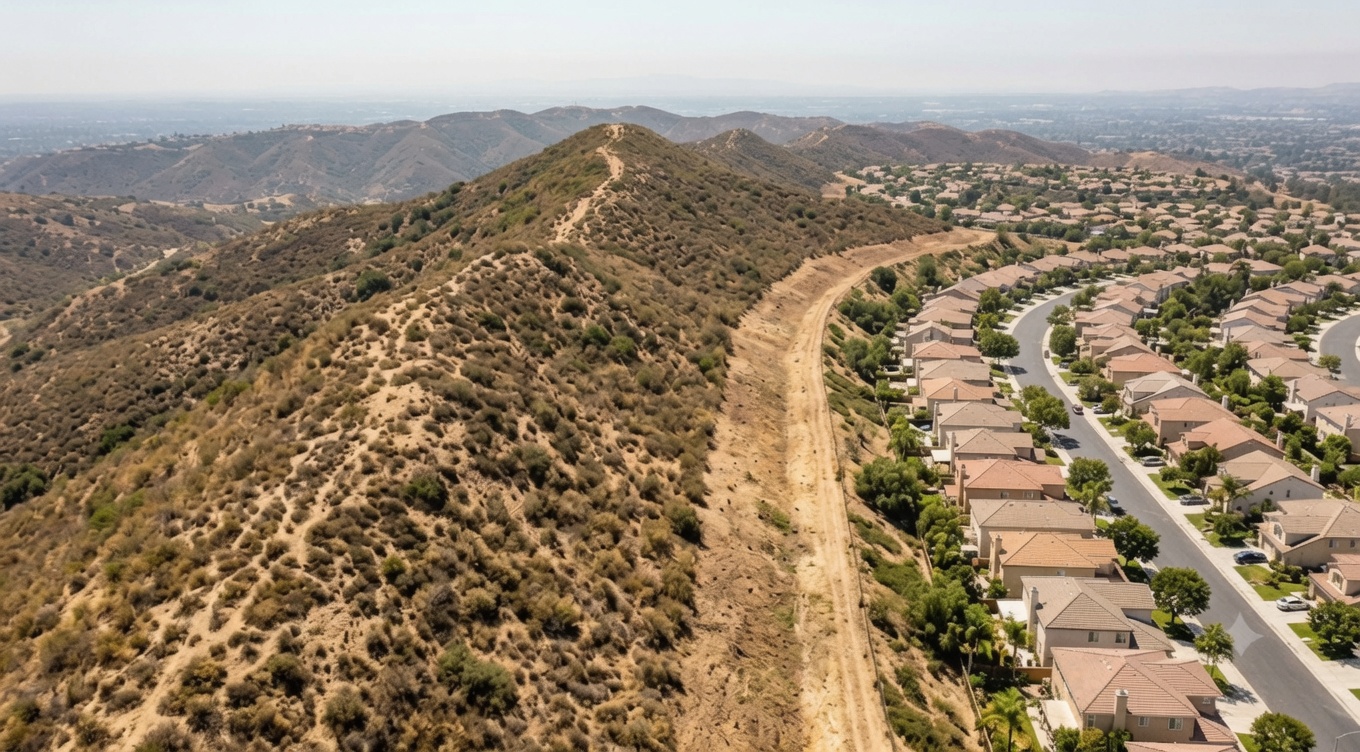
The city reports more than 6,500 acres inside a Moderate, High, or Very High zone. Over 4,700 of those acres are rated Very High. State law then hands the maps to the City Council. It must adopt the zones by ordinance within 120 days. A council may raise an area to a higher tier. However, it cannot lower a rating CAL FIRE assigned. Both figures come from the City of Yorba Linda.
How do you find out if a Yorba Linda home is in a fire hazard zone?
Check the parcel, not the neighborhood. Zone lines follow terrain and brush rather than tract boundaries. So two homes on one street can carry different ratings. The city posts an address-level map viewer with a fire hazard severity zone layer. The Office of the State Fire Marshal runs a statewide viewer that also takes an address.
During a sale, the zone arrives in writing too. Nearly every California resale includes a natural hazard disclosure report. That report names the zone for the exact parcel. It is drawn for one address. So it beats a neighbor’s memory or an old listing remark.
What do the Yorba Linda wildfire hazard zones require of a homeowner?
Duties scale with the tier. A Very High rating carries an ongoing defensible space duty. Meanwhile a Moderate rating currently adds nothing beyond disclosure. The table below shows what each zone triggers.
| Fire hazard severity zone | Defensible space | New construction standard | Disclosure when selling |
|---|---|---|---|
| Moderate | No added city requirement at present | Standard California Building Code | Zone appears on the natural hazard disclosure report |
| High | Compliance documentation required at time of sale | Wildfire-resistant standards under Chapter 7A or Section R337 | Zone disclosure plus the fire hardening disclosure |
| Very High | 100 feet maintained at all times, and documented at sale | Wildfire-resistant standards under Chapter 7A or Section R337 | Zone disclosure plus the fire hardening disclosure |
Homeowner requirements by fire hazard severity zone, Yorba Linda, verified July 2026. Sources: City of Yorba Linda, CAL FIRE, California Government Code §51182, Public Resources Code §4291, and Civil Code §§1102.6f and 1102.19; summary by Michael Mellgren, REALTOR®.
Defensible space is the treated ground around a structure. State law sets it at 100 feet, or to the property line if the lot is smaller. In practice, that means dead brush cleared, limbs trimmed, and fuels thinned. New buildings in an adopted zone face more. They must meet the wildland-urban interface standards in Chapter 7A of the California Building Code, or Section R337 of the California Residential Code. Yorba Linda has adopted the state Wildland-Urban Interface Code into its municipal code. Locally, the Orange County Fire Authority enforces the fire code.
Do the Yorba Linda wildfire hazard zones raise home insurance costs?
Not directly, and the state says so plainly. The California Department of Insurance tells consumers that the CAL FIRE maps do not affect insurance rates or availability. Most insurers already price wildfire with independent models of their own. Those models ran long before the 2025 maps landed. They weigh slope, fuel, access, and the house itself, rather than a zone label.
What does move a premium is carrier appetite. Insurers choose where to write. They also choose how much fire exposure to hold. Rates still pass through state review. So an owner in a Very High zone may keep standard coverage. That owner may instead pay more, or be non-renewed and land on the California FAIR Plan. The zone is a signal in that conversation. It is not the mechanism.
What is the California FAIR Plan, and when does it come into play?
The FAIR Plan is California’s insurer of last resort. It opens up only after the standard market declines a property. It is not a government agency, and no tax dollars fund it. Instead, every admitted property insurer in the state shares the risk in proportion to its market share.
Coverage is narrow by design. A basic dwelling policy covers fire, lightning, internal explosion, and smoke. Residential dwelling coverage caps at $3 million. Liability, theft, and water damage fall outside it. So most policyholders add a separate difference in conditions policy to fill the gaps. That pairing costs more than one bundled policy. So price the whole stack. For an answer specific to an address, talk with a licensed insurance agent or broker.
How can a homeowner lower a wildfire insurance premium?
Safety work now earns a discount by rule. Under the state’s Safer from Wildfires framework, an insurer that prices wildfire risk must also credit safety work. Credit applies to the home and to the whole neighborhood. The FAIR Plan runs its own version, worth up to 20 percent off the wildfire portion of a premium.
The credited steps fall into three groups:
- Home hardening: a Class A fire-rated roof, ember-resistant vents, upgraded windows, and enclosed eaves.
- Defensible space: a five-foot ember-resistant zone at the foundation, cleared vegetation, and no wood fencing attached to the house.
- Community programs: Firewise USA recognition, or certification as a Fire Risk Reduction Community by the California Board of Forestry and Fire Protection.
Proof turns that work into savings. Keep receipts, dated photos, and any inspection report. Then hand them to the carrier, because credit is rarely automatic. Discounts also vary widely between insurers. The same roof can be worth far more with one carrier than another.
What must a Yorba Linda seller disclose in a High or Very High zone?
Two duties attach at the point of sale. First, a seller in a High or Very High zone must document that the property complies with defensible space rules. If that paperwork is not ready before closing, buyer and seller may agree in writing that the buyer will comply within one year.
Second comes the fire hardening disclosure, which applies to homes built before January 1, 2020. The seller lists features that could let embers in, such as gaps in eaves or a wood shake roof. The seller also states which hardening improvements exist. Since July 1, 2025, that notice must carry the State Fire Marshal’s low-cost retrofit list and flag which items are done. These are disclosure duties, not retrofit mandates. Nothing forces a seller to rebuild before listing.
Yorba Linda wildfire hazard zones and insurance: common questions
Can an insurer cancel a policy right after a nearby wildfire?
No, not for one year, if the fire triggers a Governor’s emergency declaration. California Insurance Code section 675.1 then blocks cancellation and non-renewal for wildfire risk. It covers residential policies in ZIP codes inside or next to the fire perimeter. Protection applies even when the home suffered no loss. A separate rule extends it after a total loss. Since January 1, 2026, the moratorium also reaches commercial policies, homeowners associations, and condominiums.
Does a Very High rating mean a Yorba Linda home is likely to burn?
No. The rating measures hazard, meaning the conditions that support fire. It does not measure the risk to one structure. A hardened house with cleared brush sits in the same zone as a neglected one. Their exposure is not the same. CAL FIRE and the city both call the maps planning tools, not predictions.
Is defensible space 100 feet or five feet?
Both are real, and they do different jobs. State law requires 100 feet of defensible space around structures in a Very High zone. On a smaller lot, that runs to the property line. The five-foot ember-resistant zone at the foundation is a different thing. Often called Zone Zero, it is a hardening measure that counts toward insurance discounts. A state grant program under the California Safe Homes Act took effect January 1, 2026. It helps fund fire-safe roofs and that five-foot zone.
Does the FAIR Plan replace a standard homeowners policy?
No. A FAIR Plan dwelling policy is a named-peril fire policy. Liability, theft, and water damage sit outside it. Most policyholders therefore add a difference in conditions policy from another carrier. Anyone leaning on the FAIR Plan alone should confirm the gaps with a licensed agent.
Carrying cost drives many of these decisions. So these zone and insurance details are worth reading beside the current Yorba Linda housing market results, the recent Yorba Linda home price direction, and the separate question of which properties owe a Yorba Linda Mello-Roos special tax.
Buying or selling in a Yorba Linda fire hazard zone?
Zone, disclosure packet, and insurance quote decide what a hillside home really costs to own. Michael Mellgren, REALTOR®, tracks how these zones and California’s insurance rules land on North Orange County homes. He can confirm which zone a Yorba Linda address falls in. He can also lay out what the sale paperwork will ask for. Email Michael Mellgren about a Yorba Linda fire hazard zone, or call or text (714) 420-6629. For premiums, coverage, and eligibility, consult a licensed insurance agent. For parcel-specific requirements, contact the City of Yorba Linda and the Orange County Fire Authority.
This post is general information about wildfire hazard zones and property insurance in Yorba Linda and California, current as of the date shown. It is not legal, tax, financial, or insurance advice. It creates no attorney-client or agent-client relationship. Rules change, and they apply differently to each lot. Confirm the details for an address with the City of Yorba Linda and a qualified professional before acting.
Best Time to Sell a Yorba Linda Home: Now or Wait Until Fall?
Quick Answer
The best time to sell a Yorba Linda home in 2026 is now, not fall. Across 332 closed sales year-to-date through early July, sellers averaged 98.7% of original list price in 35 days. The live market holds an Expected Market Time of 64 days, a moderate seller’s market.
Market data as of July 8, 2026. Closed figures cover Yorba Linda’s 2026 year-to-date closings through early July. Source: CRMLS data via Pacific West Association of Realtors; analysis by Michael Mellgren, REALTOR® (DRE #02321556).
Is it better to list a Yorba Linda home now or wait until fall?
Listing now is the better-supported call. Current conditions can be measured; fall conditions cannot. As of July 8, 2026, Yorba Linda carried an Expected Market Time of 64 days, a moderate seller’s market. That figure estimates how long a home listed today would take to enter escrow at the current pace of demand. Unlike days on market, it counts every active listing, including homes that have sat unsold for months.
Demand is already committed, too. Some 33.7% of the Yorba Linda market sat under contract on July 8, 2026, with 68 homes in escrow against 134 active listings. Meanwhile momentum built through the first half of the year. Sellers cleared 98.2% of original list price in the first quarter and 99.0% in the second.
Still, honesty beats a tidy answer. The closing record behind this post covers 2026 only. Its third quarter holds just 5 closings so far, far too few to average. No figure here measures how a Yorba Linda fall performs. Anyone promising a better September is guessing, not reporting.
What Yorba Linda sellers actually got in 2026
Yorba Linda sellers captured 98.7% of original list price on average. That covers all 332 closings year-to-date through early July 2026. The figure is the sale-to-list ratio, which compares the final price against the price the home first asked. Because it starts at the original ask, it absorbs every reduction taken along the way.
Volume followed suit. Those same 332 sales totaled $479,974,378, at a median of $1,282,500 and an average of $1,445,706. Speed held up alongside price, since homes averaged 35 days on market. That measure runs from the day a listing goes live to the day it goes under contract. For more on how pricing and speed interact, the earlier read on Yorba Linda days on market and pricing strategy found that overpricing, not firmness, is what stalls a listing.
One caution belongs here. Against the same period in 2025, closings rose 4.4% and volume rose 2.0%, while the median fell 5.0%. However, a moving median mostly reflects which homes sold. It is not a verdict on what any single home is worth. The dedicated look at whether Yorba Linda home prices are falling in 2026 unpacks that mix shift in full.
Which Yorba Linda price bands are moving fastest right now
The $1M to $1.5M band is the strongest place to be listing. It also carries real scale rather than a thin sample. Those 120 closings, more than any other band, averaged 25 days on market. They cleared 100.0% of original list price year-to-date through early July 2026.
Above and below that band, the calculus changes. Yorba Linda’s $2M+ tier posted 57 sales at 97.6% of original list, over an average of 50 days. The under-$750K band took 38 days at 97.4%. Consequently, a seller in either tier should expect a longer runway. A little more negotiation comes with it, whichever month the sign goes up.
| Price band | Sales | Volume | Avg. price | Avg. days on market | Avg. sale-to-list |
|---|---|---|---|---|---|
| Under $750K | 54 | $32,031,700 | $593,180 | 38 | 97.4% |
| $750K–$1M | 36 | $31,229,675 | $867,491 | 31 | 99.9% |
| $1M–$1.5M | 120 | $148,400,133 | $1,236,668 | 25 | 100.0% |
| $1.5M–$2M | 65 | $110,684,900 | $1,702,845 | 41 | 97.5% |
| $2M+ | 57 | $157,627,970 | $2,765,403 | 50 | 97.6% |
Yorba Linda home sales by price band, 2026 year-to-date through early July. Source: CRMLS via Pacific West Association of Realtors; analysis by Michael Mellgren, REALTOR®.
What the live Yorba Linda market looks like today
Yorba Linda’s active listings ask more than its escrows are clearing. That is the clearest argument against waiting. On July 8, 2026, active asking prices averaged $1,759,343. Homes in escrow averaged $1,633,419, a gap of $125,924, or 7.2%. Analysts call that spread the capitulation gap, the distance between what sellers hope for and what buyers sign.
Price behavior on those actives tells the same story. Of Yorba Linda’s 134 active listings, 86 held firm within 1% of original list. Another 25 had trimmed between 1% and 5%, while 23 had cut 5% or more. In other words, most sellers have not blinked. The ones cutting are the ones who priced above the closed comps.
A fuller picture of the quarter behind these live numbers sits in the Yorba Linda housing market Q2 2026 results post. It covers the April through June cohort in detail.
Does waiting until fall improve the outcome?
Nothing in Yorba Linda’s 2026 closing record supports waiting. Nothing in it forecasts fall either. The year runs 150 closings in the first quarter and 177 in the second. Only 5 recorded in the third quarter through early July, a partial and unusable window. Therefore this data cannot answer the fall question, and a hunch should not answer it instead.
What can be said is concrete. A home listed today competes against 134 actives and a 64-day Expected Market Time. A home listed in October competes against comps set by the closings happening now. So the best time to sell a Yorba Linda home is whenever its price matches those comps. Pricing is the lever a seller controls; the calendar is not.
Frequently asked questions about selling in Yorba Linda
Is now a good time to sell in Yorba Linda?
Yes, on the evidence. In Yorba Linda, sellers averaged 98.7% of original list price in 35 days across 332 closings year-to-date through early July 2026. As of July 8, 2026, the city held an Expected Market Time of 64 days, with 33.7% of the market under contract.
Are home prices rising or falling in Yorba Linda?
Yorba Linda’s median sale price was $1,282,500 year-to-date through early July 2026. That sits about 5.0% below the same period in 2025. However, a median measures the middle sale. It shifts with the mix of homes that closed, so it should not be read as a citywide price drop.
How long does it take to sell a home in Yorba Linda?
Yorba Linda homes averaged 35 days on market across 332 closings year-to-date through early July 2026. Looking forward instead of backward, the Expected Market Time on July 8, 2026 was 64 days. That estimates how long a home listed today would take to enter escrow. The two numbers differ because days on market averages only the homes that sold, while Expected Market Time measures the whole shelf of listings still waiting for a buyer.
When is the best time to sell a Yorba Linda home?
The best time to sell a Yorba Linda home is when its asking price tracks recent closings. Through early July 2026, homes priced between $1M and $1.5M moved fastest, averaging 25 days on market at 100.0% of original list. Seasonality cannot be scored from this record, because 2026 has produced only 5 third-quarter closings so far.
Is now a good time to buy in Yorba Linda?
Buyers do have openings. Of Yorba Linda’s 134 active listings on July 8, 2026, 23 had cut their price by 5% or more. Active asking prices also averaged 7.2% above what escrows were clearing. The full buyer-side read on how to buy a Yorba Linda home without a bidding war covers where that leverage sits by price band.
Timing a Yorba Linda listing with the numbers, not the calendar
Whether to list this summer or hold for fall comes down to one question. Does the asking price match what recent closings actually cleared? Michael Mellgren, REALTOR®, tracks every closed sale in Yorba Linda as it records. He can show how a specific address prices against the 2026 closings, its price band’s average days on market, and the current 7.2% gap between asking and escrow. Email Michael Mellgren about Yorba Linda seller timing, or call or text (714) 420-6629. Consult a qualified tax professional or attorney before acting on the financial or legal side of a sale.
Fullerton High Schools: Attendance Boundaries and Programs Explained
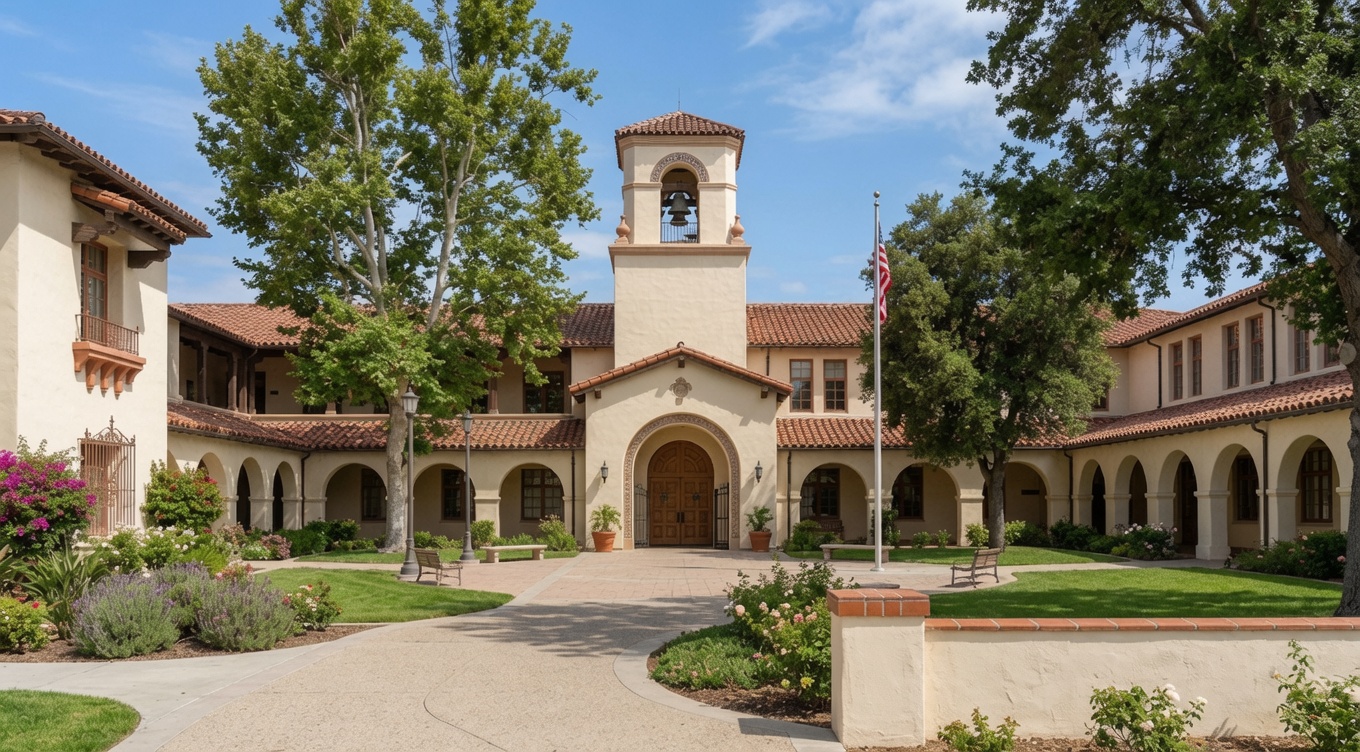
Quick Answer
Fullerton high schools are part of the Fullerton Joint Union High School District. This grades 9–12 district runs eight campuses across several North Orange County cities. Three of them sit inside Fullerton itself: Fullerton Union, Sunny Hills, and Troy. Each home is assigned to one school by attendance boundary, and the district’s official locator confirms that school by address.
Fullerton high school district and program details verified as of July 8, 2026. Analysis by Michael Mellgren, REALTOR® (DRE #02321556).
Which high school district serves Fullerton?
The Fullerton Joint Union High School District (FJUHSD) serves Fullerton for grades 9 through 12. It is a high-school-only district, so it also covers La Habra, Buena Park, and nearby areas. The younger grades fall under separate elementary and middle-school districts. So a family checks the high school separately from the elementary school for the same address.
In total, the district runs eight schools. Three comprehensive campuses sit in Fullerton: Fullerton Union, Sunny Hills, and Troy. Three more serve other cities: Buena Park, La Habra, and Sonora. Beyond those six, it also runs La Vista and La Sierra for continuation and alternative programs. It adds iSierra Online Academy as well.
How do Fullerton high school attendance boundaries work?
Attendance boundaries assign each Fullerton address to one school of residence. The zoned high school depends on where a home sits, not on its neighborhood name. Because the lines follow specific streets, two nearby homes can feed different schools. The district draws these lines and updates them, and it is the only authority on where an address lands.
An address near a city or district edge deserves a direct check. Homes at the margins of Fullerton sometimes attend another FJUHSD campus, such as Buena Park or Sonora. To be sure, families can confirm the school of residence through the district’s official school-locator tool. The district also asks anyone on or near a boundary line to call and verify.
A few other paths exist too. They include open enrollment, intra-district and inter-district transfer permits, and applications to specific academic programs. Each one depends on district rules and open space. For that reason, families weighing them should start with the district.
Which high schools are in Fullerton?
Three comprehensive FJUHSD high schools sit within Fullerton: Fullerton Union, Sunny Hills, and Troy. Each school publishes its own program list, and the details below come straight from the schools and the district. None of this ranks the campuses. It simply describes what each one offers.
Fullerton Union High School
Fullerton Union High School sits at 201 East Chapman Avenue. Founded in 1893, it is the oldest campus in the district. It offers the International Baccalaureate (IB) Diploma Programme, Advanced Placement (AP) courses, and the AVID college-readiness program. Its specialized pathways cover several fields too. They include an Academy of the Arts for visual and performing arts, an Agri-Science Academy, a Culinary Arts Academy, and JROTC.
Sunny Hills High School
Sunny Hills High School is located at 1801 Lancer Way in western Fullerton. It is an authorized International Baccalaureate World School and has offered the IB programme since the 1980s. The campus also provides AP courses, the AVID program, and a range of honors pathways.
Troy High School
Troy High School stands at 2200 East Dorothy Lane, next to California State University, Fullerton. It is home to Troy Tech, a four-year STEM magnet program. Troy Tech began in 1986 and was the first magnet program in Orange County. The school also offers the IB and Cambridge programmes, plus AP and AVID.
What programs do Fullerton high schools offer?
The three Fullerton high schools share a college-prep core and add their own specialized programs on top of it. AP and AVID run across the district. The IB programme is offered at Fullerton Union, Sunny Hills, and Troy. The table below lists each campus and its notable programs, as published by the schools.
| School | Location in Fullerton | College-prep programs | Notable specialized programs |
|---|---|---|---|
| Fullerton Union High School | 201 East Chapman Avenue | IB Diploma, AP, AVID | Academy of the Arts, Agri-Science Academy, Culinary Arts Academy, JROTC |
| Sunny Hills High School | 1801 Lancer Way | IB Diploma, AP, AVID, honors pathways | International Baccalaureate World School since the 1980s |
| Troy High School | 2200 East Dorothy Lane | IB Diploma, Cambridge, AP, AVID | Troy Tech, a four-year STEM magnet founded in 1986 |
Fullerton high schools and their published programs, Fullerton Joint Union High School District, verified July 2026. Source: FJUHSD and individual school program pages; compiled by Michael Mellgren, REALTOR®.
Families who want published performance data can find it at the state level. The California School Dashboard and each school’s School Accountability Report Card (SARC) report the numbers directly. They cover test results, graduation rates, and other measures. These official sources let a family review a Fullerton high school and draw its own conclusions.
Frequently asked questions about Fullerton high schools
What high school district is Fullerton in?
Fullerton sits in the Fullerton Joint Union High School District for grades 9 through 12. The same district also covers La Habra, Buena Park, and nearby communities. So it is shared across several North Orange County cities, not unique to Fullerton.
How do I find out which Fullerton high school my address is assigned to?
The district publishes an official school locator. It returns the assigned school of residence for any address. Still, boundary lines can run mid-block. For that reason, the district recommends calling its office to confirm any home near a boundary.
Do all Fullerton high schools offer the IB program?
Among the three high schools inside Fullerton, IB is offered at Fullerton Union, Sunny Hills, and Troy. AP and AVID are available district-wide. Troy also offers the Cambridge programme alongside its Troy Tech STEM magnet.
Can a student attend a Fullerton high school outside the assigned boundary?
Sometimes, yes. The routes include open enrollment, an intra-district or inter-district transfer permit, or an application to a specific academic program. Each one depends on district rules and open space. Families should confirm current options with the district before counting on a placement.
Where can I check published performance data for Fullerton high schools?
Two official sources carry it: the California School Dashboard and each school’s School Accountability Report Card. Both report state-collected measures for every Fullerton high school. That lets families review the same underlying data instead of a third-party ranking.
Confirm the assigned school for a specific Fullerton address
Attendance boundaries are set by address, not by neighborhood. So the zoned high school can change from one Fullerton street to the next. That detail matters to anyone weighing a specific home around a particular school or program.
For local market context, see Fullerton’s June 2026 home sales and the Fullerton housing market in Q2 2026. If a property has added-unit potential, review Fullerton’s ADU rules as well.
Michael Mellgren, REALTOR®, can confirm the assigned school of residence for any Fullerton address. He can also walk through the district’s program options. Email Michael Mellgren about a Fullerton high school boundary, or call or text (714) 420-6629. Then verify current boundaries, enrollment steps, and program details directly with the Fullerton Joint Union High School District before deciding.
Fullerton ADU Rules: Permits, Costs, and Requirements (2026)
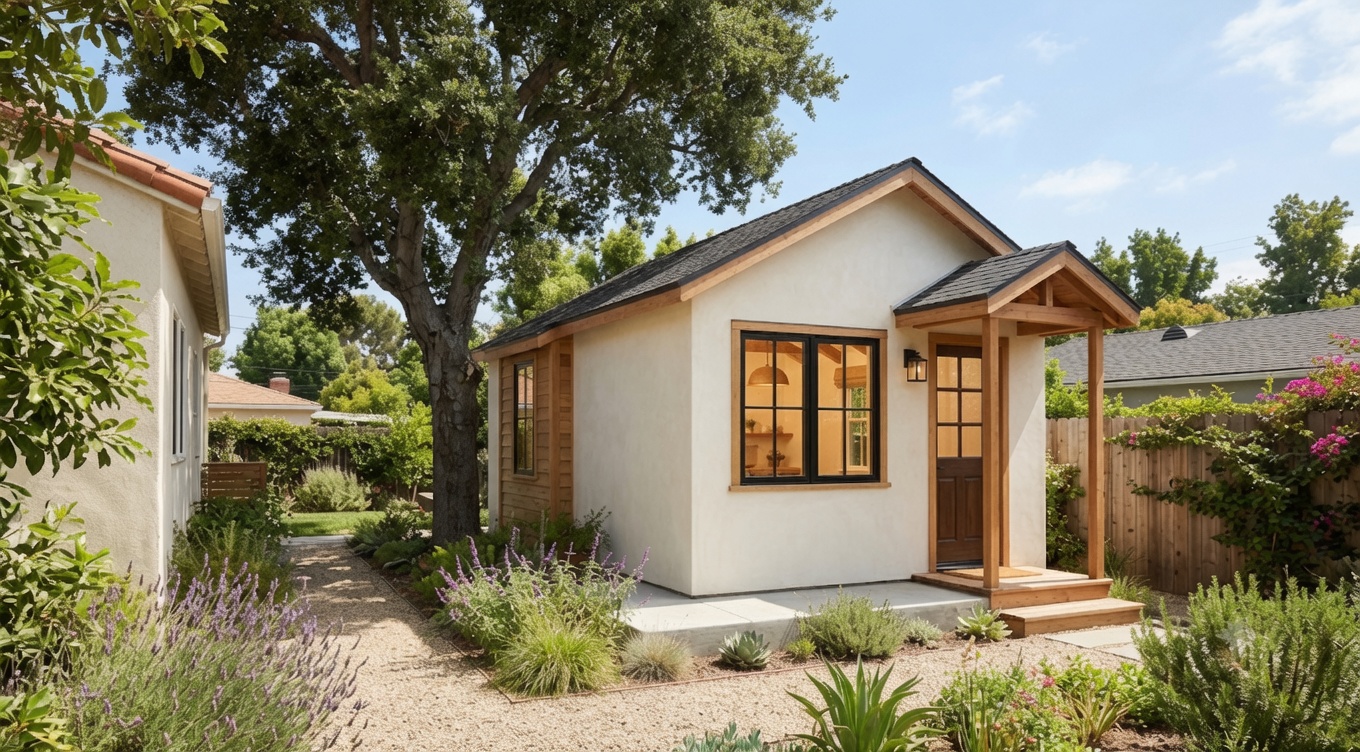
Quick Answer
Fullerton ADU rules follow California state law. On most single-family lots, a homeowner can add one accessory dwelling unit (ADU) of up to 1,200 square feet. A junior ADU (JADU) of up to 500 square feet can join it. There is no minimum lot size, and setbacks run four feet. The city reviews a qualifying permit within 60 days, with no public hearing.
Fullerton ADU details verified as of July 6, 2026, against the Fullerton Municipal Code and California ADU law (HCD). Analysis by Michael Mellgren, REALTOR® (DRE #02321556).
What is an ADU, and what is a JADU?
An ADU is a self-contained second home on the same lot as a primary residence. It has its own kitchen, bathroom, and private entrance. You may also hear one called a granny flat, a casita, or a backyard cottage. A JADU is smaller. It fits inside the existing walls of a single-family home, often a converted bedroom or garage, and runs up to 500 square feet. Both add living space without changing the lot’s zoning.
Fullerton allows three ADU forms. A detached unit stands alone in the yard. An attached unit connects to the main house. A conversion turns existing space, such as a garage, into a unit. A JADU is different: it stays inside the home’s footprint, shares systems with the main house, and needs only a small kitchen. It still requires its own entrance, though.
Can you build an ADU on any lot in Fullerton?
Most Fullerton homeowners with a single-family property can build an ADU. Lot size is not the deciding factor. California law bars cities from setting a minimum lot size for an accessory dwelling unit. So a small parcel qualifies the same as a large one. What matters is the zoning and whether the unit meets the size, setback, and height standards below.
On a single-family lot, Fullerton generally allows one ADU plus one JADU. Some properties carry extra review. A home in a historic preservation zone may face design conditions. So can one listed on the city’s local historic register. The reason is simple: the code asks that a unit visible from the street stay compatible with the main home’s look.
What are the size, height, and setback limits for a Fullerton ADU?
A detached Fullerton ADU can reach 1,200 square feet. Side and rear setbacks are four feet. A setback is just the required distance between the structure and the property line. The table below lays out the core standards for each unit type.
| ADU type | Maximum size | Maximum height | Minimum setback (side and rear) |
|---|---|---|---|
| Detached ADU | Up to 1,200 square feet | About 16 feet (higher on some transit-adjacent lots) | 4 feet |
| Attached ADU | 50% of the primary home or 1,200 square feet, whichever is less | Up to 25 feet | 4 feet |
| Junior ADU (JADU) | Up to 500 square feet, within the existing home | Within existing walls | Not applicable |
| Conversion ADU | Existing footprint (plus up to 150 square feet for an entrance) | Existing structure | Exempt |
Fullerton ADU and JADU standards under California state law and the Fullerton Municipal Code, verified July 2026. Source: Fullerton Municipal Code §15.17.100 and California HCD; summary by Michael Mellgren, REALTOR®.
Conversions of an existing garage or structure skip the four-foot setback rule, since they reuse space that already stands. Detached units usually top out at about 16 feet. Certain lots near major transit may go higher. Attached units can rise to 25 feet, or the height limit for the main home, whichever is lower.
How much does an ADU cost to build in Fullerton?
ADU construction in Fullerton commonly runs $150 to $300 per square foot. The real figure swings widely, though, with size, finishes, site conditions, and the builder. City permit and plan-check fees come on top. State law does add one break: an ADU under 750 square feet owes no local development impact fees.
A garage conversion or a JADU is usually the cheapest route, because it reuses an existing structure. A new detached unit sits at the higher end. An ADU also raises property taxes, but generally only on the value of the new unit, not the whole home. For a firm number, get bids from a licensed contractor and confirm current fees with the City of Fullerton. For the tax impact, check with a qualified tax professional.
How do you get an ADU permit in Fullerton?
A Fullerton ADU permit runs through a ministerial process. That means the city approves a compliant application at the counter, with no public hearing or discretionary vote. State law sets a decision deadline of 60 days for a complete application. A 2026 update, Senate Bill 543, adds a 15-business-day window. In it, the city must confirm whether a submission is complete, which curbs open-ended delays.
The path is straightforward. First, confirm the property’s zoning and what it permits. Next, prepare plans that meet the city’s objective standards for size, setbacks, and design. Then submit to the Planning Division and Building and Safety, and clear any plan-check corrections. The legal clock is 60 days, but most owners should plan for three to four months from start to permit.
Fullerton ADU rules: common questions
Do you have to live on the property to rent out an ADU?
No. For an ADU permitted after January 1, 2020, California law bars any owner-occupancy requirement. So an owner can rent out both the main house and the ADU. A JADU differs. Owner-occupancy can still apply, though a 2026 change, Assembly Bill 1154, limits it to JADUs that share a bathroom with the main home.
Can a Fullerton ADU be a short-term rental?
Fullerton ADU rules require any rental to run 31 days or longer. That effectively rules out nightly stays like Airbnb for the unit. The 31-day minimum sits directly in the city’s municipal code.
How many ADUs can one Fullerton lot have?
A single-family lot in Fullerton generally allows one ADU plus one JADU. Multifamily properties follow separate rules. Those depend on the number of existing units and the type of ADU proposed.
Is parking required for a Fullerton ADU?
Often not. California law waives added parking for an ADU within half a mile of public transit, for conversions, and for JADUs, among other cases. Where a space is still required, the city cannot ask for more than one.
Because an ADU decision often ties into a larger move, these Fullerton ADU rules are worth reading next to the current Fullerton housing market and recent Fullerton home price trends.
Weighing an ADU on your Fullerton property?
Whether an ADU pencils out starts with what a specific Fullerton lot and its zoning allow. Michael Mellgren, REALTOR®, follows the local ADU landscape closely. He can help weigh how an accessory dwelling unit might fit a property already owned or under consideration, for any Fullerton address on the list. Email Michael Mellgren about a Fullerton ADU, or call or text (714) 420-6629. For project-specific costs, fees, and approvals, consult a licensed contractor and the City of Fullerton Planning Division.
This post is general information about ADU rules in Fullerton and California, current as of the date shown. It is not legal, tax, or financial advice, and it creates no attorney-client or agent-client relationship. Rules change and apply differently to each property. Confirm the details for a specific situation with the City of Fullerton and a qualified professional before acting.
Anaheim Hills Housing Market: Q2 (April–June) 2026 Results
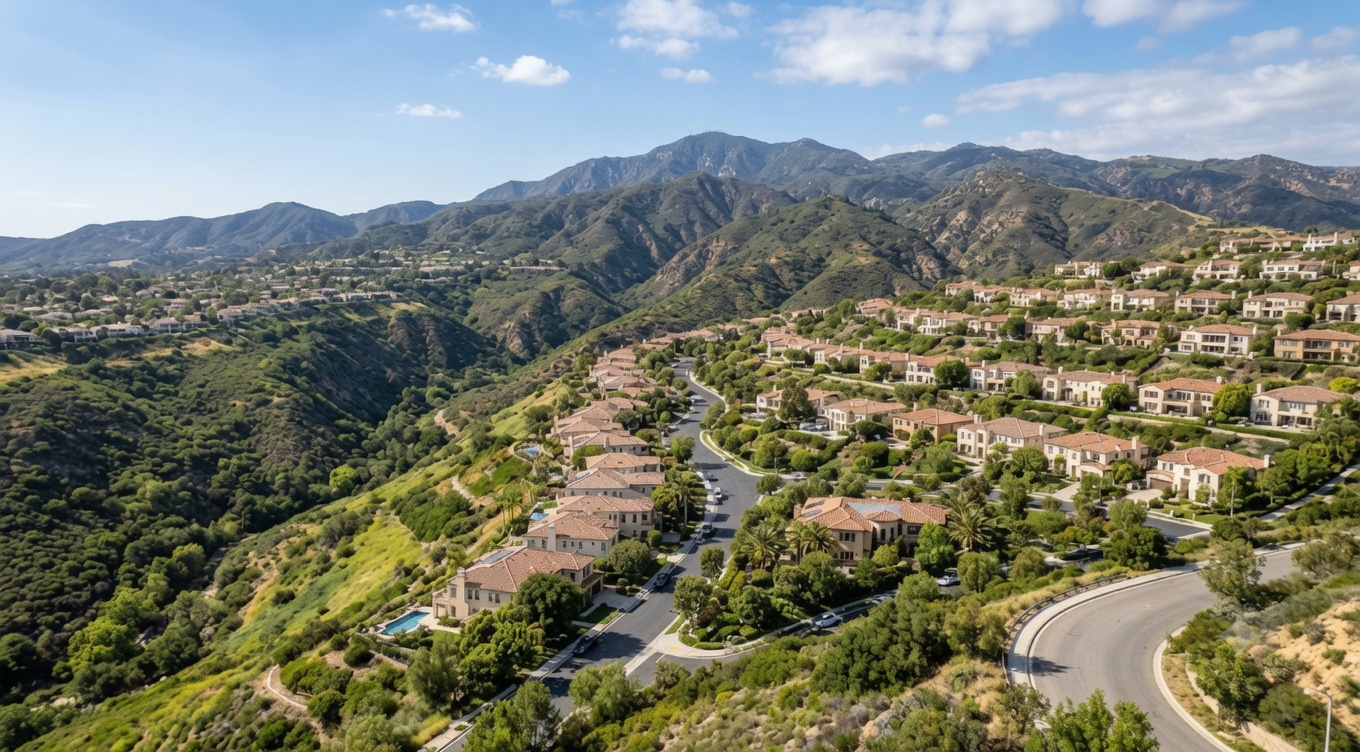
Quick Answer
The Anaheim Hills housing market recorded 71 closed sales in Q2 (April–June) 2026, worth $91.6 million at a $1,200,000 median. Sellers cleared 98.3% of original list in about 28 days. The live market stays a deep seller’s market, with Expected Market Time at 47 days as of July 4, 2026.
Market data as of July 4, 2026. Closed-sale figures cover Q2 (April–June) 2026. The data comes from CRMLS via Pacific West Association of Realtors, with analysis by Michael Mellgren, REALTOR® (DRE #02321556).
How did the Anaheim Hills housing market perform in Q2 2026?
The Anaheim Hills housing market closed 71 sales in Q2 (April–June) 2026. Together they produced $91.6 million in volume at a $1,200,000 median sale price. The average sale price ran higher, at $1,290,391, lifted by a few high-end closings. Sellers averaged 98.3% of original list, and homes took about 28 days to sell.
That 98.3% is the sale-to-list ratio. It measures the final sale price against the original asking price. That captures the full negotiation, including any price cuts along the way. At that level, most Anaheim Hills sellers gave up only a little off their opening number. Days on market, the stretch from listing to signed contract, averaged 28 days.
Compared with the same quarter a year earlier, closed activity cooled. Q2 2026 counted 23.7% fewer sales and 28.8% less dollar volume than Q2 (April–June) 2025. The median came in 7.7% lower. Still, this is a single-quarter reading, not a declared trend. It partly reflects a shift in which price bands sold, rather than a broad markdown on comparable homes.
Anaheim Hills home sales by price band, Q2 2026
In Anaheim Hills, the $1M–$1.5M band drove Q2 (April–June) 2026. It accounted for 31 of the 71 closed sales, more than any other price range. It was also the quickest-moving band with real volume, averaging 21 days on market at 99.0% of original list. Entry-level and mid-range homes moved briskly, while the top of the market took longer to sell.
| Price band | Sales | Volume | Avg. price | Avg. days on market | Avg. sale-to-list |
|---|---|---|---|---|---|
| Under $750K | 11 | $7,489,500 | $680,864 | 33 | 98.1% |
| $750K–$1M | 12 | $10,390,000 | $865,833 | 30 | 98.5% |
| $1M–$1.5M | 31 | $39,016,400 | $1,258,594 | 21 | 99.0% |
| $1.5M–$2M | 10 | $16,488,888 | $1,648,889 | 24 | 98.5% |
| $2M+ | 7 | $18,233,000 | $2,604,714 | 54 | 95.0% |
Anaheim Hills home sales by price band, Q2 (April–June) 2026. Source: CRMLS via Pacific West Association of Realtors; analysis by Michael Mellgren, REALTOR®.
At the upper end, the picture shifts. Homes priced above $2 million averaged 54 days on market and cleared at 95.0% of original list. That was the slowest pace and the widest asking-to-sale gap of any band, across 7 sales. Buyers shopping that tier found the most room to negotiate. Competition stayed tightest in the $1M–$1.5M range.
What the numbers say about pricing and negotiation in Anaheim Hills
Pricing discipline held firm across the Anaheim Hills housing market in Q2 (April–June) 2026. Sellers averaged 98.3% of original list. Firm did not mean automatic, though. The live market carries a real gap between what active sellers ask and what buyers actually pay.
As of July 4, 2026, active listings asked an average of $1,555,433. Homes going into escrow averaged $1,398,813. That $156,621 spread, about 10.1%, is the capitulation gap. It measures the distance between aspirational asking prices and the prices buyers will actually sign for. In practice, some active sellers are still pricing ahead of recent closings.
Most sellers were holding their line rather than slashing. Of 33 active listings, 23 stayed within 1% of their original price. Another 5 trimmed modestly, between 1% and 5%, and 5 more cut by 5% or higher. On balance, the market leaned toward sellers keeping firm. That matches the near-ask sale-to-list ratio the quarter produced.
What the Anaheim Hills market means for buyers and sellers right now
For sellers, the Anaheim Hills market as of July 4, 2026 remains firmly in their favor. Expected Market Time sits at 47 days, which qualifies as a deep seller’s market. That metric estimates how long it would take to sell every active listing at the current sales pace. A lower number points to a tighter, more competitive market for buyers.
Demand is showing up in the escrow count. About 43.1% of the market is under contract as of July 4, 2026. That is 25 homes in escrow against 33 active listings. When close to half the listed inventory is already spoken for, well-priced homes tend to move quickly.
Buyers still have openings, especially at the top. The upper tier offers the most negotiating room. Above-$2 million homes took 54 days to sell and cleared at 95.0% of original list. Five active listings have already cut their price by 5% or more. The capitulation gap suggests patient buyers can find sellers priced ahead of the market.
Anaheim Hills Q2 2026 real estate: frequently asked questions
Is now a good time to sell a home in Anaheim Hills?
Conditions favor sellers in the Anaheim Hills housing market as of July 4, 2026. Homes are selling in a deep seller’s market, with Expected Market Time at 47 days and 43.1% under contract. Through Q2 (April–June) 2026, sellers averaged 98.3% of original list in about 28 days. Well-priced homes have been clearing close to ask, and fairly quickly.
Are home prices rising or falling in Anaheim Hills?
The median sale price in Anaheim Hills was $1,200,000 in Q2 (April–June) 2026. That is about 7.7% below the same quarter in 2025. The figure reflects which homes sold during the period, not a confirmed market-wide decline. The average sale price actually ran higher, at $1,290,391, on the strength of upper-tier closings. One quarter is a reading, not a trend.
How long does it take to sell a home in Anaheim Hills?
Homes in Anaheim Hills took about 28 days to sell during Q2 (April–June) 2026. That is measured from listing to signed contract. Looking ahead from current inventory, Expected Market Time stands at 47 days as of July 4, 2026. That reflects a deep seller’s market, where listings priced in line with recent sales tend to move fastest.
Is now a good time to buy a home in Anaheim Hills?
Buyers in Anaheim Hills have real openings as of July 4, 2026, especially in the upper price tiers. Homes above $2 million averaged 54 days on market in Q2 (April–June) 2026, clearing at 95.0% of original list. That is the widest negotiating room of any band. Five active listings have cut their price by 5% or more. Average asking runs 10.1% above average escrow prices, so patient buyers can find sellers priced ahead of the market.
Get a data-backed read on an Anaheim Hills home
The Q2 (April–June) 2026 numbers point in different directions for different Anaheim Hills homes. The right move depends on the specific property and its price band. Michael Mellgren, REALTOR®, tracks every closed sale in Anaheim Hills directly from CRMLS records. He can pinpoint where any address sits against the latest price-band, days-on-market, and sale-to-list figures. Email Michael Mellgren about the Anaheim Hills market, or call or text (714) 420-6629. Consult a qualified tax or lending professional before finalizing any purchase or sale. For context, compare the Q2 2026 roundups for the Yorba Linda housing market, the Orange housing market, and the Brea housing market.