Facebook
 X
X
 Pinterest
 Copy Link
Quick Answer
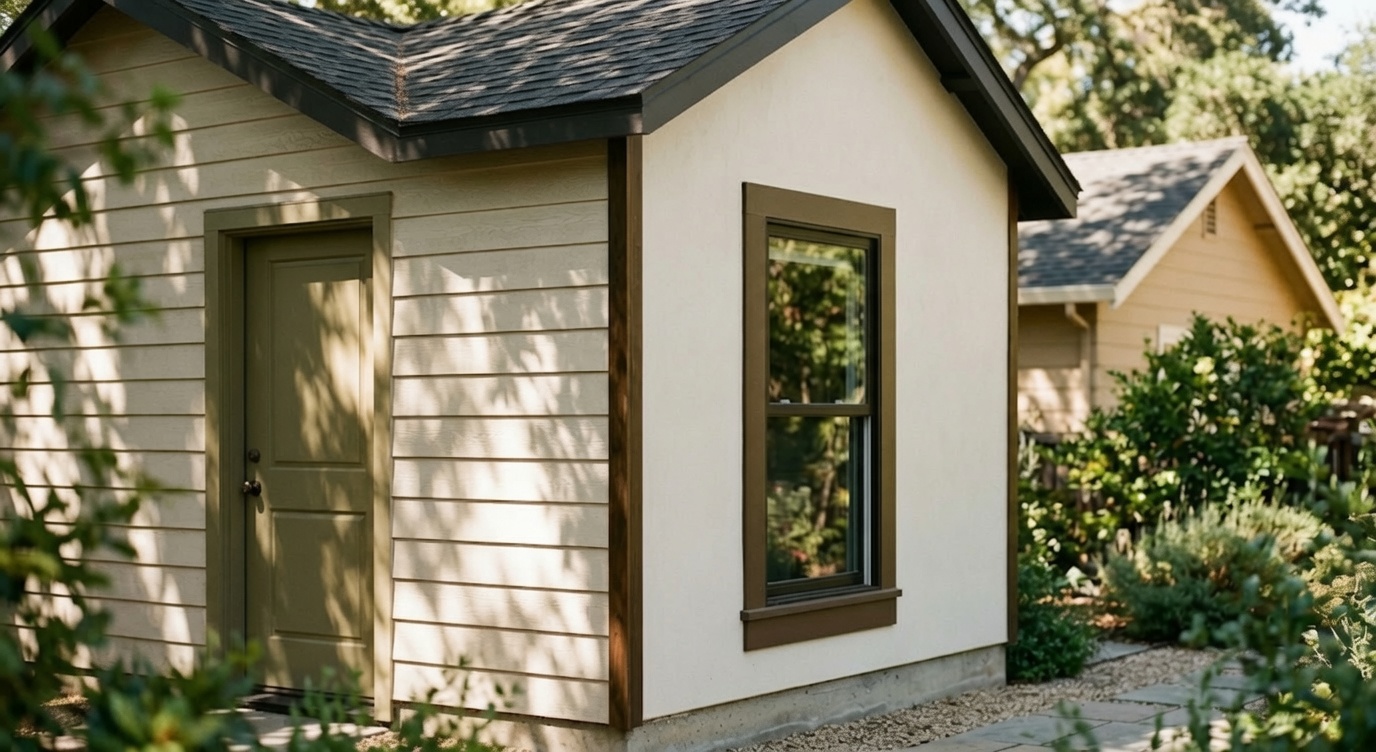
Orange ADU rules size a unit by its bedroom count, not by one flat cap. On a lot with a single-family home, the City of Orange allows one accessory dwelling unit (ADU). It can reach 850 square feet with one bedroom or none, or 1,000 square feet with two or more. One junior ADU (JADU) of up to 500 square feet may join it. There is no minimum lot size, and the city has 60 days to act on a complete application.
Orange ADU details verified as of July 16, 2026, against Orange Municipal Code Chapter 17.29 and California ADU law. Analysis by Michael Mellgren, REALTOR® (DRE #02321556).
How big can an ADU be in Orange?
An ADU in Orange tops out at 850 square feet with one bedroom or none. Add a second bedroom and the cap rises to 1,000. That bedroom-count structure catches most homeowners off guard, because many nearby cities publish one flat ceiling instead. Orange Municipal Code section 17.29.050 sets the sizes. Section 17.29.190 lists anything larger as a prohibited unit.
A second limit runs alongside the first. Under section 17.29.060, an ADU cannot exceed 50% of the floor area of the existing main home. Even so, the city must always allow at least 800 square feet, whatever that ratio says. So a modest 1,400 square foot house will not push your ADU below 800 square feet. It will, however, keep you from reaching 1,000.
Conversions escape both caps. Build inside the living area of an existing home, or inside the existing floor area of a detached garage, and the 850 and 1,000 figures drop away. The unit simply matches the square footage already there. You may add up to 150 square feet more, but only for an entrance.
| Unit type | Maximum size | Maximum height | Minimum setback (side and rear) |
|---|---|---|---|
| Detached ADU | 850 square feet with one or fewer bedrooms; 1,000 square feet with two or more | 16 feet, or 18 feet within a half mile of a major transit stop or corridor | 4 feet up to 800 square feet; zoning district setbacks above 800 square feet |
| Attached ADU | 850 square feet with one or fewer bedrooms; 1,000 square feet with two or more | 25 feet or the zone limit, whichever is lower, and no more than two stories | 4 feet up to 800 square feet; zoning district setbacks above 800 square feet |
| Junior ADU (JADU) | 500 square feet of interior livable space, inside the home or its attached garage | Within the existing walls | Not applicable |
| Conversion ADU | Existing square footage, plus up to 150 square feet for an entrance | The existing structure | None required |
Orange ADU and JADU standards on a single-family lot, verified July 2026. Source: Orange Municipal Code sections 17.29.050, 17.29.080, and 17.29.095, and California ADU law; summary by Michael Mellgren, REALTOR®.
Where can you put an ADU on an Orange lot?
Setbacks in Orange hinge on one number: 800 square feet. Stay at or below it and the side and rear setback falls to four feet, under section 17.29.080. Go above it and the full setback for the zoning district returns. On a typical Orange lot, that means well more than four feet. A setback is just the required gap between a structure and the property line.
That threshold quietly shapes most projects. A 1,000 square foot two-bedroom unit is legal on paper. Yet it must respect standard zone setbacks, so a narrow lot may not fit one at all. An 800 square foot unit tucked four feet off the line often does fit. Front setbacks follow the zoning district either way. Even then, the city cannot use a front setback to block an 800 square foot ADU when no other spot works.
Lot size itself is no barrier. Section 17.29.100 says plainly that no minimum lot size applies to an ADU or JADU in Orange. Conversions of existing space carry no setback at all, since the walls already stand where they stand. Every setback must still satisfy the fire department. Distances between buildings follow Table 17.14.120.
What design standards apply to an Orange ADU?
Orange applies a detailed list of objective design standards to new ADUs. Here the city parts ways most sharply with its neighbors. Section 17.29.090 asks that design elements continue completely around the structure, so a plain firewall facing a neighbor will not pass. These standards are objective on purpose. That means staff apply them at the counter instead of putting the project to a vote.
The specifics get unusually concrete for a residential code. Any building frontage needs at least two building materials, and each one must cover at least 20% of it. Two exterior colors are the minimum, and primary colors work only as accents. Window and door openings need trim surrounds at least two inches deep. Windows must follow classical proportions such as 2:1, 3:2, or 4:3.
Massing rules round out the list. No facade may run more than 20 feet in a continuous plane without a window, door, plane change, or vertical element. New construction must also match the roof form and pitch of the main house. Failing that, it should track the home’s architectural style. Trash receptacle locations belong on the plans, screened from public view.
What if your Orange home sits in a historic district?
An ADU in one of Orange’s four historic districts carries submittal duties that no other North Orange County city imposes. According to the City of Orange, a project on a historic property, or on any property inside a historic district, needs an evaluation of existing conditions and project compliance. A historic preservation professional must prepare it, one who meets the Secretary of the Interior’s Professional Qualifications Standards. That report rides with the application. It is not an afterthought.
Garage conversions draw an extra step. Propose converting an existing accessory structure and you must also file a condition assessment. It covers siding, framing, windows, doors, and roofing. It must also show the structure can feasibly be rehabilitated for the new use. If it cannot, city staff steer the applicant toward an approach that leaves the historic structure alone. Demolition comes last.
The code adds one more historic-district rule worth knowing early. Under section 17.29.055, garage doors on contributing structures stay in place, finished so they no longer operate. Owners may replace a non-contributing garage door with a compatible style, or infill the opening. First, though, a historical assessment must confirm the structure does not qualify as a contributing resource. Budget for the consultant before you budget for the build.
Does an Orange ADU require parking?
Orange does require parking for an ADU, unlike many California cities that waived it outright. Section 17.29.130 calls for one space per ADU or one per bedroom, whichever is less. Each space needs clear interior dimensions of 20 feet deep by 10 feet wide. Tandem parking on a driveway counts, so long as the space sits outside the zoning district setback.
The exemptions run broad enough that many projects never provide a space. Orange waives parking when the ADU sits within a half mile walking distance of public transit. It also waives parking when the unit is part of the existing home or an accessory structure, and when the property falls inside an architecturally and historically significant district. Two narrower cases apply as well. One covers a lot where on-street permits exist but the ADU occupant cannot get one. The other covers a reserved car-share space within one block.
A JADU never triggers added parking. That said, any main-house parking a JADU displaces must return somewhere on site. If a required ADU space cannot fit through the normal options, the Community Development Director picks an alternate location.
What does an ADU cost to permit in Orange?
Permit costs in Orange start with the ADU application fee. Section 17.29.030 sets it at the Administrative Design Review rate on the city’s master fee schedule. Building plan-check fees follow once the city approves the application. The city updates that fee schedule periodically, so confirm current figures directly with the City of Orange Planning Division rather than trusting a published estimate.
Two exemptions cut real money off the total. Section 17.29.180 bars impact fees on any ADU under 750 square feet, and charges them proportionally at 750 square feet or more. A 2026 state law, Senate Bill 543, also exempts ADUs and JADUs under 500 square feet from school district developer fees. Fire sprinklers are another common worry that often proves unfounded. Section 17.29.170 skips them in an ADU unless the main home needs them too.
Construction cost is the larger and less predictable half. It turns on size, finishes, site conditions, and the builder. A garage conversion generally runs cheapest, because the shell already exists. A historic-district project adds the consultant report described above. For a firm number, collect bids from a licensed contractor. An ADU also raises property taxes, though generally only on the value of the new unit. Ask a qualified tax professional what that means for a specific parcel.
How do you get an ADU permit in Orange?
An Orange ADU permit runs through a ministerial process. The city approves a compliant application with no hearing and no discretionary vote. Start with the Community Development Department’s ADU application, filed through the city’s online portal. Once the city deems it complete, section 17.29.030 gives staff 60 days to act. A building permit application with full plans follows the approved ADU application.
State law now guards the front end of that clock. Senate Bill 543, effective January 1, 2026, gives a permitting agency 15 business days to decide whether an ADU or JADU application is complete, and to say so in writing. Miss the deadline and the application counts as complete anyway. If the city calls it incomplete, it must list exactly what is missing.
Plan for real time regardless. These clocks cap each stage, yet they skip the design work, the corrections, and the construction around them. Confirm the zoning first. Next, design to the objective standards. Then submit. Owners in a historic district should add the consultant assessment to the front of that sequence.
Orange ADU rules: common questions
Do you have to live on the property to rent out an ADU in Orange?
No. Section 17.29.120 of the Orange Municipal Code still carries conditional language tying owner-occupancy to a state provision that expired after January 1, 2025. Assembly Bill 976 made that provision permanent, effective January 1, 2024. State law controls, so no owner-occupancy requirement reaches a standard ADU. A JADU differs. Under Assembly Bill 1154, effective January 1, 2026, owner-occupancy applies only where the JADU shares a bathroom with the main home.
Can an Orange ADU be a short-term rental?
No. Orange ADU rules require any ADU or JADU rental to run longer than 30 days, under section 17.29.120. The code states directly that neither one qualifies as a short-term rental. Nightly platform bookings are therefore off the table for the unit.
How many ADUs can one Orange lot have?
A single-family lot in Orange allows one ADU plus one JADU. The ADU may be attached or detached, but not both. Multifamily properties follow separate rules. There, owners may convert up to 25% of the existing unit count from non-livable space, and add up to two detached ADUs.
Can an ADU be sold separately from the main house in Orange?
No. Section 17.29.120 lets an owner rent an ADU separately from the main residence, but bars selling or conveying it separately. A JADU carries a recorded deed restriction to the same effect. A standard ADU needs no deed restriction.
Because an ADU decision usually rides on a larger move, these Orange ADU rules read well beside the current Orange housing market results for Q2 2026 and the data on the best time to sell a home in Orange. Owners comparing cities can also review the Fullerton ADU rules, which set noticeably different size limits.
Weighing an ADU on an Orange property?
Whether an ADU pencils out in Orange depends on the lot, the zoning, and whether the address falls inside a historic district. Michael Mellgren, REALTOR®, follows the local land-use landscape closely. He can help weigh how an accessory dwelling unit might fit a property already owned or under consideration, for any Orange address on the list. Email Michael Mellgren about an Orange ADU, or call or text (714) 420-6629. For project costs, fees, and approvals, consult a licensed contractor and the City of Orange Planning Division. For the assessment impact, speak with a qualified tax professional.
This post is general information about ADU rules in Orange and California, current as of the date shown. It is not legal, tax, or financial advice, and it creates no attorney-client or agent-client relationship. Rules change and apply differently to each property. Confirm the details for a specific situation with the City of Orange and a qualified professional before acting.