Facebook
 X
X
 Pinterest
 Copy Link
Quick Answer
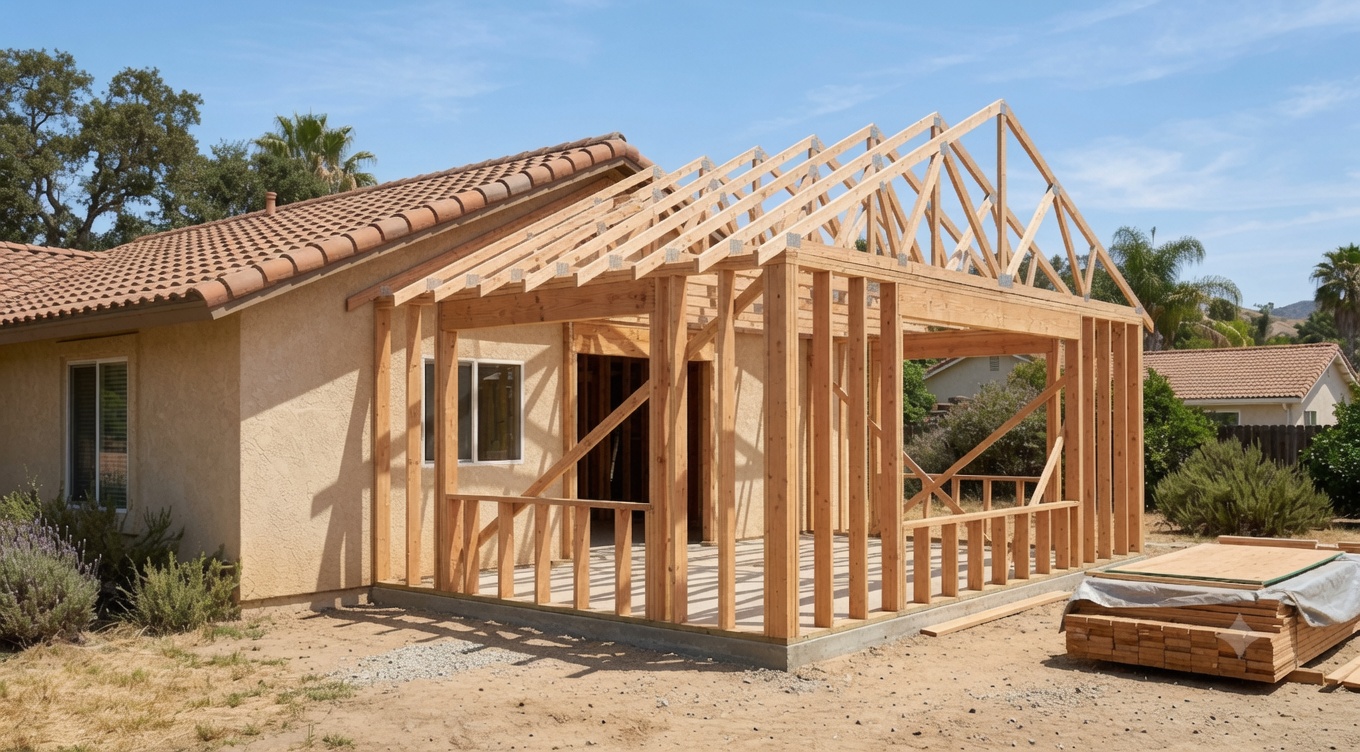
Does remodeling raise your property taxes in California? Only if the work counts as new construction. Under Proposition 13, the assessor reassesses just the new portion, never the whole home. A room addition or an ADU is assessable, but normal maintenance and like-for-like replacement is not.
Property tax rules verified as of July 27, 2026. Sources: the Revenue and Taxation Code, the Board of Equalization, and the Orange County Assessor. Analysis by Michael Mellgren, REALTOR® (DRE #02321556). General information only, not tax advice.
How Proposition 13 decides what gets reassessed
Proposition 13 sets a base year value for your home. That value rises no more than 2 percent a year, whatever the market does.
Still, only two events reset it. One is a change of ownership, and the other is new construction. A remodel falls under the second.
Here is the part most owners get wrong. New construction does not reassess the whole property. Under section 71, the assessor sets a new base year value for the new portion only. Everything else keeps its old value.
Say a 1994 base year value sits on a Yorba Linda home. Adding a bedroom does not disturb it. That bedroom gets its own value, which is then added on top. Meanwhile, land value does not change at all.
What counts as new construction, and what does not
Section 70 defines new construction two ways. The first is any addition to land or improvements. The second is any alteration that amounts to a major rehabilitation or converts the property to a different use.
Major rehabilitation means work that makes an improvement the substantial equivalent of a new one. By contrast, normal maintenance and repair falls outside all of it. The Board of Equalization publishes examples on both sides. So does the Orange County Assessor’s guidance on new construction.
| Project | Usually assessable | Why |
|---|---|---|
| Room addition or added square footage | Yes | An addition to improvements under section 70 |
| New ADU, or a garage converted to living area | Yes | Adds living area and converts the space to a different use |
| Pool, spa, deck, patio cover, or flatwork | Yes | Outdoor additions are additions to improvements |
| Tear-down and rebuild | Yes | The structure is new in its entirety, even if one wall stands |
| Rehabilitation of framing, foundation, plumbing, or wiring | Usually | Structural work that extends the building’s usable life |
| Roof replacement, like for like | No | Normal maintenance and repair |
| Paint, carpet, or wall coverings | No | Cosmetic work that adds no square footage |
| Swapping a heater, water lines, or windows for similar items | No | Replacement of existing items of similar size and purpose |
How California assessors generally treat common residential projects. Sources: Revenue and Taxation Code section 70, the Board of Equalization, and the Orange County Assessor; analysis by Michael Mellgren, REALTOR®.
The tear-down rule catches people out
Leaving one wall standing does not help. According to the Board of Equalization, a rebuilt house counts as new construction in its entirety, whatever survives on site. So only the land keeps its old assessed value.
There is a partial offset, at least. The value added by the new house is measured against the assessed value of the home that came down.
Does remodeling raise your property taxes on a kitchen or bathroom?
It depends, and the two authorities read differently. The Board of Equalization lists kitchen and bathroom work as assessable in several cases:
- Structural changes, or a changed floor plan.
- Upgraded plumbing or wiring.
- Added size.
- Cabinets, counters, flooring, or fixtures replaced with upgraded materials.
Orange County reads it more narrowly. The Assessor’s own guidance says remodeling is generally not assessable unless it adds square footage. That guidance names countertops, cabinets, carpeting, and windows as cosmetic.
Both can hold, because the call is local. The Board of Equalization says a county assessor decides case by case. The test is whether the room is now the equivalent of a new one. So for an Orange County address, the county’s own guidance governs.
A practical read follows. Swapping finishes rarely triggers anything. Moving walls, adding square footage, or rebuilding the plumbing and wiring usually does.
How much does the tax actually go up?
The increase tracks market value added, not what the project cost. That distinction comes from the Board of Equalization itself, and it cuts both ways. A $200,000 remodel that adds $120,000 of value is assessed on the $120,000.
After that the math is ordinary. The new value joins your assessed value. Tax then runs at the Proposition 13 base rate of 1 percent. Voter-approved debt and direct levies already on your bill apply on top.
Worked example
A homeowner carries a base year value of $420,000 and builds a detached ADU. On completion, the assessor determines the ADU added $180,000 of market value.
That $180,000 becomes its own base year value and joins the $420,000, for $600,000 total. The original $420,000 is untouched and keeps its 2 percent cap. At the 1 percent base rate, the added tax runs about $1,800 a year, before voter-approved debt and direct levies.
The supplemental bill nobody expects
Completed construction also triggers a one-time supplemental assessment. It is prorated from the first day of the month after completion to the end of the fiscal year. That year runs July 1 to June 30.
Also, completion means available for use, not the day the last invoice clears. In Orange County, work finished on May 15 carries a supplemental effective date of June 1.
That bill arrives separately from the annual one. A purchase produces the same kind of bill for a different reason. This guide to closing costs in Orange County covers that version.
Which improvements are excluded from reassessment?
State law excludes a short list of projects. Several require a claim form, and some carry hard deadlines that are easy to miss.
| Excluded work | Code section | Claim form | Filing window |
|---|---|---|---|
| Active solar energy system | Section 73 | None | Scheduled to sunset January 1, 2027 |
| Fire sprinkler, detection, and extinguishing systems | Section 74 | None | None stated |
| Disabled access work on a home | Section 74.3 | BOE-63 | No stated period |
| Seismic safety retrofitting | Section 74.5 | BOE-64 | Notify within 30 days of completion, documents within six months |
| Rebuilding after a disaster, substantially as before | Section 70(c) | None | None stated |
| Cleanup of environmentally contaminated property | Section 74.7 | Required | Notify by 30 days after completion, documents within six months |
New construction exclusions most often reaching California homeowners. Source: California State Board of Equalization, with the Revenue and Taxation Code sections cited; analysis by Michael Mellgren, REALTOR®.
Every exclusion has the same catch
An exclusion protects the owner who did the work. Even so, it does not shield the property forever. Per the Board of Equalization, excluded value reaches the assessment at the next change of ownership. A new base year value gets set then.
So solar you install stays excluded while you own the home. Once the home sells, the buyer’s assessment rests on the purchase price, and that price includes the panels.
The solar exclusion is on a clock
Section 73 is scheduled to sunset on January 1, 2027. A system completed before that date keeps the exclusion until the next change of ownership, which the statute states directly.
In fact, lawmakers have extended this deadline repeatedly since 1980. However, a 2026 bill to extend it again was held in committee on May 14, 2026. So the sunset stands as of this writing, and anyone planning an installation should confirm the current status first.
Does the assessor find out without a permit?
Usually, yes. State law requires cities and counties to send the assessor copies of building permits. Pulling one therefore puts the project in front of the Assessor by itself.
Still, skipping the permit does not solve the problem. The Board of Equalization states that the assessor must value new construction whether or not a permit issued. Discovery also comes from aerial photographs, satellite imagery, routine field inspections, and what surfaces when a property sells.
Unpermitted work then carries its own trouble at resale. Appraisers often exclude it from square footage, lenders can balk, and California disclosure duties still apply. This step-by-step guide to how to sell a home in Orange County covers where disclosures land.
Property tax and income tax pull in opposite directions
One remodel can move two different taxes at once. For property tax, an assessable improvement raises the bill every year you own the home.
For income tax at sale, that same improvement raises your basis, which shrinks the taxable gain. Repairs do neither. This guide to capital gains tax when selling a California home sets out which costs count toward basis.
Frequently asked questions: does remodeling raise your property taxes?
Does painting or new flooring raise property taxes?
No. Cosmetic work counts as normal maintenance, and the Orange County Assessor names carpeting and paint as examples. So nothing is added to your assessed value.
Does a new roof raise property taxes?
Not when it replaces the old one like for like. The Board of Equalization treats swapping a shake roof for tile as routine maintenance. Any added market value is therefore not assessable. Replacement items should be similar in size and purpose to the ones removed.
Does an ADU trigger a full reassessment of the house?
No. Only the ADU is valued, and that figure is added to your existing assessed value. The main home keeps its base year value and its 2 percent annual cap.
Does remodeling raise your property taxes if you do the work yourself?
It makes no difference. The assessor values the market value the work added, not the labor bill and not who swung the hammer. Sweat equity lowers your cost, though it does not lower the assessment.
Can you appeal a new construction assessment?
Yes. In Orange County you get 60 days from the mailing of the Notice of Supplemental Assessment. File with the Clerk of the Board of Supervisors. Filing does not pause the due date, so pay the bill and pursue a refund.
Weighing a project on a North Orange County home?
The tax question and the resale question are separate questions, and both belong in the decision before a contractor starts. Michael Mellgren, REALTOR®, follows the North Orange County market closely. He can talk through how a planned project is likely to land at resale. He can also flag what to confirm with the Assessor first.
Email Michael Mellgren about a remodel and property taxes, or call or text (714) 420-6629. For the assessment on a specific address, contact the Orange County Assessor. For the tax treatment of a project, consult a qualified tax professional.